Portable Solar vs Fixed Solar for Touring
You notice the difference between portable solar vs fixed solar when you pull into camp late, the fridge is still running hard, and the sun is dropping behind the trees. On paper, both can keep a battery charged. In real touring conditions, though, the better option depends on how you travel, how long you stay put, and how much effort you want to put into managing your power.
For caravan owners, campervan travellers and 4WD setups, this choice is less about which system is better overall and more about which one suits the way you actually camp. A system that works brilliantly for a week parked up on the coast may be annoying on a quick overnight stop inland. The right answer usually comes down to your routine, your battery capacity and your willingness to move panels around.
Portable solar vs fixed solar – what changes in real use?
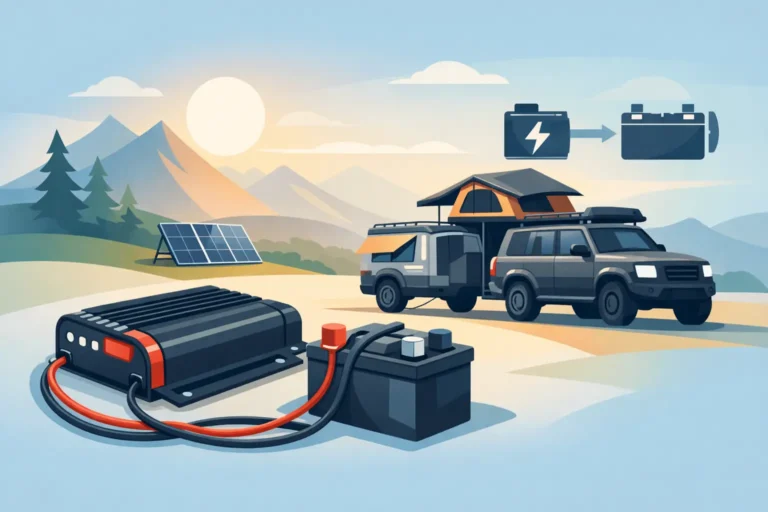
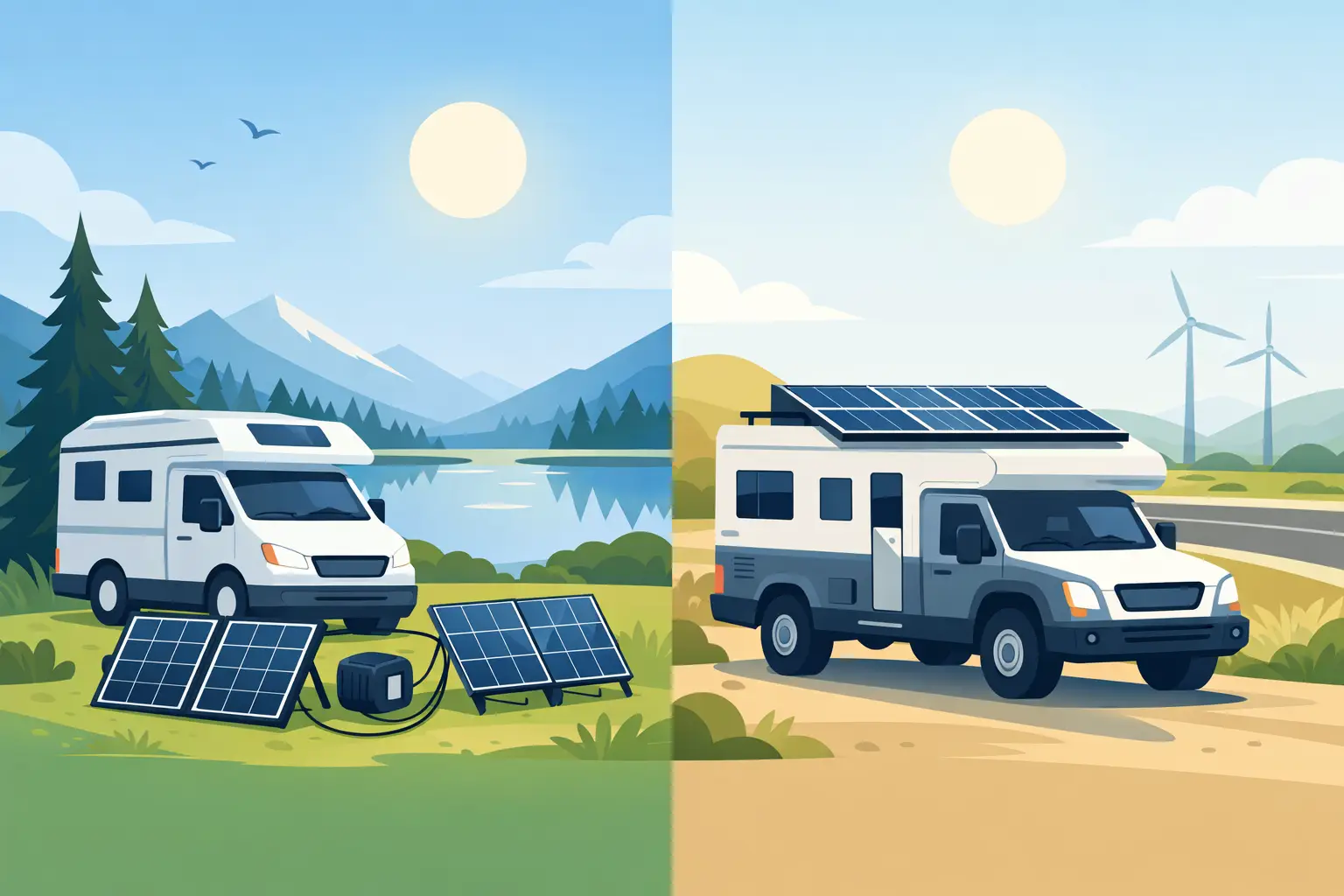
Fixed solar is mounted permanently to the roof of your caravan, camper, canopy or vehicle. It charges whenever there is daylight, with no setup once it is installed. Portable solar is a separate panel or folding blanket you pull out at camp, place in the sun and connect back to your battery system.
That sounds simple enough, but day-to-day use is where the trade-offs show up. Fixed solar is convenient because it is always working when the sun is available. You do not have to unpack it, angle it or remember to put it away before driving off. Portable solar gives you flexibility because you can park in the shade and still place the panel out in full sun.
That single difference matters more than most spec sheets suggest. In the middle of summer, a roof panel baking in clear sun can perform well all day. In a bush camp with patchy shade, fixed panels can lose useful output fast, while a portable panel can be shifted to follow the sun and avoid shadows.
Why fixed solar suits a lot of travellers
For many touring setups, fixed solar is the easiest way to keep the battery topped up with the least fuss. Once properly installed with a quality regulator and battery system, it just becomes part of the vehicle. That is a big advantage if you move often, stop for one night at a time or want charging to happen while the vehicle is parked during the day.
Fixed solar also makes sense if roof space is available and your energy use is fairly predictable. A caravan running a fridge, lights, water pump and occasional inverter load can often benefit from permanent charging every daylight hour, even if the solar harvest is modest in poor weather.
There is also less gear to carry and less chance of user error. No leads stretched across camp. No panel left out overnight by mistake. No hunting for a clean patch of ground. For people who value simplicity, that counts for a lot.
The downside is that fixed panels are at the mercy of where the vehicle is parked. If your van is tucked under trees to keep cool, your solar may be disappointing. Roof-mounted panels also sit flat in most installations, so they rarely operate at the ideal angle to the sun. They charge consistently, but not always efficiently.
Where portable solar makes more sense
Portable solar is popular for a reason. If you like parking your vehicle or caravan in the shade and still want decent charging, a portable panel gives you options fixed panels cannot. You can chase the best patch of sunlight, reposition the panel during the day and squeeze more charge out of difficult campsites.
That flexibility is especially useful for longer stays. If you are setting up for three or four days in one spot, spending a few minutes placing a portable panel is usually worth it. The same goes for higher-demand systems where every amp counts, such as lithium setups running larger fridges, fans, charging devices and occasional 240V loads through an inverter.
Portable solar can also be a good add-on rather than a full replacement. Plenty of travellers run fixed roof solar for daily background charging, then bring out a portable panel when camped for longer or when weather and shade start cutting output.
The catch is convenience. Portable panels need to be unpacked, connected, positioned and packed away. They take up storage space. They can be awkward in bad weather, and they are one more item to secure from wind, theft or accidental damage. For quick stops or touring days where you are constantly on the move, some people get tired of the extra job and stop using them properly.
Charging performance is not just about panel size
A common mistake is comparing portable solar vs fixed solar purely by wattage. A 200W portable panel and a 200W fixed roof panel are not guaranteed to deliver the same real-world result.
Portable panels often perform better in mixed camping conditions because they can be angled and moved into full sun. Fixed panels often perform better over the course of a travel day because they are charging whenever daylight hits them, even if the output is not perfect. If you are driving, stopping for lunch, parking at a lookout and then pulling into camp, the roof panel may quietly contribute more over the full day than expected.
Battery chemistry matters too. Lithium battery systems can accept charge more efficiently and recover faster, so they pair very well with solar. AGM setups can still work fine, but they generally need more careful charge management and may take longer to fully top up. The regulator, cable sizing and installation quality all affect performance as much as the panel itself.
Cost, installation and long-term value
Fixed solar usually costs more upfront if you are starting from scratch, because installation is part of the job. A proper setup may include panel mounting, cable runs, gland seals, fusing and an MPPT regulator matched to the battery system. Done well, it is neat, reliable and low-maintenance.
Portable solar can look cheaper at first because there is less installation involved. But the full cost can still add up once you include a quality folding panel, regulator if required, suitable leads, connectors and protective storage. Cheap portable kits often disappoint in output and durability, especially when they spend time in dust, heat and damp camping conditions.
Value comes back to use. If a fixed system is always charging and reduces generator use or battery stress, it earns its keep. If a portable panel spends most of its life in the front boot because it is too much hassle, it is not really saving you anything.
Which setup fits your style of travel?
If you move camp often, fixed solar is usually the better match. It is reliable, automatic and easier to live with. It suits touring rigs where convenience matters and where the battery system gets support from driving as well.
If you stay put for days and prefer shade, portable solar often has the edge. It gives you control over panel placement and can produce solid charging in camps where roof panels struggle.
If your power use is modest, either option can work. If your power use is heavy, the answer is often both. A combined setup gives you steady background charging from the roof and extra collection when conditions are less than ideal.
This is where tailored advice matters. A 4WD with a fridge and a few USB loads has very different needs from a caravan with a compressor fridge, water pump, lighting, fans and inverter. The right solar setup should be matched to battery size, charger type, roof space, travel habits and the loads you expect to run.
Portable solar vs fixed solar for caravans, 4WDs and campervans
Caravans often benefit from fixed solar because they usually have roof space and enough battery capacity to make good use of it. But if you regularly free-camp under trees, adding a portable panel can make a noticeable difference.
For 4WDs and canopies, fixed solar can be limited by roof rack space, shade from gear or the simple fact that not every vehicle has a practical mounting area. In that case, portable solar may be the better primary option. It is also useful for basecamp-style trips where the vehicle stays parked for longer periods.
Campervans sit somewhere in the middle. Roof-mounted solar is tidy and convenient, but portable panels can help if available roof space is small or partly occupied by vents and accessories.
A lot of Sunshine Coast travellers end up with a hybrid approach for this reason. Conditions change, campsites vary, and flexible systems cope better with real travel than one-size-fits-all setups.
The best solar setup is the one you will actually use, trust and understand. If you want something simple that works in the background, fixed solar is hard to beat. If you want flexibility and are happy to manage it at camp, portable solar can be excellent. And if your trips are longer, your loads are bigger or your camps are unpredictable, combining both often gives the most dependable result. Before spending money on more panel wattage, it is worth making sure the whole 12V system is designed to suit the way you travel.