Battery Drain Diagnosis Car Owners Can Trust
You usually notice a battery drain problem at the worst possible time – early for work, halfway through a camping trip, or after the car has sat overnight and suddenly won’t crank. A proper battery drain diagnosis car check is about finding what is still drawing power when the vehicle should be asleep, not just fitting another battery and hoping for the best.
That distinction matters. Plenty of flat battery complaints start with a weak battery, but plenty more are caused by a hidden parasitic draw, a charging issue, an accessory fault, or a wiring problem that only shows up under certain conditions. If the root cause is missed, the same problem comes back.
What battery drain diagnosis in a car actually involves
When people say their battery keeps going flat, they are often dealing with one of three issues. The battery itself may be failing and no longer holding charge. The alternator or charging circuit may not be replenishing it properly while driving. Or the vehicle may have an abnormal current draw while parked.
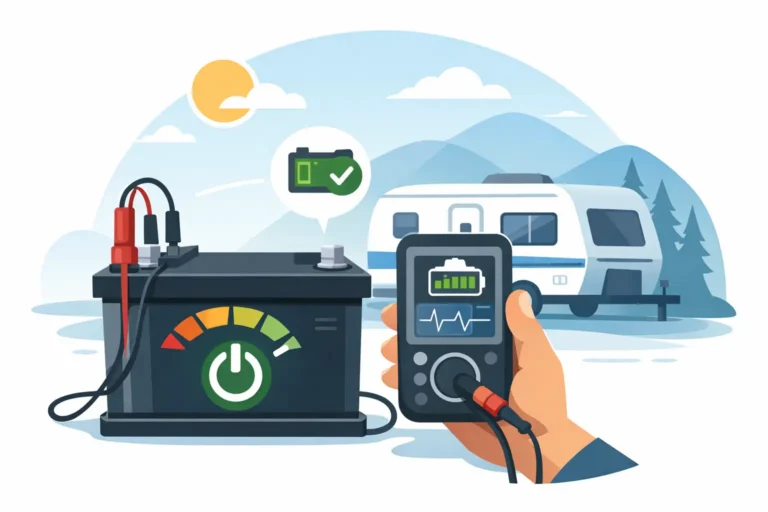
A good diagnosis separates those possibilities before any parts are replaced. That means checking battery condition, testing charging voltage and current, and measuring key-off draw once the vehicle has gone into sleep mode. On modern vehicles, that sleep period matters. Test too early and the reading can look high even when the system is operating normally.
For 4WDs, caravans, campervans and vehicles with dual battery systems, there is another layer. Fridges, brake controllers, DC chargers, inverters, solar regulators, aftermarket lighting and accessory wiring can all add complexity. Sometimes the problem is not the vehicle at all – it is an add-on system that has been installed poorly, configured incorrectly, or is simply drawing more than expected.
Common causes of battery drain
The most common cause is still a battery that has reached the end of its life. Heat, vibration, short trips and age all take a toll. A battery can test well enough one week and drop off quickly the next, especially if it has been repeatedly flattened.
After that, parasitic draw is high on the list. This is when something keeps using power after the ignition is off. It might be obvious, like an interior light, glovebox lamp or aftermarket stereo staying alive. It can also be less obvious, such as a control module that fails to go to sleep, a relay sticking on, a tailgate switch issue, or a tracker, dash cam or UHF installation with the wrong power feed.
Charging faults can look similar. If the alternator output is low, inconsistent or affected by poor cable connections, the battery may never fully recover after each drive. Corrosion at terminals, damaged earths, loose clamps and voltage drop through cables can all contribute.
There is also the usage side of it. A vehicle that only does very short school runs and local errands may not get enough charging time, especially if demisters, headlights, seat heaters and accessories are used regularly. In touring vehicles, a fridge, compressor or camp lighting setup can quietly pull a battery down if the isolation or charging strategy is not right.
Why guessing usually costs more
Battery drain faults are frustrating because the symptoms often point in the wrong direction. The car starts fine for a few days, then fails after sitting overnight. You jump-start it, it behaves normally again, and nothing obvious looks wrong. That is why people often replace the battery first.
Sometimes that works. Sometimes it just gives the fault a fresh battery to flatten.
The same goes for alternators. Replacing parts without confirming the fault can turn a straightforward diagnosis into an expensive process of elimination. If there is an intermittent current draw, a poor ground, or an accessory wired incorrectly, the new part will not solve it.
A proper test saves time because it narrows the fault down to a system, circuit or component. It also gives you a clearer repair path. That matters if you rely on the vehicle for work, daily driving or getting away on weekends.
How technicians approach battery drain diagnosis car faults
The first step is usually the complaint history. How long does the car sit before it goes flat? Has the battery already been replaced? Are there aftermarket accessories fitted? Did the issue start after another repair or installation? Those details help point the testing in the right direction.
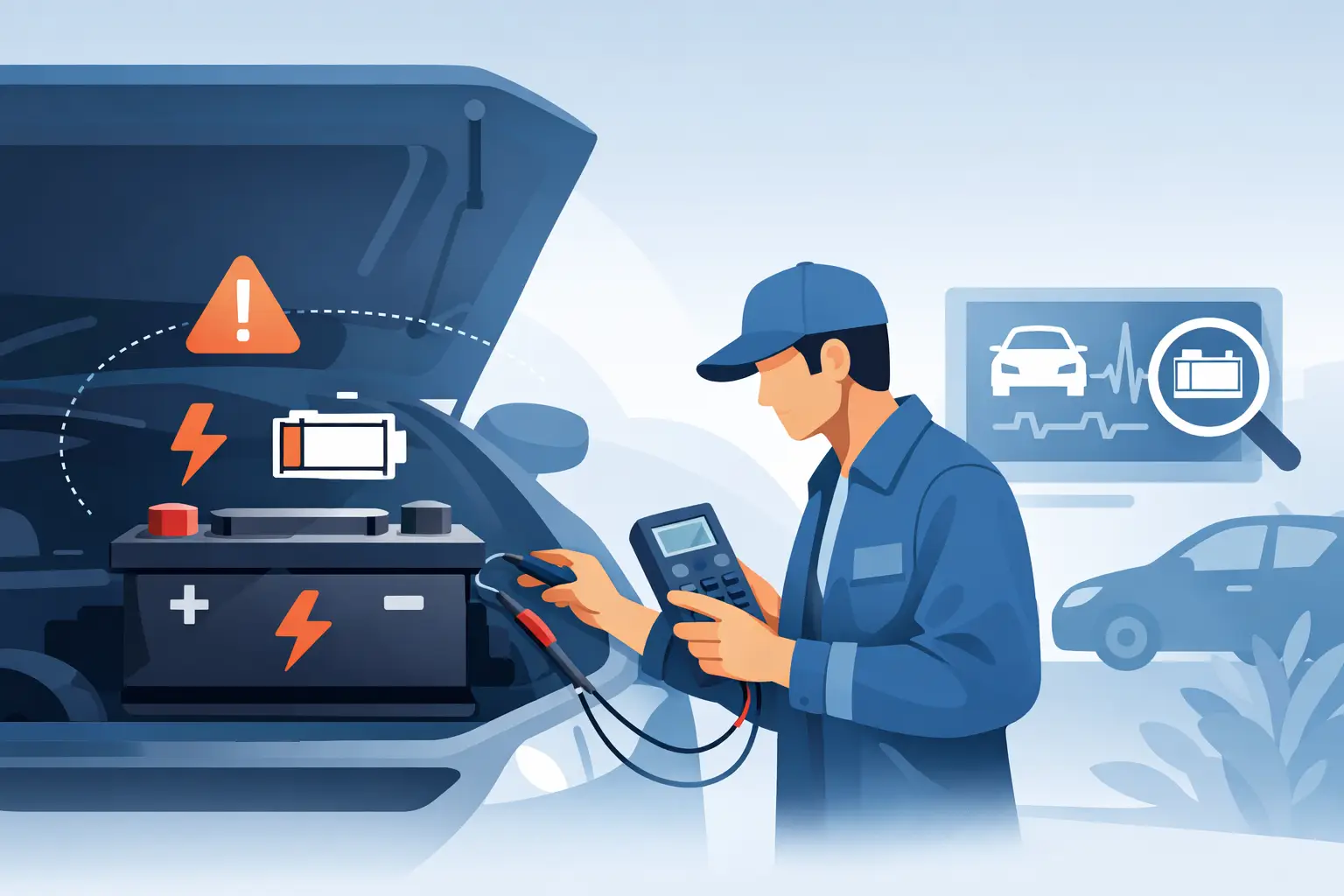
From there, the battery is tested for state of charge and health. A battery that has been deeply discharged several times can become unreliable even if it still accepts charge. After that, charging system performance is checked under realistic conditions rather than just a quick voltage glance at idle.
When parasitic draw is suspected, the vehicle is tested with the ignition off and allowed to power down fully. This part requires patience. Many newer vehicles keep modules awake for some time after locking, and opening a door or waking the network can reset the process.
If the key-off draw is too high, circuits are isolated one at a time to identify where the current is going. That may involve fuse-by-fuse testing, current clamp measurements, scan tool checks for modules that remain awake, and inspection of accessory wiring. On touring and off-grid setups, the separation between crank battery, auxiliary battery and charging equipment also needs to be confirmed.
This is where experience matters. The fault may be a failed module, but it may also be a simple issue such as a dual battery isolator not disconnecting, a brake controller wired to constant power incorrectly, or a van connection back-feeding the tow vehicle.
DIY checks that can help before booking in
There are a few practical checks you can do without making things worse. Start with the basics. Look for loose or corroded battery terminals, check whether interior lights are staying on, and note any recent accessory installations or electrical work. If the battery is older, that is relevant too.
Pay attention to patterns. If the battery only goes flat after the vehicle sits for two or three days, that suggests one type of fault. If it struggles immediately after driving, charging performance may be part of the issue. If the problem started after fitting a dash cam, driving lights, fridge socket or trailer plug, mention that when you book the vehicle in.
What is usually not worth doing is repeatedly jump-starting and carrying on as normal. Deep discharges shorten battery life and can create extra diagnostic noise. Once a battery has been flattened enough times, you can end up chasing both the original drain fault and a damaged battery.
Battery drain in 4WDs, caravans and camper setups
Vehicles set up for travel often have more than one possible source of battery drain. That does not mean the setup is bad – it just means there are more systems to assess. DC-DC chargers, solar regulators, lithium upgrades, inverters and fridge circuits all need to work together properly.
A common issue is poor battery isolation. If the crank battery and accessory system are not separated correctly, overnight loads can drag the starting battery down. Another is charging mismatch. A system may look fine in the workshop but underperform on short drives, cloudy days or when a fridge is cycling hard in warm weather.
This is also where quality parts and installation standards make a real difference. Reliable components, correct cable sizing, proper fusing and neat termination are not just about appearance. They reduce voltage drop, improve charging, and make future fault-finding much more straightforward.
When to get it checked professionally
If the battery has gone flat more than once, there is no real upside in waiting. The longer it goes on, the higher the chance of battery damage and the more inconvenient the failure usually becomes. It is especially worth booking a proper diagnosis before a road trip, towing holiday or off-grid run.
Professional testing is also the better option if the vehicle has modern electronics, intermittent faults or multiple accessories. Electrical issues are rarely fixed by guesswork, and newer vehicles can be sensitive to incorrect testing methods. The goal is not just to find a flat battery. It is to find out why it happened.
For Sunshine Coast drivers, particularly those with 4WDs, caravans or custom 12V systems, that practical approach matters. The best result is a clear explanation of what was found, what actually needs repair, and what can wait if there are options.
A flat battery is annoying. A recurring one can leave you stranded, damage components and chip away at confidence in the vehicle. If yours keeps going down, treat it as an electrical fault to diagnose properly, not a nuisance to work around. A reliable car starts with knowing where the current is going when everything is supposed to be off.