Best Dual Battery Setup 4WD Owners Need
A fridge that cuts out overnight, camp lights that dim too early, or a starter battery that struggles in the morning usually means the same thing – your 4WD power setup was built for compromise, not for the way you actually travel. The best dual battery setup 4wd owners can rely on is not always the biggest or most expensive system. It is the one that matches your vehicle, your accessory load, and the way you use it.
For some drivers, that means a simple under-hood system that runs a fridge and a few USB outlets. For others, it means a lithium battery in the canopy, DC-DC charging, solar input, and inverter power for longer trips. The right answer depends on how far you go, how long you stay put, and how much margin you want when conditions are less than ideal.
What makes the best dual battery setup 4WD owners can trust?
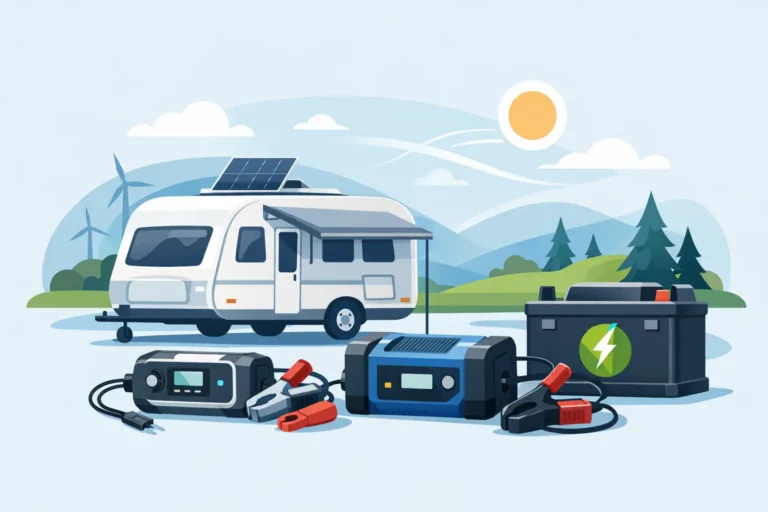
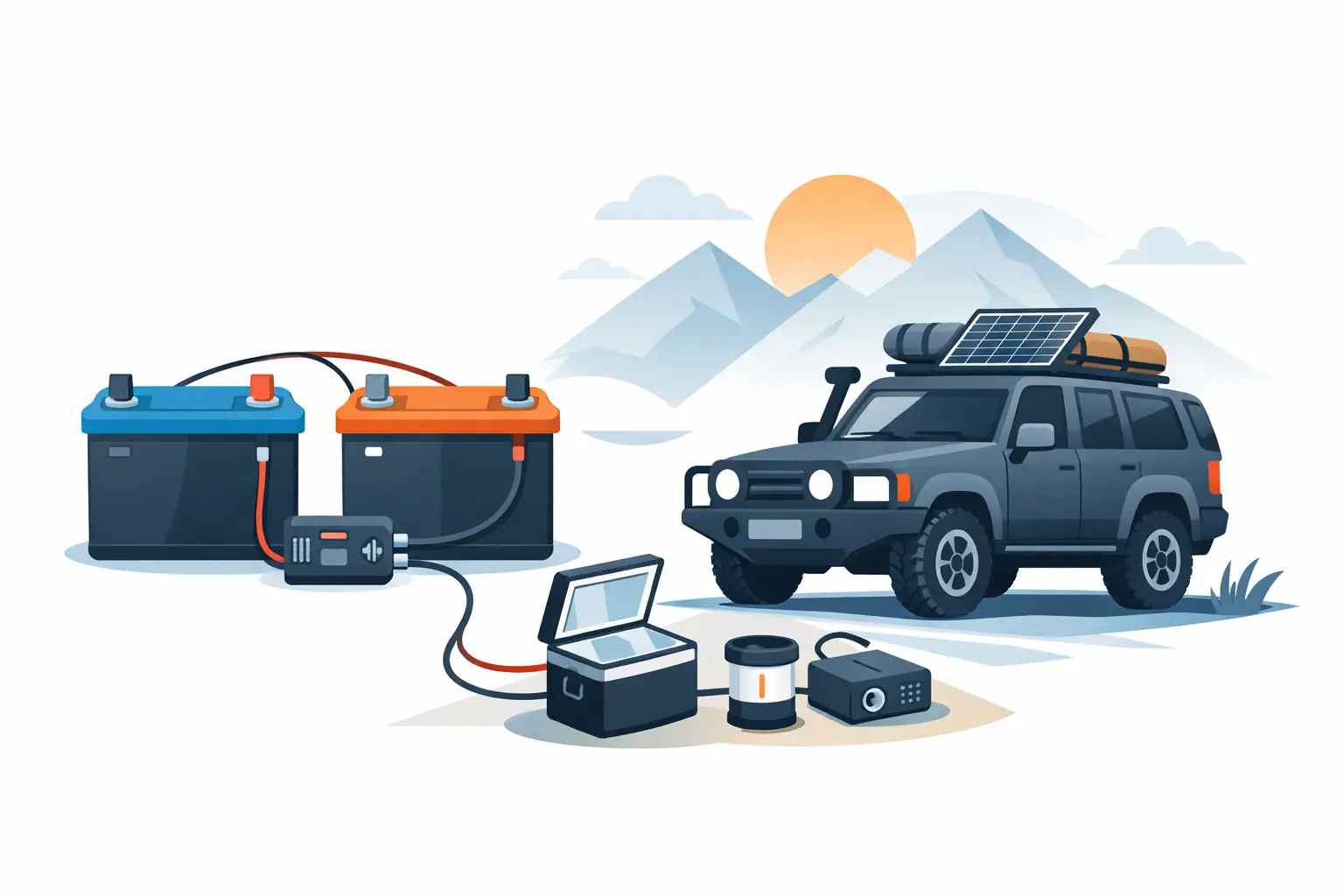
At its core, a dual battery system separates your starting battery from your accessory power. That way, you can run a fridge, lights, air compressor, phone chargers, and other 12V gear without flattening the battery needed to crank the engine. That sounds simple, but the quality of the setup comes down to how well the parts work together.
A good system should charge properly while driving, protect the starter battery, use cable sized for the load, and suit the battery chemistry being installed. It also needs to fit the vehicle properly. A touring wagon with limited engine bay space has different requirements than a ute with a canopy or a camper setup with room for a larger battery bank.
The best setups also leave room for growth. A lot of people start with a fridge and camp lights, then add a diesel heater, inverter, solar, or compressor later. If the original system is undersized or poorly planned, upgrades get messy fast.
Start with how you actually use your 4WD
Before choosing brands, battery sizes, or charging gear, it helps to be honest about your usage. Weekend trips with daily driving are very different from extended off-grid travel. If you move camp every day, alternator charging will do most of the work. If you sit in one place for two or three days, solar and battery capacity matter much more.
Accessory load matters too. A single efficient fridge may draw far less than people expect, but once you add camp lighting, device charging, a water pump, and an inverter, the daily power use climbs quickly. That is where many budget setups fall short. They are not wrong on paper, but they do not leave much reserve.
This is why there is no single best dual battery setup 4wd solution for everyone. There is only the best fit for the vehicle and the job.
AGM or lithium?
This is usually the first big decision, and it changes the whole design.
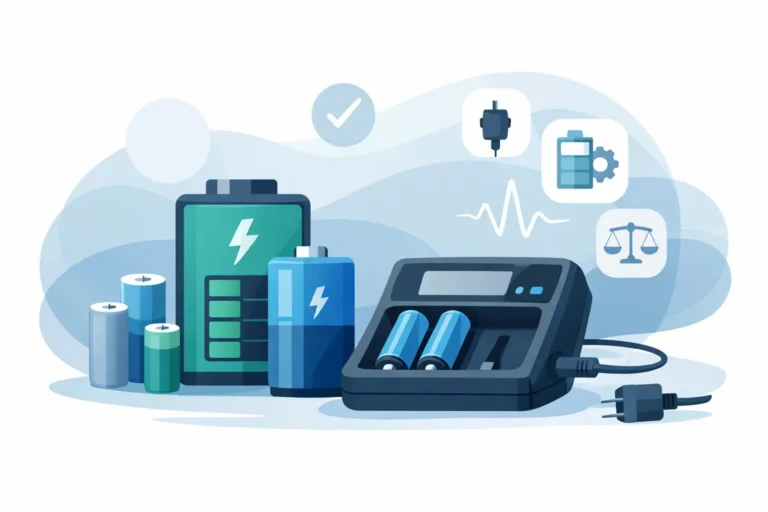
AGM batteries still suit plenty of 4WD owners. They are proven, widely available, and often cost less upfront. For drivers who want a straightforward setup for shorter trips, AGM can be a sensible option. They do have limitations, though. They are heavier, offer less usable capacity for the size, and take longer to recharge. If your driving times are short, that slower charging can become frustrating.
Lithium batteries cost more at the start, but they bring real benefits when the vehicle is used for touring or off-grid camping. They are lighter, recharge faster, and deliver more usable capacity. In practical terms, that often means longer fridge runtime, less voltage drop under load, and better performance when you are parked up for a while. They also make sense when weight matters, especially in utes, touring wagons, and vehicles already carrying drawers, recovery gear, roof loads, and water.
The trade-off is that lithium systems need to be designed properly. Charging profile, battery management, cable protection, and install quality all matter. A cheap mix of parts can cancel out the advantages quickly.
Why the charger matters more than many people think
A lot of dual battery issues are not battery issues at all. They are charging issues.
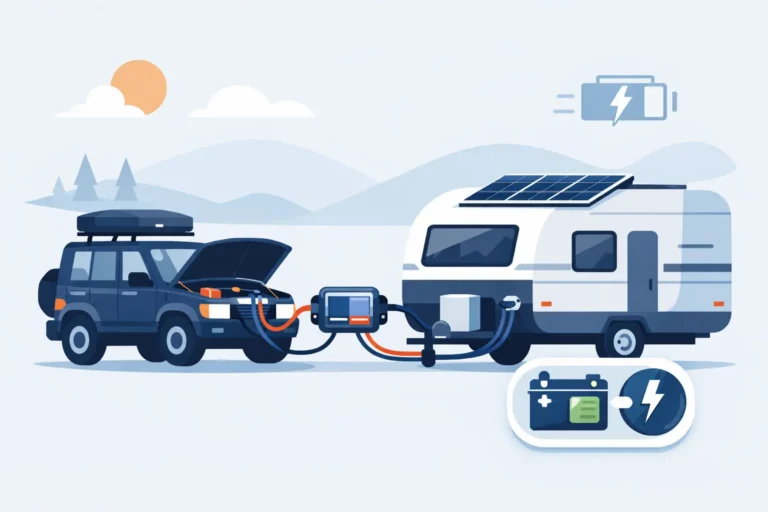
Modern vehicles often run smart alternators, and those do not always provide the steady voltage needed to charge an auxiliary battery properly. That is why DC-DC chargers have become the standard in many quality installs. A good DC-DC charger manages the charging process correctly, helps protect battery life, and often allows solar input as well.
For a simple older 4WD with a conventional alternator, a voltage-sensitive relay setup may still work well in the right application. It is usually more affordable and less complex. But once you are dealing with lithium, longer cable runs, canopy installations, or a newer vehicle, DC-DC charging is generally the better path.
It is also worth remembering that charger size needs to match the battery and usage. Too small, and recovery time is slow. Too large, and the system may be harder on components than necessary. Balance matters.
Battery location changes the setup
Where the auxiliary battery sits has a big effect on performance and serviceability.
Under-hood installs are tidy and space-efficient, but heat can be hard on some batteries and available room is often limited. Rear-mounted batteries in a tub, cargo area, or canopy usually offer more flexibility and better access for larger systems. They also tend to make more sense when you are powering rear accessories, inverters, or caravan charging feeds.
The trade-off is cable length. Longer runs need proper cable sizing and protection to avoid voltage drop and heat buildup. This is one of the most common weak points in low-cost installs. The system may work, but not efficiently enough to keep up in real-world use.
The supporting gear is not optional
The battery gets most of the attention, but the supporting components are what make the system reliable.
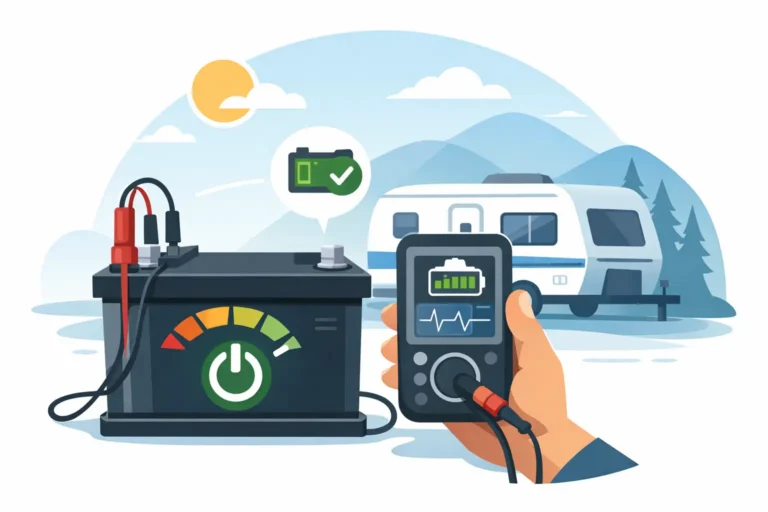
Quality fusing, isolators, cable, terminals, mounts, and monitoring all matter. If you cannot see what voltage is doing or how much current is being used, diagnosing problems becomes guesswork. A proper monitor helps you understand battery state, daily consumption, and charge recovery. That is especially useful if you are running a fridge around the clock.
Solar can also be a smart addition, but only when it matches your travel style. For regular camps in open sun, it can reduce load on the alternator and extend your time off-grid. If you mostly park in shade or move every day, portable or fixed solar may be less valuable than increasing battery capacity or improving charge rates from the vehicle.
Inverter choice needs the same practical thinking. Many people install more inverter than they really need. If you only want to charge laptops or camera gear, a modest inverter may be enough. Oversizing adds cost and can increase standby draw.
A practical setup for most touring 4WDs
For many 4WD owners, the sweet spot is a lithium auxiliary battery paired with a quality DC-DC charger, proper battery monitoring, fused distribution, and optional solar input. That kind of system gives strong day-to-day usability without becoming overly complex.
If the vehicle is used for regular touring, a rear-mounted lithium battery often gives the best balance of usable capacity, charging performance, and future expansion. If it is more of a daily driver that does occasional camping duties, a simpler AGM setup may still be the better value.
This is where a tailored approach matters. Premium gear from brands like Redarc, Victron Energy, and Custom Lithium can perform extremely well, but only when the sizing and install quality are right for the vehicle.
Common mistakes that cost more later
The first mistake is building the system around price alone. Saving money on cable, charging gear, or battery quality often leads to poor performance and repeat labor later.
The second is chasing battery size without calculating actual load. Bigger is not always better if the charging system cannot recover it properly.
The third is treating every 4WD the same. A vehicle used for trades during the week and camping on weekends needs a different setup than a dedicated touring rig pulling a camper.
The last mistake is poor installation. Even high-end parts will disappoint if they are mounted badly, wired incorrectly, or left without proper protection. In a vehicle that sees corrugations, heat, dust, and vibration, workmanship matters.
So what is the best choice?
The best dual battery setup 4wd owners should invest in is the one that gives reliable starting protection, enough usable power for real conditions, and a charging system that keeps up with how the vehicle is driven. For many people, that means lithium plus DC-DC charging. For others, a well-built AGM system is still more than enough.
What matters most is not chasing a trend. It is choosing a setup that fits your trips, your gear, your vehicle layout, and your budget without cutting corners where reliability counts. If you get that part right, your power system stops being something you worry about and starts being one less thing to think about when you are a long way from home.