Car Electrical Fault Diagnosis That Saves Time
A car that starts one day and refuses the next rarely has a simple story behind it. Flickering dash lights, random warning messages, flat batteries, blown fuses, and accessories that work only when they feel like it all point to one thing – the fault needs proper testing, not guesswork. Good car electrical fault diagnosis is about finding the actual cause before parts are replaced, because in modern vehicles one small issue can create a long list of misleading symptoms.
Why car electrical fault diagnosis matters
Electrical problems can look obvious when they are not. A dead battery might be a worn battery, but it could also be an alternator that is undercharging, a parasitic drain, a bad earth, corrosion in a fuse box, or an accessory install that is pulling power when the vehicle is parked. If someone replaces the battery without checking the rest of the system, the same problem can come back within days.
That is why diagnosis matters more than assumptions. A proper process saves time, avoids unnecessary parts, and gives the owner a clearer picture of what is happening. It also matters for safety. Faults in wiring, charging systems, and high-current circuits can damage components, leave a driver stranded, or create heat where it should not be.
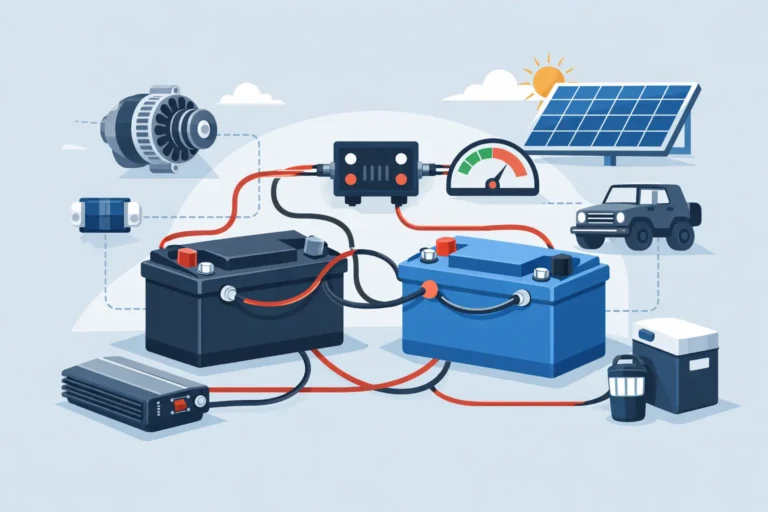
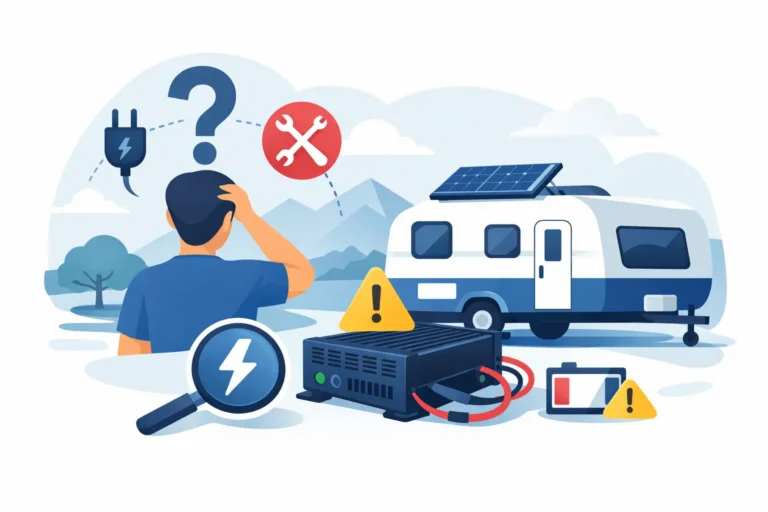
For 4WDs, campervans, and touring setups, the stakes are often higher. A basic fault in a dual battery system, DC-DC charger, inverter feed, brake controller supply, or trailer wiring can affect more than convenience. It can interrupt refrigeration, lighting, charging, communication gear, or the ability to safely tow and travel.
What causes automotive electrical faults
Most people think of electrical issues as major failures, but many start with smaller problems that build over time. Heat, vibration, dust, moisture, corrosion, and poor previous repairs all take their toll. A connector that looks fine from the outside may have green corrosion inside. A cable can test okay with no load on it, then fail when current demand rises.
Battery age is another common factor, but it is only one piece of the puzzle. Weak charging output, poor cable condition, loose grounds, damaged insulation, failed relays, and intermittent module faults can all create similar symptoms. That is why the first symptom is not always the source of the problem.
Aftermarket accessories also change the equation. Spotlights, fridges, UHF radios, canopies, solar inputs, lithium battery systems, and trailer connections all add complexity. When they are installed well, they are reliable. When wiring routes are poor, cable size is wrong, fuse protection is inadequate, or connections are not weather-sealed, faults can appear months later and be difficult to trace.
How car electrical fault diagnosis is done properly
A proper diagnostic job usually starts with questions, not tools. When did the issue begin? Does it happen only when the engine is cold? After rain? While towing? With the air conditioning on? With electrical faults, patterns matter.
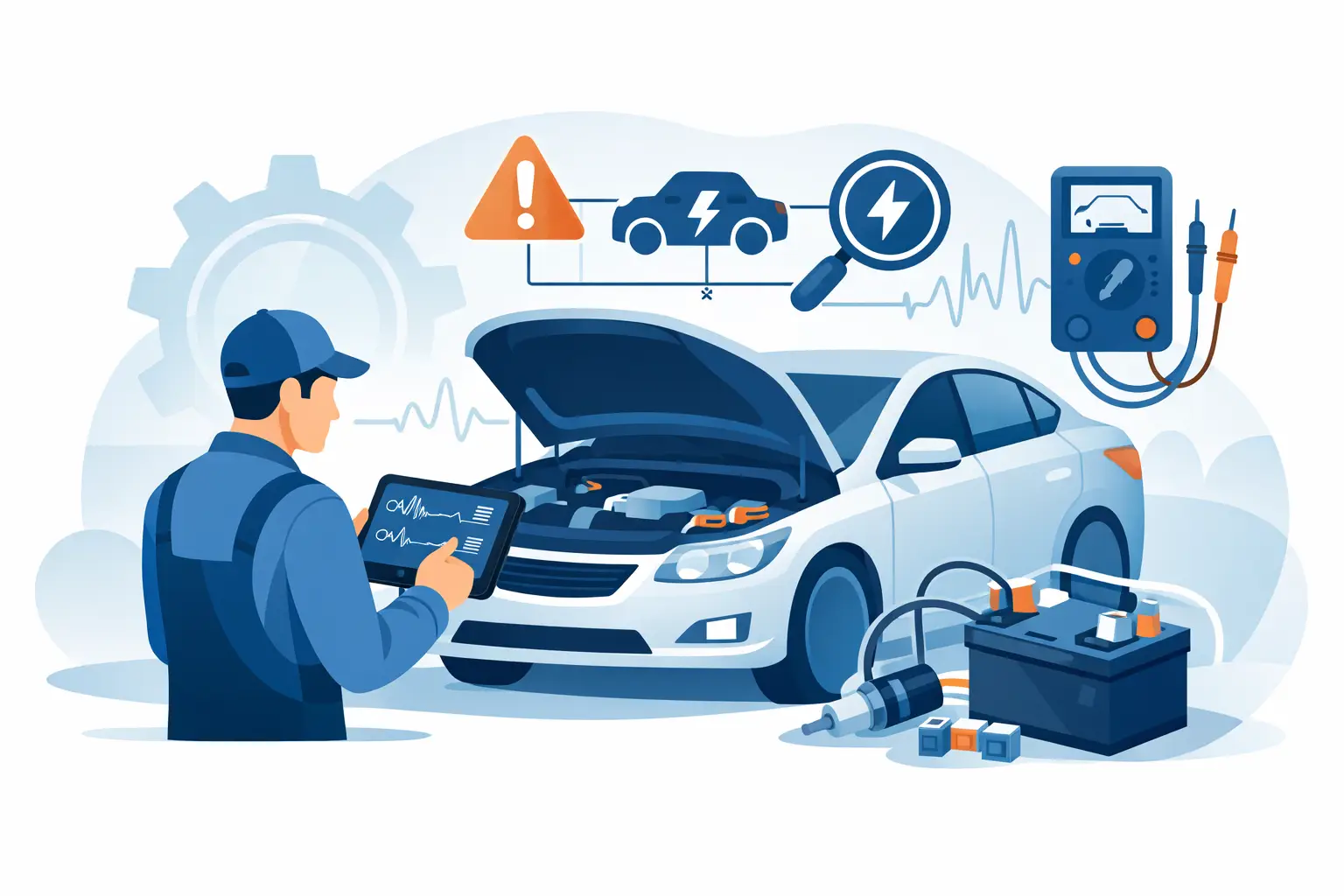
From there, testing needs to follow a logical path. Battery condition is checked, charging voltage is measured, and voltage drop testing is used to see whether cables and grounds are doing their job under load. Fuse circuits, relays, connectors, and control signals are then checked based on the symptom and the vehicle layout.
Scan tools can help, but they are only part of the job. Fault codes can point a technician in the right direction, yet they do not always identify the failed component. A low-voltage condition may trigger multiple module codes even though the root cause is a poor connection at the battery or alternator. The real value comes from combining scan data with hands-on electrical testing.
In practical workshop terms, that means proving the fault rather than guessing at it. If a parasitic drain is suspected, current draw is measured with the vehicle asleep and circuits are isolated one by one. If an intermittent power loss is reported, the focus may shift to harness movement, terminal tension, heat-related failure, or load testing specific sections of the circuit.
Common signs you need electrical diagnosis
Some faults are obvious, while others creep in slowly. Slow cranking, repeated flat batteries, headlights that dim at idle, warning lights that come and go, or power windows that move unevenly are all worth checking. The same applies to blower motors cutting out, trailer plugs not working correctly, reverse cameras dropping out, or 12V accessories losing power on rough roads.
For touring vehicles, signs can include a secondary battery that never fully charges, solar input that seems inconsistent, a fridge that cuts out overnight, or an inverter that trips under load. These are not always battery problems. Sometimes the issue is voltage drop, poor system design, an incorrect charge profile, or a bad connection hidden behind trim or under a tray.
If the problem is intermittent, that is even more reason to book it in before it becomes a breakdown. Intermittent faults are often easier to solve when a technician can test around the early symptoms instead of after a complete failure has damaged other components.
Why guessing gets expensive
Electrical diagnosis is one area where replacing parts on hope can burn through money quickly. A customer may already have fitted a new battery, alternator, starter motor, or sensor before the vehicle reaches the workshop, only to find the original fault is still there. That is frustrating, but it is also common.
The reason is simple. Many electrical symptoms overlap. A charging problem can feel like a battery problem. A bad ground can look like a starter issue. A communication fault can mimic a failed module. Without testing, each repair is only a guess.
There is a trade-off here. Proper diagnosis takes time, and some faults take longer than others, especially when they are intermittent or buried in accessory wiring. But that time usually costs less than replacing multiple good parts and still not trusting the vehicle afterward.
The difference between standard vehicle faults and touring setup faults
Not every workshop is set up for both factory vehicle systems and off-grid accessory systems. That matters because the fault may sit between the two. A ute with starting issues may also have a dual battery charger, canopy lights, a fridge circuit, and a trailer charging feed all connected into the broader electrical system. If one part has been wired poorly, the symptom may show up somewhere else.
This is where experience with 12V setups helps. Dual battery systems, lithium upgrades, solar integration, and inverter circuits need to be diagnosed with the same care as factory wiring. Load paths, isolation methods, fuse locations, cable sizing, earth returns, and charging strategy all need to make sense together.
For customers who travel, reliability matters more than theory. You want to know whether the fix will hold up on corrugated roads, hot days, and nights off-grid, not just whether the warning light is off when you leave the shop.
What to expect from a good diagnostic service
A solid diagnostic service should be clear about what was tested, what was found, and what needs to happen next. Sometimes the answer is straightforward, like a failed battery or corroded connection. Sometimes the answer is staged, where the first fault must be repaired before further testing can confirm whether anything else remains.
That is normal with electrical work. One fault can mask another. What matters is having a process and explaining it properly so the owner understands the difference between confirmed findings and possible follow-up items.
At Coastal Cool Air, that practical approach matters because customers are not just trying to clear a warning light. They need their vehicle to start, charge, cool, tow, and power the gear they rely on. Whether it is a daily driver, work ute, 4WD, caravan tow vehicle, or camper setup, the goal is the same – find the fault properly and repair it with parts and methods that suit how the vehicle is actually used.
When to stop driving and get it checked
If you notice a burning smell, hot wiring, repeated fuse failure, battery swelling, major charging voltage issues, or electronics cutting in and out while driving, do not leave it for later. Those symptoms can move from inconvenient to unsafe quickly. The same applies if the vehicle stalls unexpectedly, struggles to crank, or loses key accessories needed for safe operation.
Some issues can wait a day or two. Others should not. If you are not sure, that is usually the sign to ask before pushing on.
The best electrical repairs start with accurate testing, not hopeful part swapping. When the diagnosis is right, the repair makes sense, the bill is easier to justify, and the vehicle is far more likely to be dependable when you need it most.