Guide to Car Electrical Warning Lights Explained
A warning light appearing halfway to work, on the school run or while towing the van can put a quick end to a good day. This guide to car electrical warning lights explains what the main symbols are telling you, what action is sensible, and why guessing can turn a minor fault into an expensive repair.
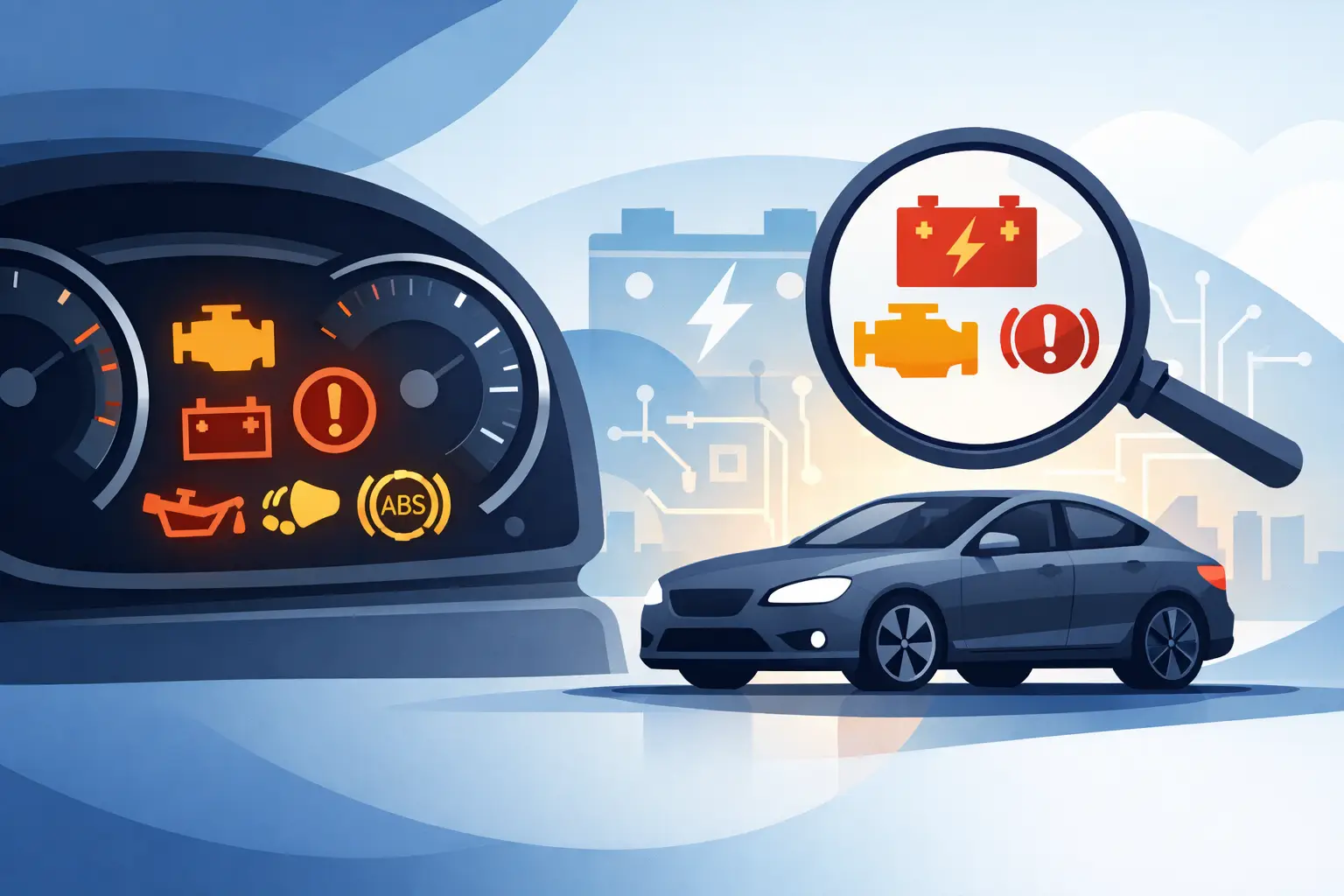
Dashboard lights are not all the same. Some simply confirm that a system is operating, while others indicate a safety or charging fault that needs attention. The exact symbol and wording vary between makes and models, so your owner’s manual remains the final reference. Still, knowing the difference between a red warning, an amber warning and a normal indicator light gives you a practical starting point.
Guide to car electrical warning lights: start with the colour
As a general rule, red means stop as soon as it is safe to do so. Continuing to drive may cause engine damage, compromise braking or leave you stranded. Amber or yellow means the vehicle usually needs checking soon, although it may still be safe to drive carefully for a short distance. Green, blue and white lights usually confirm that a feature is switched on, such as high beam, cruise control or fog lights.
Flashing makes a difference too. A flashing engine warning light, for example, can indicate a misfire severe enough to damage the catalytic converter. A steady light is still worth diagnosing, but a flashing one calls for prompt action.
Do not rely on colour alone. A red battery light does not necessarily mean the battery itself is faulty, and an amber tyre pressure light can become a safety issue if a tyre is rapidly losing air. Pay attention to how the vehicle feels, sounds and drives alongside the light on the dash.
Red warning lights that should not be ignored
Battery or charging-system warning light
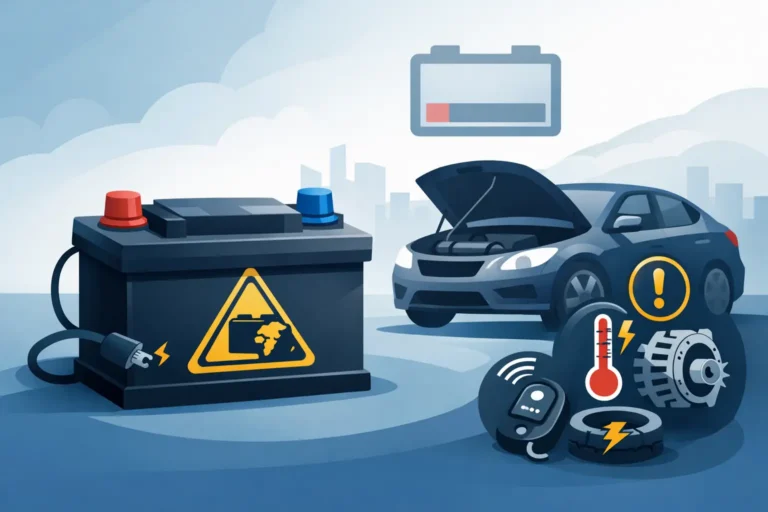
The battery-shaped light is one of the most misunderstood symbols. It normally means the charging system is not keeping the vehicle battery charged while the engine is running. The cause could be an alternator fault, a broken or slipping drive belt, damaged wiring, poor battery terminals or a failing battery.
If this light stays on, reduce electrical load where possible. Turn off unnecessary accessories, such as aftermarket spotlights or a fridge connected to the vehicle’s starting system, and head somewhere safe. The engine may continue running until the battery is flat, but modern vehicles can lose critical systems as voltage drops. Stopping early is better than being stranded at the side of the road.
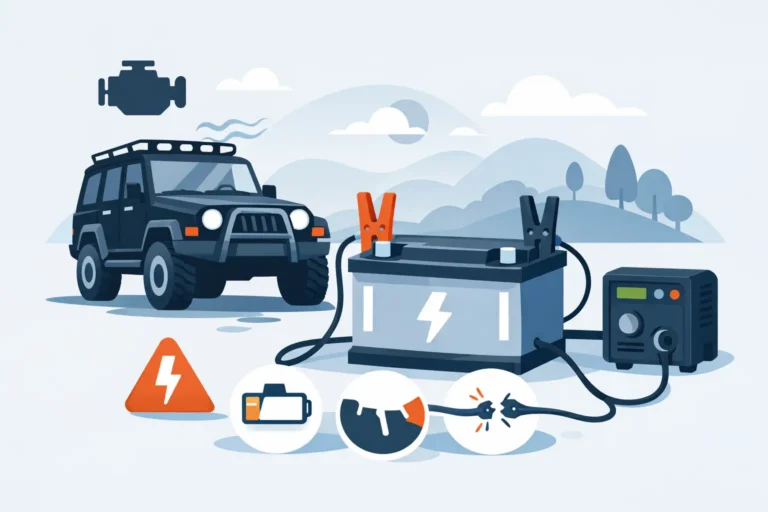
For 4WDs, caravans and campervans with dual batteries, it is also worth separating a vehicle charging fault from a problem in the auxiliary setup. A DC-DC charger, isolator, solar regulator or lithium battery monitor may show a warning of its own. Those systems need testing as a complete installation, not just a quick battery replacement.
Oil-pressure warning light
An oil-can symbol is a stop-now warning. It indicates low oil pressure, which means the engine may not be receiving the lubrication it needs. Pull over safely, switch the engine off and check the oil level after allowing time for it to settle.
Low oil is one possible cause, but adding oil is not always the answer. A failed oil pump, blocked pickup, incorrect oil or an electrical fault in the sensor circuit can trigger the light. If the level is normal or the light returns, do not keep driving. Arrange a proper inspection.
Engine-temperature warning light
A red temperature symbol or temperature gauge in the hot zone means the engine is overheating. Stop safely, switch off the engine and let it cool. Never remove a radiator or coolant reservoir cap while hot, as pressurised coolant can cause serious burns.
An overheating issue may stem from low coolant, a leak, a thermostat, radiator fan, water pump or wiring fault. Air-conditioning performance can also drop when an engine is running hot, particularly in Sunshine Coast traffic and summer conditions. The priority is protecting the engine first.
Brake-system warning light
A brake warning light may mean the handbrake is still applied, but it can also point to low brake fluid or a hydraulic braking fault. Check the handbrake is fully released. If the light remains on, the brake pedal feels soft, or braking performance changes, do not take chances.
The ABS light is different. Your normal brakes may still work, but the anti-lock braking function may be unavailable. That is particularly relevant on wet roads, gravel tracks and when towing. It should be checked promptly rather than left until the next service.
Amber lights that need a diagnosis soon
Check-engine warning light
The check-engine light can cover a wide range of faults, from a loose fuel cap through to sensor, ignition, emissions or fuel-system problems. On many later-model vehicles, the engine computer stores a fault code that gives a technician a useful direction. It is a starting point, not an automatic diagnosis.
Avoid clearing the light without finding the cause. Erasing codes may hide useful evidence while the fault remains. If the light is steady and the car is driving normally, book it in soon. If it flashes, the engine runs rough, lacks power or smells strongly of fuel, stop driving and seek advice.
Airbag or SRS warning light
An airbag light means the supplementary restraint system has detected a fault. The vehicle may still drive normally, but one or more airbags or seatbelt pretensioners may not operate as designed in a crash.
Common causes include wiring beneath seats, a steering-wheel clock spring, low system voltage or a fault stored after a previous repair. It needs diagnostic equipment that can read the airbag system safely. Do not probe airbag wiring or attempt home repairs around yellow SRS connectors.
Tyre-pressure monitoring warning light
A tyre-pressure monitoring system, or TPMS, light may indicate one or more tyres are underinflated, overinflated or that the system has a sensor fault. Check tyre pressures with a reliable gauge when tyres are cold, including the spare if your vehicle monitors it.
If the light appeared suddenly, inspect each tyre for damage and listen for air escaping. A tyre can look acceptable while being dangerously low, especially on a loaded ute, caravan or 4WD. Resetting the system without correcting the pressure only delays the problem.
Stability control, traction control and 4WD warnings
A skidding-car symbol often relates to electronic stability control or traction control. It may flash while the system is actively helping on a slippery surface, which is normal. If it stays on, the system may have been switched off or there may be a fault affecting wheel-speed sensors, steering-angle data or the braking system.
On 4WDs, driveline and terrain-mode warnings deserve the same care. A flashing 4WD light can sometimes mean the vehicle has not completed a selected shift between high and low range. If it persists, avoid forcing the system and have it assessed before heading onto the beach or track.
What to do when a dashboard light comes on
When a warning appears, stay calm and focus on the symptoms. Note the light’s colour, whether it is steady or flashing, and any message shown on the display. Pay attention to temperature, unusual noises, reduced power, burning smells or changes to steering and braking.
Then take the action that matches the risk:
- Pull over and switch off for red oil-pressure, overheating or serious brake warnings.
- Reduce electrical load and get to a safe location if the battery or charging light remains on.
- Drive gently and arrange a booking soon for most steady amber warnings when the vehicle otherwise feels normal.
- Do not continue if a light flashes, the engine misfires, smoke appears, or the vehicle becomes difficult to control.
A quick photo of the dash can be very helpful. It records the exact symbol and any wording before the message disappears. It also helps a technician understand whether multiple systems warned at once, which can point to a voltage, wiring or network issue.
Why warning lights need more than a code scan
A scan tool can retrieve stored fault codes, but the code rarely says which part should be replaced. For example, a low-voltage code might be caused by an ageing battery, alternator output, corrosion in a cable, a poor earth, an accessory drawing excessive current or a connection fault in an added 12V system.
Proper electrical diagnostics involve testing battery condition, charging voltage, voltage drop, wiring integrity, fuses, relays and live data where appropriate. That process takes longer than reading a code, but it avoids the common and costly cycle of replacing good parts.
This is especially relevant where a vehicle has a dual battery, solar, inverter, fridge, winch or aftermarket lighting. These additions can be excellent for touring, provided their wiring, charging paths and protection are designed to suit the vehicle and the way it is used.
If a warning light keeps returning, or your vehicle has more than one electrical symptom, Coastal Cool Air can assess the system and explain the findings before repairs begin. A clear diagnosis gives you the best chance of getting back to reliable daily driving or the next trip away with confidence.