Alternator Not Charging Battery? Start Here
You turn the key, the engine fires, and everything seems normal until the battery light stays on or the vehicle goes flat again the next day. If your alternator not charging battery problem keeps coming back, the issue is usually bigger than the battery itself. In many cases, the charging system is failing under load, dropping voltage intermittently, or being affected by wiring, belt, or control module faults that are easy to miss without proper testing.
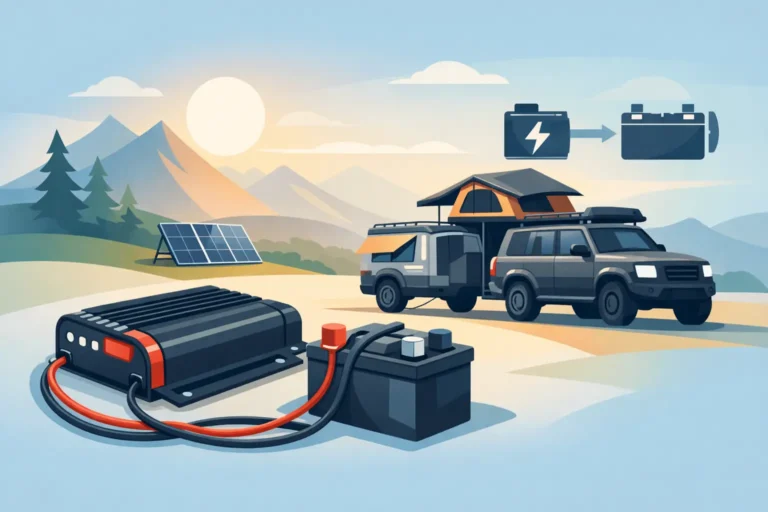
For everyday drivers, that means unreliable starts and the risk of being stranded. For 4WD owners, caravan users, and campervan setups, it can also mean fridge problems, low auxiliary battery charge, inverter cut-outs, and a trip that gets cut short for a fault that started under the hood.
What happens when the alternator stops charging properly
Your alternator is responsible for supplying power to the vehicle while the engine is running and maintaining battery charge. The battery mainly starts the engine. Once the engine is running, the alternator should take over electrical demand and keep system voltage in the proper range.
When that does not happen, the vehicle starts relying too heavily on the battery. At first, you might only notice a battery warning light, dim headlights, slower power windows, or dash faults that seem unrelated. Leave it long enough and the battery drains to the point where the vehicle will not restart.
Modern vehicles make this a little trickier than older ones. Some charging systems are computer-controlled and vary output depending on load, temperature, and fuel-saving strategies. That means a quick glance with a basic meter does not always tell the full story.
Common signs the alternator is not charging the battery
A charging fault rarely shows up as one neat symptom. More often, it builds gradually. The battery warning light is the obvious one, but not the only one worth paying attention to.
You may notice hard starting, flickering interior lights, weak air-conditioning blower speed, radio resets, warning messages on the dash, or electronics behaving strangely. In work utes and touring vehicles, auxiliary systems often give the first clue. A dual battery setup that suddenly stops charging properly, a DC-DC charger that keeps dropping out, or a lithium system that never reaches full charge can all point back to a problem with the vehicle charging side.
There is also a difference between an alternator that has completely failed and one that is underperforming. A weak alternator can still show some voltage at idle but fall short when headlights, fans, wipers, and accessories are switched on.
Why an alternator not charging battery issue happens
The alternator itself is a common failure point, but it is not the only one. Worn internal brushes, a failed voltage regulator, bad diodes, or damaged windings can all reduce or stop output. In some cases, the alternator charges when cold and drops off once it heats up.
Drive belt issues are another common cause. If the serpentine belt is loose, glazed, stretched, or contaminated, the alternator may not spin at the correct speed under load. A belt tensioner can also cause trouble, especially when it seems fine at idle but slips during acceleration or when more electrical demand is applied.
Then there is the wiring side. Corroded battery terminals, poor engine grounds, damaged charge cables, blown fusible links, or voltage drop in the main charging circuit can all mimic an alternator failure. This is where guesswork gets expensive. Replacing the alternator will not fix a bad cable or a poor earth.
On newer vehicles, smart charging systems add another layer. The alternator may be controlled by the ECU, body control module, or battery sensor. If that control signal is incorrect, the alternator may not be commanded to charge the way it should. That is why proper diagnostics matter, especially on vehicles with start-stop systems, battery monitoring sensors, or aftermarket power accessories.
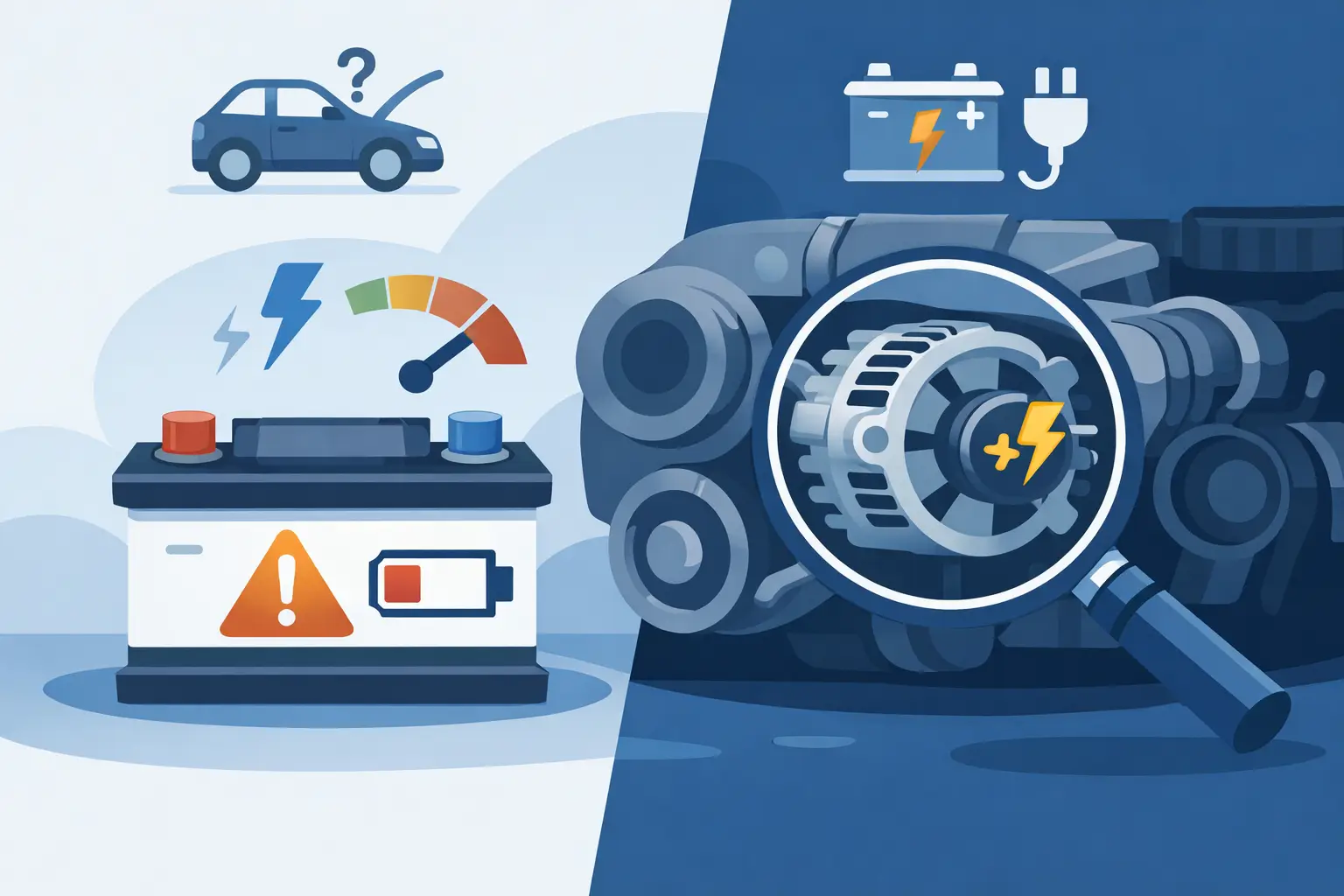
How to tell whether it is the battery or the alternator
This is the question most vehicle owners ask first, and the honest answer is that it depends on the failure pattern. A dead battery and a bad alternator often appear together because one can damage or expose the other.
If the battery is old, sulfated, or has an internal fault, it may not accept or hold charge even if the alternator is working. On the other hand, if the alternator has been undercharging for days or weeks, even a healthy battery can end up deeply discharged and weakened.
A proper test looks at both sides. Battery state of health matters. So does charging voltage, charging current, voltage drop through the cables, and performance under electrical load. On vehicles with dual battery systems or DC-DC chargers, you also need to confirm whether the problem is at the main alternator, the charging path to the auxiliary battery, or the battery management equipment itself.
Basic checks you can do before booking diagnostics
There are a few simple things worth checking if your alternator not charging battery concern has just started. Look for obvious belt damage, loose battery terminals, corrosion, and any burning smell around the alternator or wiring. If your dash battery light is on, do not ignore it and keep driving as if it will sort itself out.
If you have a multimeter, battery voltage with the engine off should usually be around 12.6 volts on a healthy, fully charged battery. With the engine running, many systems should show somewhere around 13.5 to 14.7 volts, though smart alternators can vary depending on conditions. The number alone is not enough to confirm a good system, but it can point you in the right direction.
What you should not do is replace parts based on internet guesses. Batteries, alternators, and charging modules are not cheap, and the wrong part swap can waste time without fixing the actual fault.
Why charging faults matter more in 4WD and camper setups
A standard passenger vehicle can limp along for a short time with a charging issue, but touring and off-grid vehicles have less room for error. Add a fridge, lights, charging ports, brake controllers, inverters, compressor loads, and caravan connections, and the charging system works harder than factory design often expected.
That does not mean accessories cause the problem by default. It does mean any weakness shows up faster. A borderline alternator, poor earth, or undersized cable may go unnoticed in a stock vehicle but become obvious in a setup that actually uses electrical power every day.
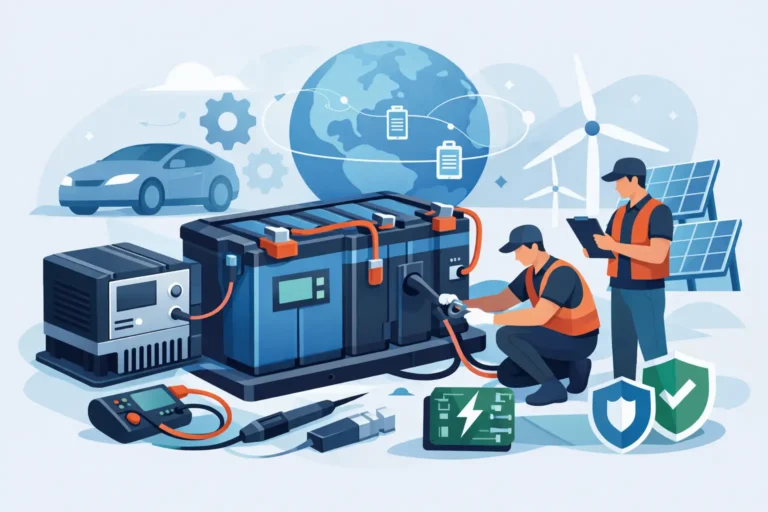
This is especially true where lithium batteries, DC-DC charging, and solar are involved. The system has to be designed so the alternator, battery chemistry, charge equipment, and cable sizing all work together. If one part is off, charging performance suffers and the symptoms can be misleading.
How a workshop diagnoses the real cause
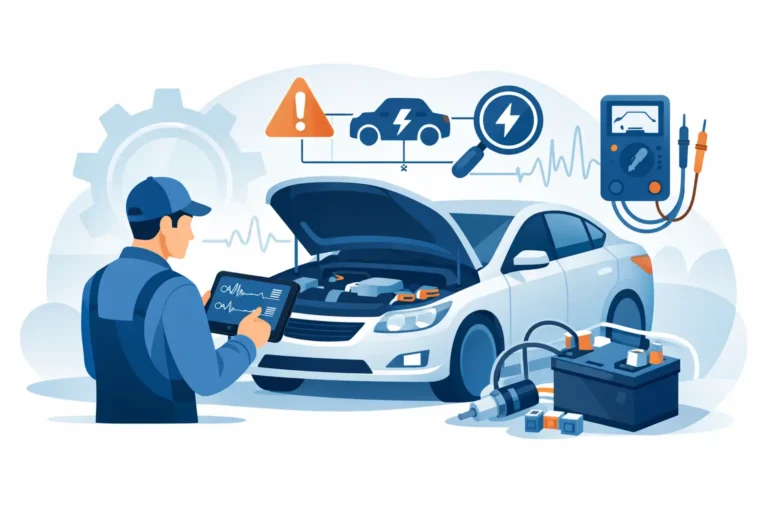
Professional charging system diagnostics should go beyond checking whether voltage is present. A good technician will test battery condition, alternator output, ripple voltage, circuit integrity, earth quality, and current delivery under load. If the vehicle uses smart charging control, scan data and control signals also need to be checked.
That process matters because two vehicles can have the same symptom and completely different faults. One may need a new alternator. Another may only need a belt tensioner and terminal repair. Another may have an auxiliary charging issue that starts at the battery isolator or DC-DC charger rather than the alternator itself.
At Coastal Cool Air, this kind of fault finding is part of what we do every day. The goal is simple – explain what is actually wrong before repairs begin, so you are not paying for trial-and-error.
Repair or replace?
If the alternator has internal failure, replacement is often the most practical option. In some cases, especially with certain models or specialty applications, repair may be possible. The right choice depends on parts quality, vehicle use, warranty, and whether the unit has suffered collateral damage from heat or wiring faults.
It is also worth looking at the battery at the same time. If an alternator has been failing for a while, the battery may already be compromised. Replacing one without assessing the other can leave you with an ongoing reliability issue that feels like the original problem never went away.
When to stop driving
If the battery warning light is on steadily, lights are dimming, electronics are dropping out, or the vehicle is struggling to crank, it is best to treat it as urgent. Once system voltage falls too low, the engine may stall or fail to restart. In modern vehicles, low voltage can also trigger multiple fault codes and misleading warning messages.
For travelers, tradies, and anyone towing a caravan, this is not a problem to push through until the weekend. Charging faults tend to get worse at the wrong time.
If your vehicle is showing signs the alternator is not charging properly, getting it tested early usually saves money, downtime, and a lot of frustration. A clear diagnosis beats replacing good parts every time. And when your vehicle is meant to get you to work, home, or out on the next trip, reliable charging is not a nice extra – it is the foundation everything else depends on.