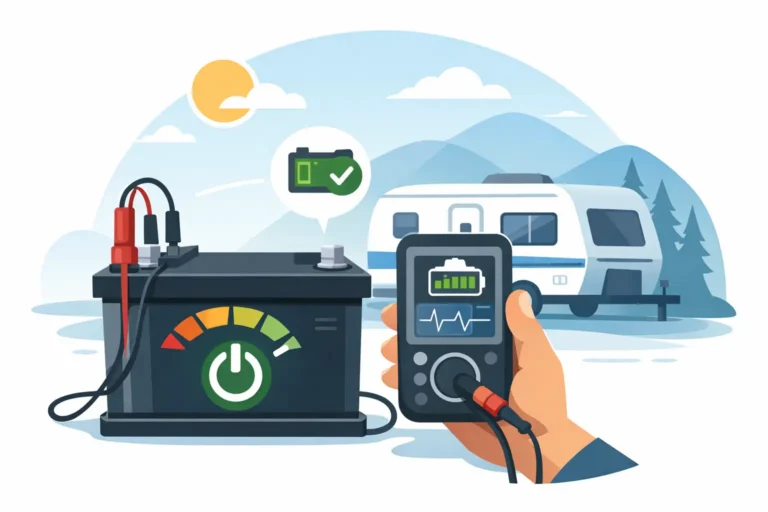
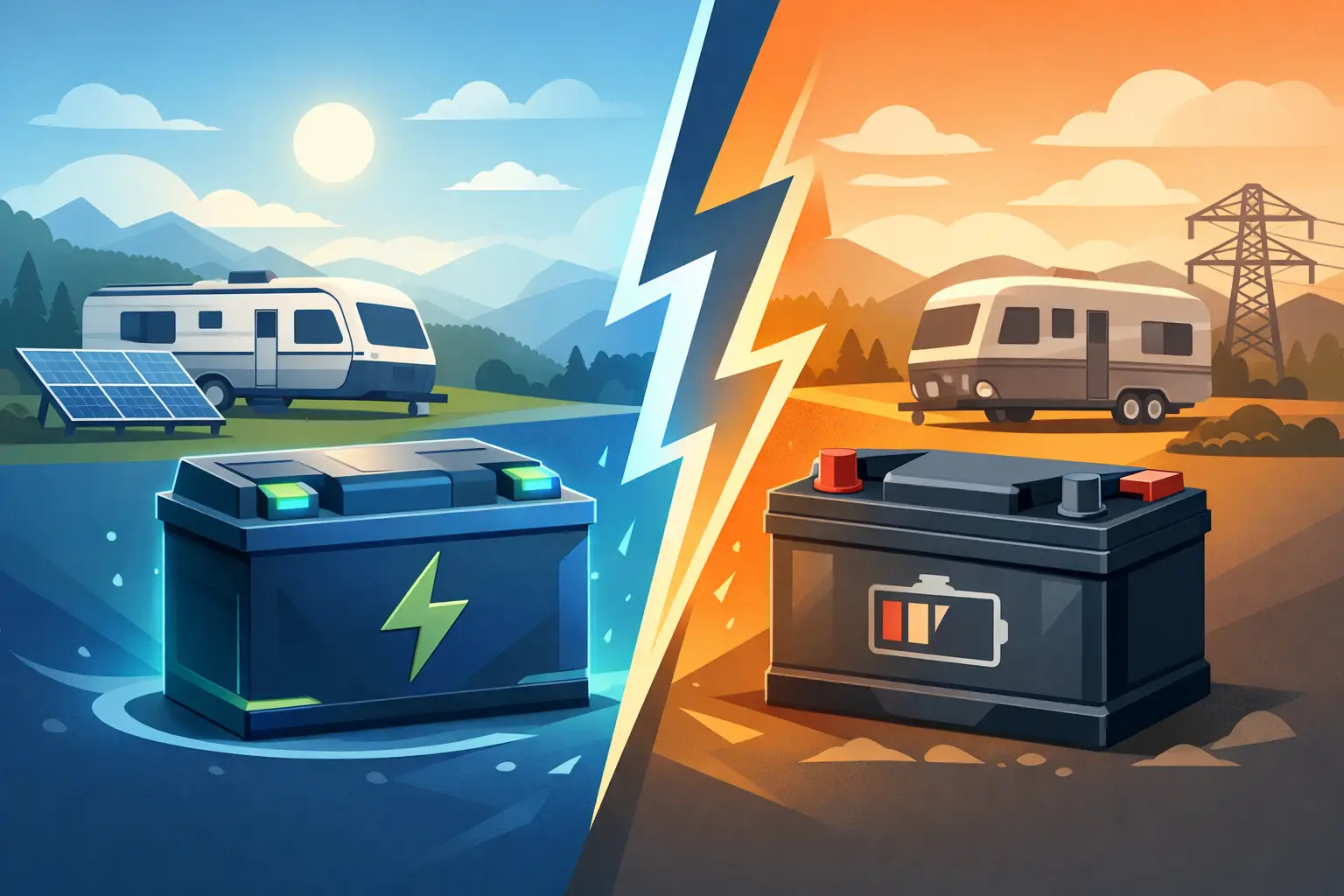
Lithium vs AGM Caravan Batteries
You usually notice the difference between battery types when the fridge has run all night, the lights are still on, and one van is ready for another day while the other is already chasing a powered site. That is where the lithium vs AGM caravan batteries question stops being theoretical and starts affecting how you travel.
For some caravan owners, AGM is still a sensible choice. For others, lithium is a clear upgrade that changes how long they can stay off-grid, how quickly they recharge, and how much weight they carry. The right answer depends on your setup, your budget, and how you actually use the van.
Lithium vs AGM caravan batteries – what is the real difference?
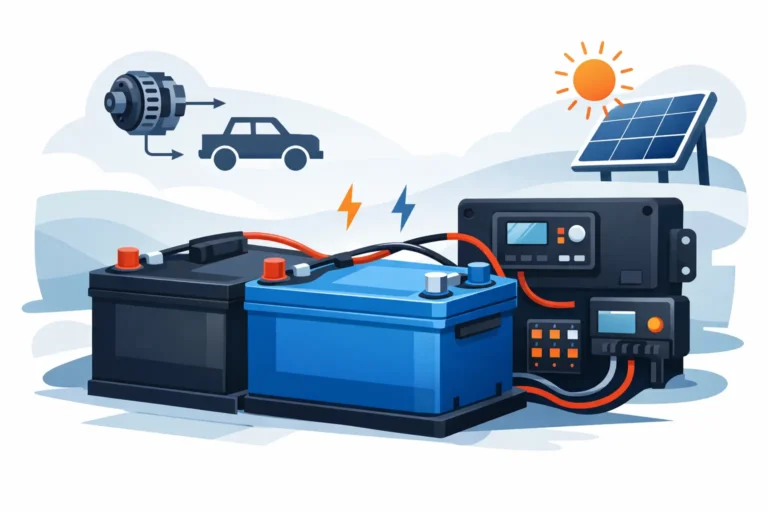
At a basic level, both battery types store 12V power for your caravan systems. That includes lights, water pumps, fans, fridges, charging devices, and sometimes inverters for 240V appliances. The big difference is how efficiently they deliver that power, how much of their rated capacity you can realistically use, and how they behave under load.
AGM stands for Absorbent Glass Mat. It is a sealed lead-acid battery that has been a common choice in caravans for years. AGM batteries are proven, widely available, and generally cheaper upfront. They suit straightforward touring setups, especially where power demands are modest.
Lithium batteries, usually LiFePO4 in caravan applications, are lighter, hold voltage better, recharge faster, and allow far deeper discharge without shortening battery life the way lead-acid does. They cost more to buy, but in many setups they perform better across the board.
That sounds simple enough, but the detail matters. Plenty of people compare a 100Ah AGM to a 100Ah lithium and assume they are equal. In the real world, they are not.
Usable power matters more than the sticker
This is where many caravan owners get caught out. A battery’s amp-hour rating only tells part of the story.
With AGM, you generally do not want to discharge the battery much beyond 50 per cent if you want reasonable life from it. That means a 100Ah AGM battery often gives you about 50Ah of practical usable capacity. Push it deeper and you can, but repeated deep discharge will shorten its lifespan.
Lithium is different. A 100Ah lithium battery can usually provide around 80 to 100Ah of usable capacity depending on the system and manufacturer recommendations. It handles deep discharge far better, and it keeps its voltage steadier as it empties. In practical terms, your fridge and appliances are happier for longer.
That means one 100Ah lithium battery can often do the job of roughly two 100Ah AGM batteries in real use. Once you factor in space and weight, that changes the conversation quickly.
Weight and space in a caravan setup
If you tow a van, weight is never just a number on paper. It affects payload, ball weight, petrol use, and how much gear you can carry without pushing limits.
AGM batteries are heavy. A typical 100Ah AGM can weigh around 25 to 30kg. A comparable lithium battery may weigh closer to 10 to 15kg. If your van uses a battery bank, the difference becomes significant fast.
For travellers trying to free up payload for water, tools, recovery gear, food, or simply stay legal, lithium has a clear advantage. It also helps when battery space is tight. A more compact system with greater usable capacity can make layout and installation much easier.
Charging speed and off-grid recovery
Charging performance is one of the biggest practical differences in the lithium vs AGM caravan batteries debate.
AGM batteries charge slower, particularly as they approach full charge. They also need the correct charging profile to reach and maintain a healthy state of charge. If your charging sources are limited to short towing periods or patchy solar, AGM can take a while to recover.
Lithium batteries accept charge much faster. If you are driving between stops, using DC-DC charging, or relying on solar during shorter daylight windows, lithium can recover more quickly and make better use of available charging time.
That matters if you run a compressor fridge, charge mobiles and laptops, use a coffee machine through an inverter, or spend a lot of time free camping. A battery that recharges faster gives you more flexibility and less stress.
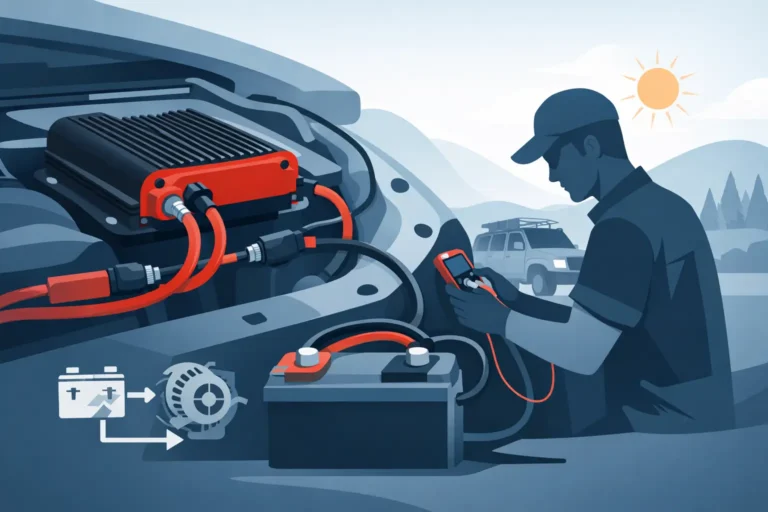
Of course, you cannot just drop lithium into every older system and call it done. Chargers, solar regulators, DC-DC units, and inverter settings need to suit the battery chemistry. In some vans, upgrading to lithium also means upgrading charging equipment and protection hardware.
Lifespan and long-term value
This is where upfront price can be misleading.
AGM batteries are cheaper to purchase, which is why they still appeal to many owners. If you only use the caravan a handful of times a year and mostly stay in caravan parks, AGM may be perfectly adequate. There is no point paying for capability you will not use.
But if you travel regularly, spend time off-grid, or cycle your batteries hard, lithium often works out better over time. Lithium batteries usually deliver far more charge cycles than AGM. They also maintain performance better through repeated use.
So yes, lithium costs more at the start. But when you look at usable capacity, lifespan, charging efficiency, and reduced need for replacement, the value equation often shifts in its favour.
Performance under load
Not all caravan loads are gentle. Fridges cycle, pumps start and stop, fans run overnight, and inverters can place a serious demand on the battery bank.
AGM voltage tends to sag more under load, especially as the battery discharges. That can affect the performance of some appliances and make the system feel tired earlier in the discharge cycle.
Lithium holds voltage more consistently. That helps appliances run more reliably, and it is one reason lithium systems tend to feel stronger in everyday use. If you are using an inverter for induction cooking, a coffee machine, or charging multiple devices, this becomes more noticeable.
Safety, quality and installation matter
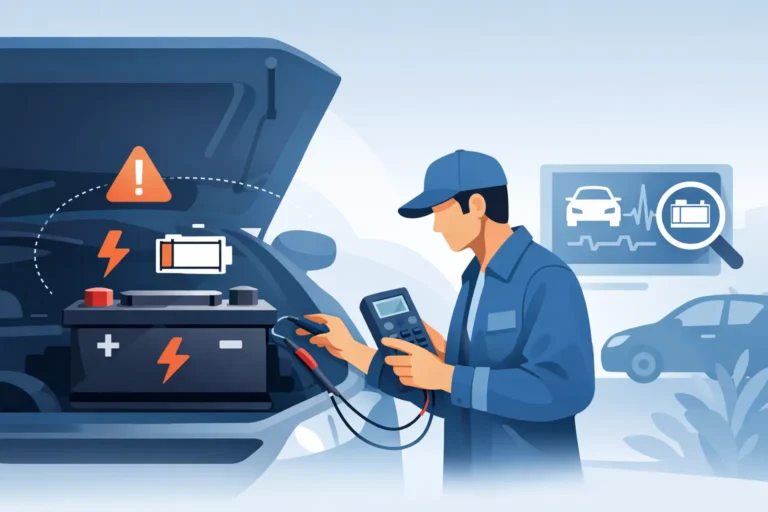
A lot of battery arguments online are too broad to be useful. Not all AGM batteries are equal, and not all lithium batteries are equal either.
A quality lithium battery with a proper internal battery management system is a very different proposition from a cheap no-name unit with vague specs. The same goes for charging gear, cable sizing, circuit protection, and overall installation quality.
That is why system design matters just as much as battery choice. A good caravan power setup is matched to your loads, your charging sources, and your travel style. There is no benefit in fitting lithium if the rest of the system cannot support it properly.
Cold-weather performance can also be relevant. Some lithium batteries have charging restrictions in low temperatures, which matters more in colder regions or winter touring. For most Sunshine Coast travellers this is less of an issue, but if you head south or into alpine areas, it should be part of the conversation.
So which battery is right for your caravan?
If you do shorter trips, stay on powered sites often, run a basic 12V setup, and want lower upfront cost, AGM can still be the right fit. It is familiar, dependable, and suitable for many traditional caravan setups.
If you free camp regularly, run higher loads, want faster charging, need more usable capacity, or care about reducing weight, lithium usually makes more sense. It is particularly worthwhile for modern caravans with solar, DC-DC charging, inverters, and bigger off-grid expectations.
For some owners, the best move is not simply swapping batteries but reviewing the whole system. Battery size, charger compatibility, solar input, wiring, and appliance loads all need to line up. That is where clear advice matters. A battery should suit your van and how you travel, not just what looked good on a spec sheet.
Coastal Cool Air regularly sees setups where the battery itself is only part of the issue. Poor charging, undersized cabling, or mismatched components can make a decent battery perform badly. Getting the right answer usually starts with understanding what the van is actually drawing and how it is being recharged.
If you are weighing up lithium and AGM, the simplest rule is this: buy for the way you camp now, and the way you realistically want to camp next. Spending less upfront can be the smart move. So can upgrading once and doing it properly. The best system is the one that keeps your caravan reliable when you are well away from the nearest powered site.