Caravan DC Charger Not Charging? Find the Fault
A caravan DC charger not charging is rarely a problem to ignore until the next campsite. If your battery is low after a day of driving, the fridge is cutting out, or the charger display is showing an error, your off-grid setup may not have the charging source it needs. The good news is that most faults come back to a small number of issues: no power getting to the charger, a poor connection, a control-wire problem, incorrect settings, or a battery that has protected itself.
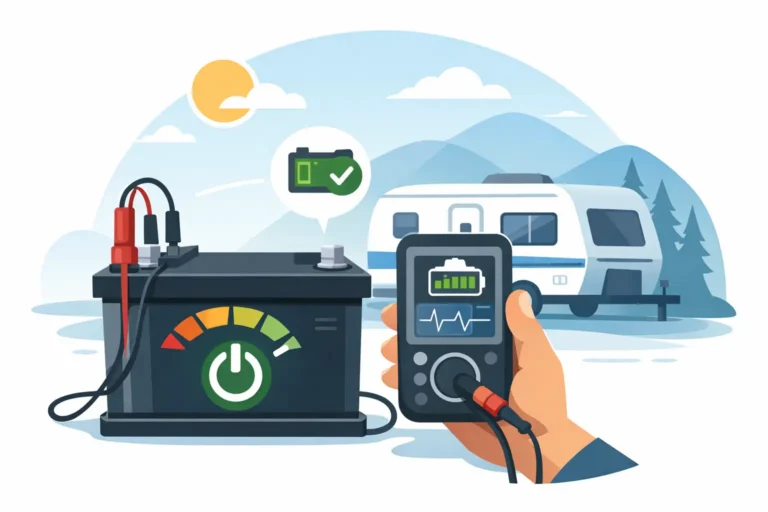
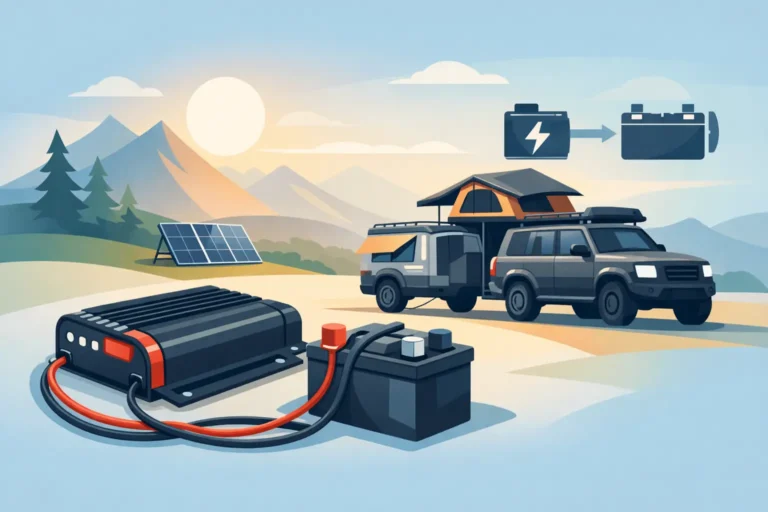
A DC-DC charger takes power from the vehicle alternator and delivers the correct charging profile to your caravan or camper battery. It is not simply a bigger cable between the vehicle and battery. That is why a system can look connected, yet still fail to charge properly.
Caravan DC Charger Not Charging: Start With the Basics
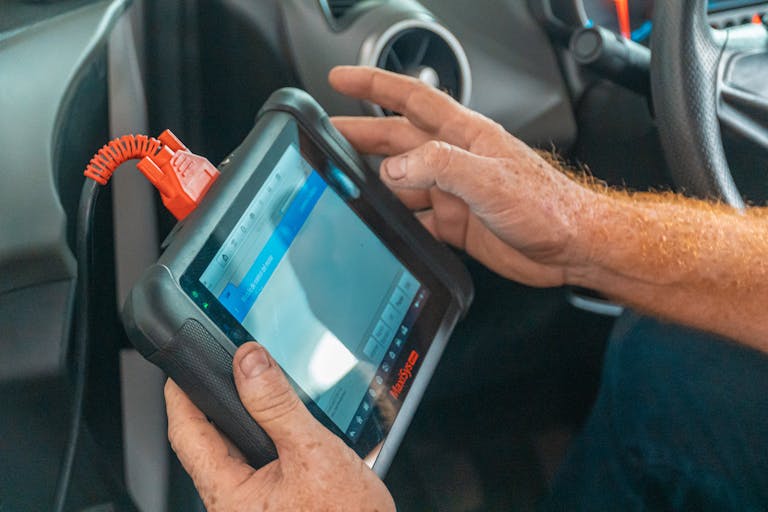
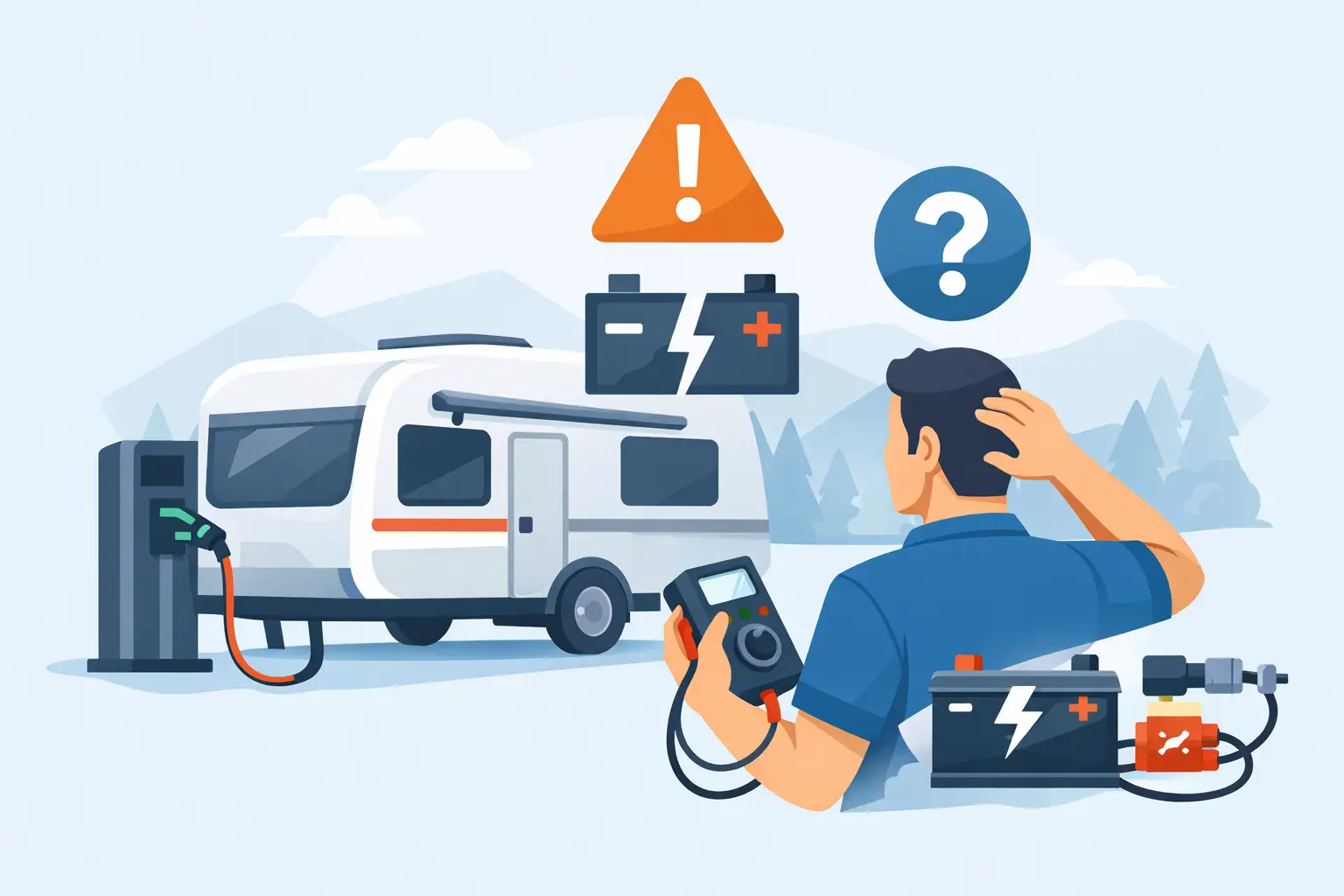
Before pulling panels apart or replacing parts, check what the charger is actually doing. Most quality units have status lights, a screen, Bluetooth monitoring or fault codes. Note whether the unit has no power at all, is switched on but idle, is reporting a fault, or appears to be charging but the battery voltage is not rising.
Start the tow vehicle and allow it to idle for a few minutes. Some smart alternators need a higher engine speed before they deliver a useful charging voltage, while some DC-DC chargers need an ignition trigger before they wake up. Check the charger manual for its normal light sequence rather than relying on a single flashing light to diagnose the issue.
It also helps to separate alternator charging from solar charging. If your charger has both vehicle and solar inputs, solar may be keeping the battery alive while the vehicle input has failed. Conversely, a shaded panel or solar fuse fault can make it look as though the whole charger has stopped working.
The Common Reasons a DC-DC Charger Stops Charging
Blown fuse, circuit breaker or loose connection
Every charging circuit should have correctly sized protection close to the power source and battery. A blown fuse is an obvious possibility, but it is not always the root cause. Fuses can fail because of a short circuit, damaged cable, loose terminal or an incorrectly sized installation. Replacing it without finding out why it blew can lead to the same problem again.
Inspect battery terminals, Anderson plugs, fuse holders, circuit breakers and earth points for heat marks, corrosion, loose fasteners or damaged insulation. A connection can look acceptable from the outside but have high resistance inside the terminal. That resistance creates voltage drop and heat, which limits charging and can eventually damage cables or connectors.
Not enough voltage at the charger input
A DC-DC charger needs sufficient voltage at its input before it will start. Voltage can be healthy at the vehicle battery but too low by the time it reaches the caravan drawbar or rear-mounted charger. Long cable runs, undersized cable, poor earths and tired Anderson plugs are common causes.
This is particularly noticeable with modern vehicles fitted with smart alternators. Their output voltage may reduce once the start battery is charged, which is good for vehicle efficiency but can leave an older or incorrectly configured charger without enough input voltage. A charger with an ignition or vehicle-running trigger can overcome this in many setups, but the trigger wiring needs to be installed and functioning correctly.
A proper voltage-drop test under load is more useful than a quick voltage check with nothing running. It shows whether the cable and connections can actually deliver current when the charger asks for it.
Ignition trigger or smart-alternator wiring fault
Many chargers use an ignition feed, D+ signal, voltage-sensing function or a dedicated trigger wire to know when the vehicle is running. If that signal is missing, the charger may stay in standby even with the engine running.
This fault often appears after vehicle accessories have been added, wiring has been repaired, or a caravan has been connected to a different tow vehicle. It can also happen when a trigger has been tapped into a circuit that is not live in all required ignition positions. A test light or multimeter can confirm whether the trigger reaches the charger, but automotive wiring should be tested carefully to avoid damaging vehicle electronics.
Battery settings do not match the battery
Lithium, AGM, gel and flooded lead-acid batteries need different charge voltages and charging stages. If the charger is set to the wrong battery type, it may charge poorly, stop early or create a battery-life issue over time.
Lithium batteries deserve extra care. Many have a battery management system, known as a BMS, that protects the cells from unsafe voltage, current and temperature. If the BMS has disconnected the battery because it is too cold, too hot, too flat or outside a safe operating range, the charger may appear faulty even though it is doing exactly what it should.
Check the battery manufacturer’s recommended charge profile and maximum charge current. A larger charger is not automatically better. It must suit the battery bank, cable size and the rest of the system.
Poor earth connection
A DC-DC charger may use a dedicated negative cable back to the battery, a chassis earth, or a combination depending on the installation. A poor negative connection can cause the same symptoms as a poor positive supply: low input voltage, intermittent charging, error codes and hot terminals.
Caravans and camper trailers are exposed to water, dust, vibration and coastal air. Earth points that were fine when installed can deteriorate over time. Clean, tight, correctly sized connections are essential, especially for higher-output lithium charging systems.
Charger protection mode or internal failure
Quality chargers protect themselves from over-temperature, reverse polarity, low input voltage and other faults. A charger mounted in a cramped, unventilated compartment may reduce output or shut down on a hot summer run. Check that vents are clear and that the unit is not buried beside heat-producing equipment.
Internal charger faults are less common than wiring or setup issues, but they do happen. If the input supply, trigger, earth, output wiring and battery condition all test correctly, the charger itself may need bench testing or replacement.
A Safe Fault-Finding Order
If you are comfortable using a multimeter, a logical test order can save time and prevent unnecessary parts replacement:
- Confirm the caravan battery voltage with the engine off, then again with the engine running and the charger expected to operate.
- Check charger status lights or monitoring information, including any temperature, battery or input-voltage fault codes.
- Measure voltage at the charger input terminals, not just at the vehicle battery or Anderson plug.
- Check the charger output voltage and compare its battery setting with the battery manufacturer’s specifications.
- Inspect and test fuses, breakers, cable terminations, plugs and negative connections under load.
Do not bridge fuses, bypass breakers or force a lithium battery BMS to reconnect. Those safeguards are there to prevent cable damage, battery damage and fire risk. If you find melted insulation, hot plugs, repeated fuse failures or a burning smell, stop using the charging circuit until it has been inspected.
When the Fault Only Happens While Towing
Intermittent faults are frustrating because the charger may work perfectly in the driveway. Vibration can expose a loose Anderson plug terminal, fractured cable, weak crimp or marginal earth connection. Heat can also cause resistance to rise, especially in undersized wiring or worn connectors.
Pay attention to the pattern. Does charging stop after an hour on the highway? Only on rough roads? Only when the solar system is connected? Does it work with one tow vehicle but not another? These details narrow down the cause quickly and are valuable information for a technician.
For caravans with a fridge, inverter, solar regulator and multiple batteries, the issue may be system demand rather than charger failure. A 25A charger cannot fully recharge a heavily discharged battery bank during a short drive while the fridge and other loads are also operating. The charger may be working normally, but the energy budget does not add up. In that case, improving solar input, reducing loads, increasing charge capacity or changing travel habits may be the better fix.
Get the Right Diagnosis Before Your Next Trip
A caravan charging system should be tested as a complete circuit, from alternator and trigger signal through to cable size, connections, charger settings and battery condition. Replacing the charger first can be expensive and may not solve a voltage-drop or wiring fault.
For Sunshine Coast travellers heading away from mains power, Coastal Cool Air can assess DC-DC charging, lithium battery systems, solar integration and the wiring that ties it all together. A clear diagnosis before you leave is far better than discovering a flat house battery when you are set up for the night.