A Practical Guide to Auto Electrical Fault Finding
A vehicle with an electrical fault rarely fails at a convenient time. It might be the air con fan cutting out on a hot run, a starter that only clicks at the servo, or a caravan battery that stops charging halfway through a trip. That is why a proper guide to auto electrical fault finding matters – not just to identify the fault, but to avoid replacing good parts and chasing the wrong problem.
Auto electrical issues can look dramatic, but the cause is often simple. A weak battery can mimic a faulty alternator. A poor earth can behave like a dead sensor. A damaged wire can create faults that come and go with vibration, heat or rain. Good diagnosis is less about guesswork and more about a method.
What auto electrical fault finding actually involves
At workshop level, fault finding means testing the system in a logical order until the fault is proven. That sounds basic, but it is where many expensive mistakes happen. Swapping batteries, alternators, control modules or relays without proper testing can turn a small repair into a costly one.
Most vehicle electrical systems fall into a few main groups. You have starting and charging, lighting, accessories, engine management, air-conditioning controls and, in many 4WDs or touring vehicles, secondary 12V systems such as dual batteries, inverters and solar inputs. Each group has its own failure patterns, but the diagnostic process stays much the same.
The goal is to answer a few simple questions. Is power getting where it should? Is earth return solid? Is the component being commanded to operate? And is the component itself actually capable of doing the job?
Start with the fault, not the part
A good guide to auto electrical fault finding always starts with symptom checking. Before touching a meter, pin down exactly what the vehicle is doing.
Does the fault happen all the time or only when hot? Is it worse on corrugated roads? Did it start after another repair, accessory installation or battery replacement? Does it affect one circuit or several? These details matter because they tell you whether you are likely dealing with a supply issue, a communication issue, a shared earth problem or a failed component.
If several unrelated items stop working together, look for what they share. That could be an ignition feed, a fuse block, a common earth point or a body control module input. If only one item fails, the problem is more likely local to that circuit.
The basics still catch plenty of faults
The first checks are not glamorous, but they solve a lot of jobs. Battery condition comes first. A battery can show 12 volts at rest and still collapse under load. That is why voltage alone is not enough. You need to know what happens during cranking or when a high load is applied.
Battery terminals should be tight and clean, with no hidden corrosion between the clamp and post. Main earth connections should be secure at the battery, body and engine. Fuse checks should go beyond a quick glance. A fuse can look fine and still have poor contact at the holder, heat damage or a supply issue upstream.
This is also where visual inspection earns its keep. Look for rubbed-through wiring, melted insulation, green corrosion in plugs, water entry, aftermarket joins and signs of overheating. On 4WDs, caravans and campervans, accessory wiring is often exposed to dust, vibration and moisture, so faults can sit outside the factory loom.
Voltage drop testing beats guessing
If there is one habit that separates proper electrical diagnosis from parts swapping, it is voltage drop testing. Rather than just checking whether voltage exists, you test how much voltage is being lost across a cable, connection or earth path while the circuit is operating.
For example, a starter motor that receives poor current through a corroded positive cable may still show battery voltage on a simple test. Under load, though, that cable can lose enough voltage to stop the starter from doing its job. The same applies to earth circuits. A bad earth can create slow cranking, dim lights, erratic sensor readings or charging issues.
Voltage drop testing is especially useful on older vehicles, touring setups and anything with added accessories. Long cable runs to rear batteries, fridges, trailers and canopies can suffer from undersized cable, poor joins or tired connectors. The result is low performance that gets blamed on the battery when the real issue is cable loss.
Common faults and what they often point to
No two jobs are identical, but patterns do emerge. A no-start with a single click may be battery condition, cable resistance, a starter fault or a control-side issue such as a relay or inhibitor switch. Headlights that brighten and dim with engine speed often point toward charging system problems. Repeated flat batteries can come from a parasitic draw, poor charging, short-trip use or a battery that is simply past its best.
Intermittent faults are usually the ones that test patience. These often come down to heat-sensitive components, broken strands inside wiring, loose terminals or moisture intrusion. If the fault only appears when driving on rough roads, vibration is part of the story. If it appears after heavy rain or beach work, corrosion or water entry moves up the list.
With modern vehicles, warning lights and odd behaviour can also be caused by low system voltage rather than a failed module. That is why battery and charging health should be confirmed early. Electronic systems do not like unstable voltage, and they can produce misleading symptoms when supply drops out.
Fault finding on dual battery and off-grid setups
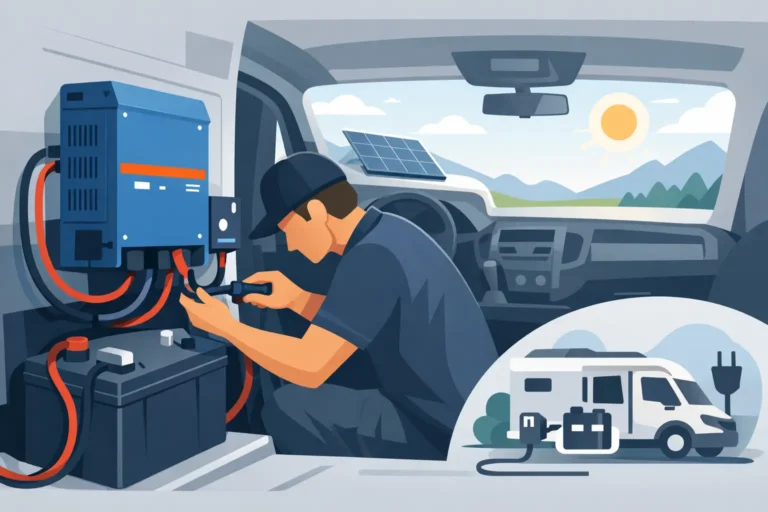
This is where things can get more layered. Touring vehicles, caravans and campervans often combine factory electrics with DC-DC chargers, solar regulators, lithium batteries, inverters and battery monitors. When one part of the system stops performing, the fault may not be where the symptom appears.
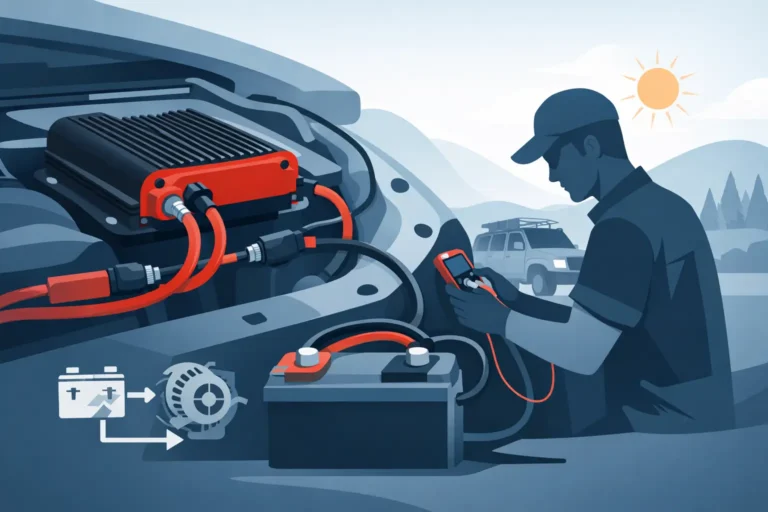
A secondary battery not charging could be caused by poor alternator input, incorrect charger settings, voltage drop on cable runs, a failed isolator, solar regulator issues or battery protection settings. A fridge cutting out overnight may be battery capacity, low-voltage cut-off, bad cable sizing or simply higher load than expected.
Lithium setups add benefits, but they also need correct design and programming. Battery management systems can disconnect to protect the battery, which can look like a random system failure if you do not know what parameters triggered it. In these cases, diagnosis has to consider the whole system rather than one component in isolation.
Why scan tools help, but do not replace testing
Scan tools are useful, particularly on later-model vehicles, but fault codes are only one piece of the puzzle. A code tells you what the vehicle has noticed, not always what caused it. For instance, a sensor code may be triggered by wiring resistance, poor earth, connector damage or supply voltage problems rather than a failed sensor.
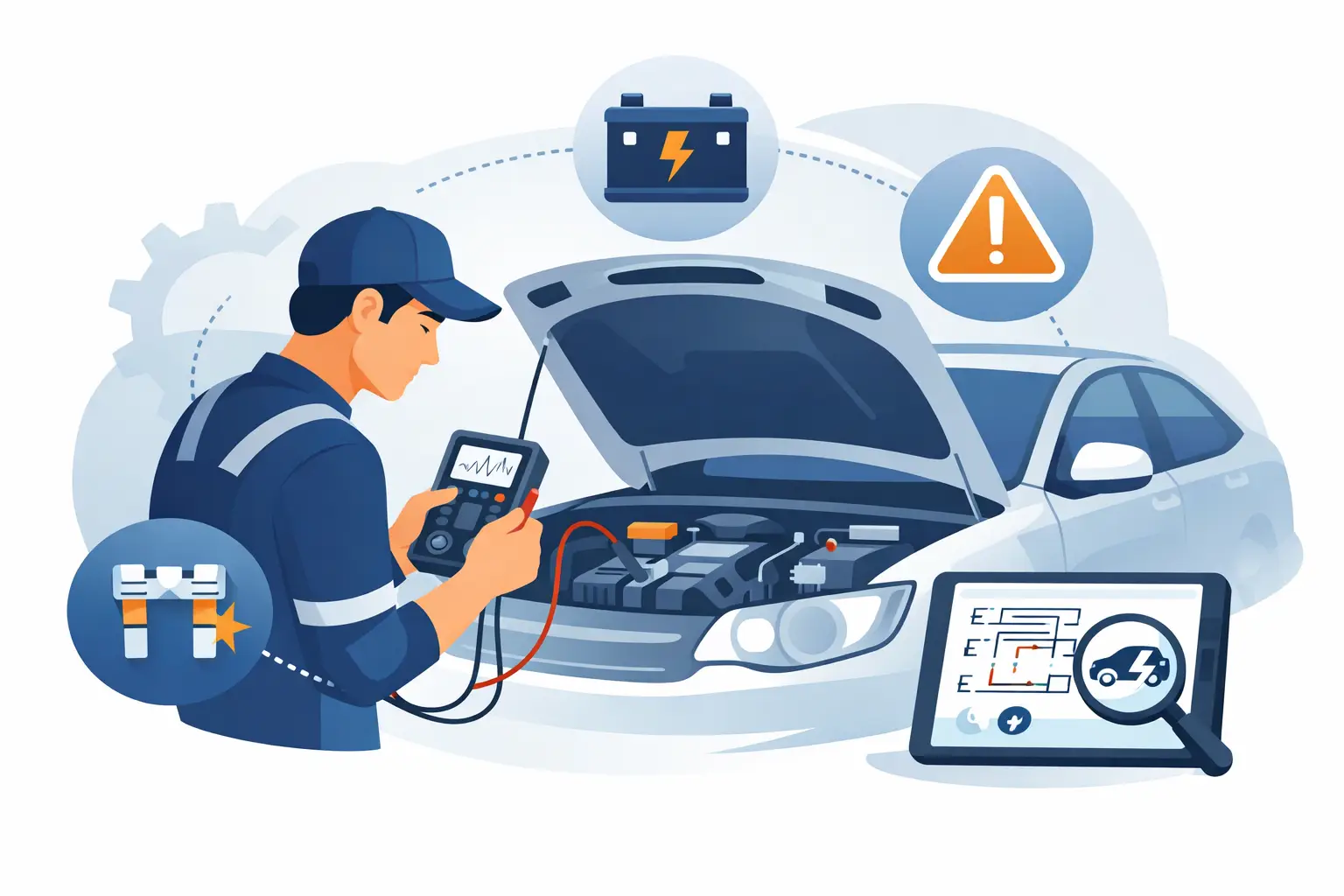
Live data is often more useful than the code itself. Seeing battery voltage, charging voltage, sensor values and command signals in real time can point the job in the right direction. Even so, scan data needs to be backed up with physical testing. The meter, test light and wiring diagram still matter.
When to stop and get it properly diagnosed
Some checks are reasonable for an owner, such as inspecting terminals, checking obvious fuses and noting when the fault occurs. Beyond that, modern vehicles can punish guesswork. Shorting the wrong circuit, fitting the wrong fuse rating or disturbing sensitive wiring can turn one problem into several.
If the issue involves repeated battery drain, intermittent no-starts, charging faults, CAN communication issues, air-conditioning electrical controls or integrated 12V touring systems, proper diagnosis usually saves time and money. The same goes for faults in caravans and campervans where vehicle charging, solar and battery systems overlap.
A dependable workshop will explain what they found before repairs go ahead. That matters because the best result is not just fixing the symptom. It is knowing why it failed, what needs repair now, and whether there is anything else likely to cause trouble on the next trip.
A sensible approach saves money
Electrical diagnosis is really about being systematic. Confirm the fault. Check the basics. Test the circuit under load. Prove the cause before replacing parts. It is not flashy, but it is the difference between a reliable repair and an expensive hunch.
For drivers around the Sunshine Coast who rely on their vehicle for work, school runs, towing or weekends away, that practical approach makes all the difference. When the wiring, charging or accessory system starts playing up, slow down, test properly and let the evidence lead the repair. That is usually the fastest way back to a vehicle you can trust.