Why Does Car Aircon Leak Water?
You pull up after a drive, glance under the car, and spot a small puddle near the passenger side. Fair question follows straight away – why does car aircon leak water, and is it a problem or just part of how the system works? In plenty of cases, it is completely normal. In others, that water is a clue that something is blocked, misdirected or starting to fail.
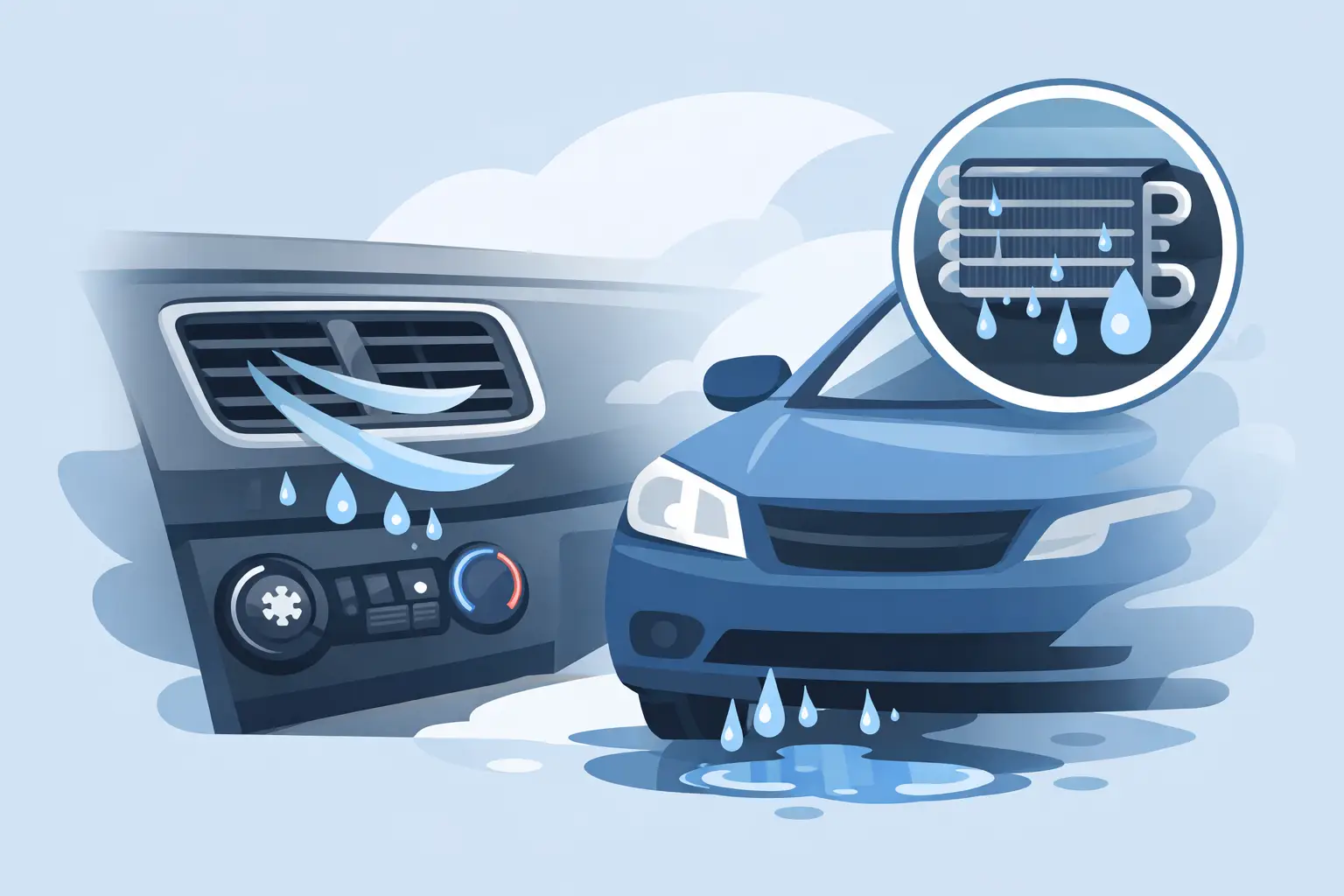
Car air-conditioning does more than blow cold air. It also removes moisture from the cabin air. As warm, humid air passes over the evaporator inside the HVAC box, condensation forms, much like water beads on a cold drink on a hot day. That moisture has to go somewhere, so the system is designed to let it drain out underneath the vehicle.
If that is all that is happening, there is usually no cause for alarm. You may notice a clear, odourless drip after using the air-con on a warm Sunshine Coast day, especially if the weather is humid. That is the system doing exactly what it should.
Why does car aircon leak water under the car?
The simplest answer is condensation. When refrigerant passes through the evaporator, it chills the coil. Moisture in the air condenses on that cold surface and drains out through a dedicated evaporator drain tube. The amount of water can vary quite a bit depending on outside temperature, humidity, cabin settings and how long the system has been running.
That means one car might leave only a few drops, while another leaves a noticeable puddle after a long drive. Both can be normal. Vehicles used in coastal areas or during muggy summer conditions often produce more condensate than owners expect.
Where people get caught out is assuming all water is harmless. The location, amount and timing matter. Water dripping under the car after the air-con has been running is generally fine. Water soaking into the carpet, dripping from behind the dash, or continuing in odd places is a different story.
When water from the air-con is normal
Normal air-con water is usually clear and appears underneath the vehicle, often around the firewall area on the passenger side. It tends to show up after the system has been operating for a while, particularly with the fan on and the cabin cooling properly.
A good sign is that the air-con is still working as expected. Air is cold, airflow is steady, there are no strange smells, and there is no dampness inside the cabin. In that case, the drain is likely doing its job.
Some drivers mistake this for an engine coolant leak, but coolant usually looks coloured and may have a sweet smell. Plain condensation is just water. If you are unsure, it is worth checking rather than guessing, because cooling system leaks and air-con condensation can sometimes appear in similar spots under the vehicle.
When a car aircon water leak points to a fault
The main problem is not usually that the system is creating water. The problem is when that water cannot leave the vehicle the way it should. A blocked evaporator drain is one of the most common causes. Dust, debris, mould growth or even insect activity can clog the drain tube, forcing the water back into the HVAC box and then into the cabin.
If you have wet carpet on the passenger side, fogging windows, a musty smell or unexplained dampness, a blocked drain is high on the list. Left alone, this can lead to mould, unpleasant odours and damage to insulation, trim and in some cases electrical components.
Another possibility is a poorly seated hose, a cracked drain fitting or damage around the evaporator housing. This is less common than a simple blockage, but it does happen, especially in older vehicles or those that have had previous dash or heater box work.
A failing cabin filter setup can also contribute if water is being redirected or airflow is restricted enough to cause icing. In some systems, an evaporator that freezes up and then thaws can create excess water and odd drainage behaviour. That sort of fault often comes with weak cooling, fluctuating vent temperature or reduced airflow.
Signs your air-con leak is not just harmless condensation
There are a few signs that tell you this needs a proper inspection rather than a wait-and-see approach. If the carpet is wet, if water is dripping into the footwell, or if the windows keep misting up from the inside, the drain system may be blocked or the evaporator box may be leaking internally.
If the air-con is not cooling well and you still have water issues, there may be more than one fault going on. Low refrigerant, sensor issues, blower problems or evaporator icing can all change the way moisture behaves in the system.
Pay attention to smell as well. Clean condensation does not usually stink. A mouldy or sour smell through the vents can mean moisture is hanging around inside the HVAC box instead of draining properly.
And if the fluid under the car is not clear, do not assume it is air-con water. Engine coolant, washer fluid and even transmission fluid are different problems entirely, and they need a different response.
Why does car aircon leak water inside the cabin?
When people ask why does car aircon leak water, what they often mean is why is it leaking inside the vehicle. That is where it stops being normal.
The most common cause is a blocked drain tube. Instead of exiting under the car, condensate backs up and spills into the passenger footwell. Depending on the vehicle design, it might drip from under the dash, run behind trim panels or soak straight into the carpet underlay.
There are a few other possibilities too. A damaged evaporator case, loose drain connection, poor-quality previous repair or missing seal can all let water escape into the cabin. In some vehicles, leaves and debris entering the fresh air intake can also contribute to drainage issues and overflow.
Because modern vehicles pack a lot of wiring and control modules into tight spaces, cabin water leaks are worth fixing early. What starts as a damp mat can turn into corrosion, electrical faults or recurring mould problems if it is ignored.
Can you fix it yourself?
It depends on the vehicle and on what is actually wrong. If you can clearly see the evaporator drain outlet under the vehicle and it is only lightly blocked, sometimes a careful clean can restore flow. But this is also where DIY can create more trouble. Poking sharp wire into a drain can damage the hose or evaporator. Blasting compressed air in the wrong direction can dislodge fittings or force debris further into the system.
If water is already inside the cabin, the cause needs to be confirmed, not guessed. Wet carpet might be from the air-con, but it can also come from a blocked plenum drain, door seal issue, windscreen leak or heater core fault. The fix depends on proper diagnosis.
For that reason, workshop inspection is usually the safer option when the symptoms are more than just a normal drip under the car. A decent technician will check drain operation, cooling performance, signs of icing, cabin filter condition and whether the moisture is definitely tied to the air-con system.
What a technician will usually check
A proper air-con inspection is not just a regas and hope for the best. If there is a water leak concern, the job is to find the source and explain what is happening before repairs go ahead.
That may include checking evaporator drain flow, inspecting for blockages, testing vent temperatures, assessing refrigerant performance, looking for signs of evaporator freeze-up and checking whether any water ingress is coming from outside the HVAC system. If the carpet is soaked, the underlay may also need attention because trapped moisture can linger long after the original fault is fixed.
For owners of 4WDs, caravanning tow vehicles and camp rigs, this matters even more. Moisture problems in a touring setup are never convenient, and cabin dampness can get worse fast when the vehicle is loaded up, parked for periods, or used in humid conditions.
When to book it in
If the air-con is cooling well and the only symptom is a clear puddle under the car after use, you are probably seeing normal condensation. If there is water inside the cabin, a musty smell, poor cooling, irregular airflow or any doubt about what the fluid actually is, book it in.
At Coastal Cool Air, this is the sort of fault we would rather diagnose early than let turn into mould, wiring issues or a bigger air-conditioning repair. A straightforward drainage problem is usually far easier to sort out before it starts affecting the rest of the vehicle.
A bit of water under the car can be perfectly normal. Water where it should not be is your vehicle asking for attention. Getting it checked early usually saves money, mess and a lot of frustration later on.