Can Lithium Batteries Charge Safely?
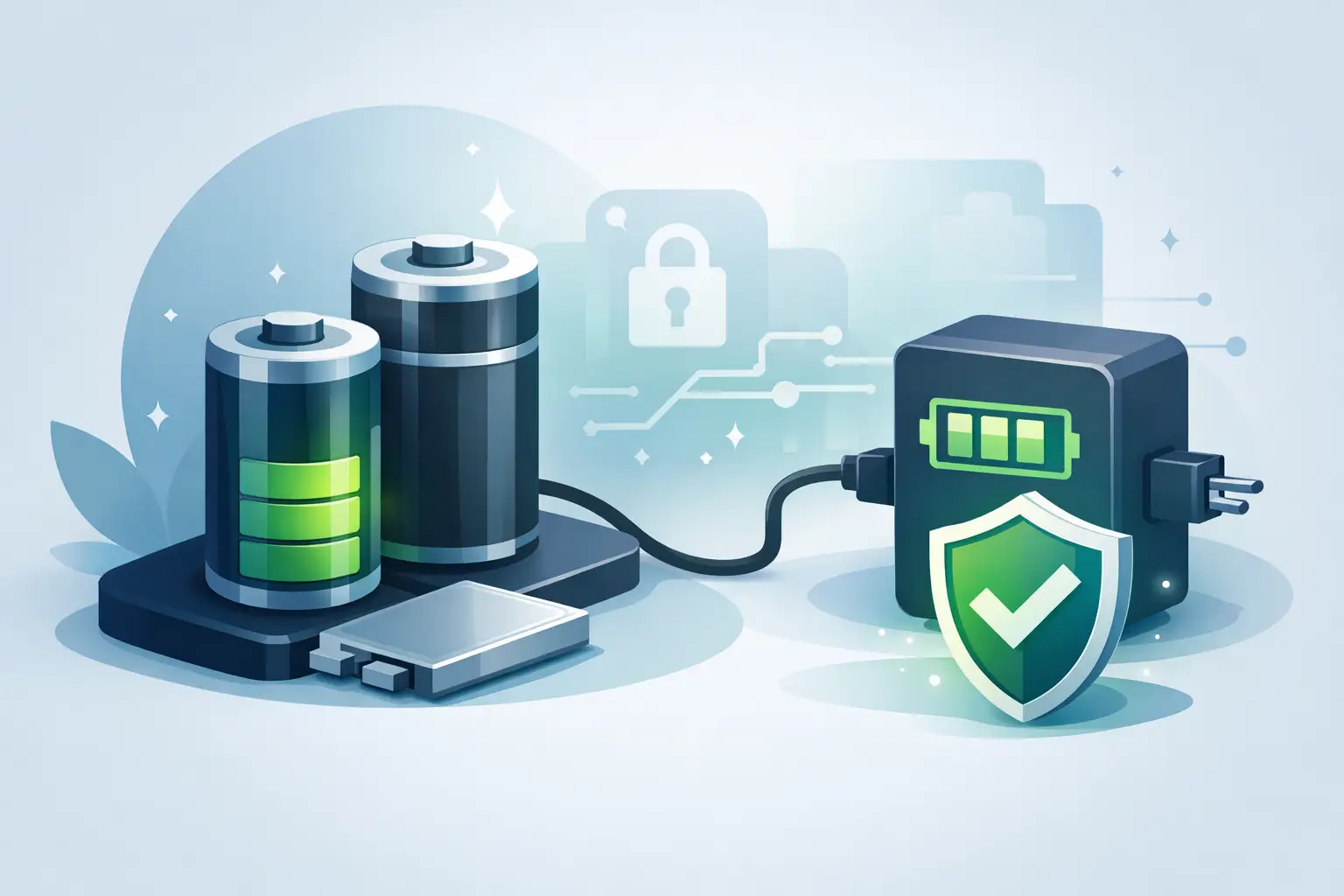
A lithium battery that charges hard one day and cuts out the next usually is not “just being temperamental”. In most cases, the issue is in the setup – the charger profile is wrong, the wiring is undersized, the battery management system is stepping in, or the whole system was never designed for how the vehicle is actually used. So, can lithium batteries charge safely? Yes, they can, and very reliably too, but only when the battery, charger and installation are suited to each other.
For 4WDs, caravans, campervans and touring rigs, lithium has a lot going for it. It is lighter than AGM, gives more usable capacity, and handles repeated cycling better when looked after properly. But “safe charging” is not just about plugging a battery in and hoping for the best. In an automotive and off-grid setup, safe charging comes down to voltage control, temperature, current limits, quality components and a battery management system that is doing its job.
What safe charging actually means
When people ask whether lithium batteries are safe to charge, they are usually asking two things at once. First, will the battery charge without damage, overheating or failing early? Second, will it do that consistently in real-world conditions like corrugated roads, hot weather, short drives, solar input and nights running fridges, lights and inverters?
A safely charging lithium system keeps the battery within the limits set by the manufacturer. That means the charging voltage is correct, the charge current is appropriate, the battery temperature is within range, and the battery management system, or BMS, is able to monitor and protect the cells. If any one of those pieces is off, the battery may still appear to work, but it may not be charging properly or safely.
Can lithium batteries charge safely in vehicles?
Yes, but vehicle charging is where a lot of problems start.
Older charging systems were generally more forgiving with lead-acid batteries. Lithium is less forgiving when the charging source is poorly matched. A standard alternator on its own is not always the right charging solution for a lithium auxiliary battery, especially in newer vehicles with smart alternators. The alternator may drop voltage, charge inconsistently or never bring the battery up properly.
That is why a DC-DC charger is often the right choice in a dual battery setup. It regulates the charge profile, helps protect the alternator, and gives the lithium battery the voltage it is designed to receive. In a touring vehicle or caravan setup, adding solar regulation into that mix matters as well. Good gear from established brands gives better control and fewer surprises.
There is a trade-off, though. A proper lithium charging setup costs more upfront than a basic lead-acid arrangement. But the upside is reliability, faster charging, better battery performance and a lower chance of faults caused by mismatched components.
The role of the BMS in safe lithium charging
If there is one part that makes modern lithium batteries practical for vehicle and off-grid use, it is the BMS.
The BMS protects the battery cells from over-voltage, under-voltage, over-current and temperature extremes. If the battery is being charged too hard, charged when too cold, or pushed outside its limits, the BMS can disconnect or restrict operation. That protection is a good thing, but it is not a substitute for a properly designed system.
A battery that keeps tripping the BMS is telling you something. It may be seeing too much current from a charger, poor wiring causing voltage issues, or heat build-up in the battery compartment. The BMS is there to prevent damage, not to cover up bad design.
This is one reason premium lithium batteries are worth a look for serious touring and off-grid use. The quality of the cells, the BMS logic and the manufacturer support can make a big difference over time.
What makes lithium charging unsafe?
Unsafe charging usually comes back to mismatch, poor installation or low-quality gear.
The first common issue is the wrong charger profile. Lithium batteries need a charger designed for lithium chemistry, with the right voltage set points. A charger meant for AGM or calcium batteries may undercharge, overcharge or trigger battery protection.
The second issue is heat. Batteries do not like excessive heat, and neither do chargers. Under-bonnet installs are a classic example. Some lithium batteries are not suitable for that environment at all, and even those that are need the right product selection and mounting position. In the Sunshine Coast climate, heat is not theoretical – it is a real design factor.
The third issue is poor cable sizing or bad connections. If the wiring is too small, has too much voltage drop, or uses weak terminations, the charger and battery may not behave as intended. That can lead to slow charging, charger faults and unnecessary stress on components.
The fourth issue is charging outside the battery’s temperature range. Some lithium batteries should not be charged below certain temperatures unless they have heating or specific low-temp protection. That matters less for many local conditions than it does in alpine climates, but it still matters for anyone travelling widely.
Chargers, solar and alternators all need to work together
A safe lithium system is not about one good battery. It is about the whole charging ecosystem.
If your vehicle charges from the alternator, from solar on the roof, and from 240V at home or in a caravan park, each charging source needs to be compatible with the battery. The settings should align, and the system should be designed so the battery is not being confused by inconsistent voltages or poor regulation.
This is especially relevant in caravans and campervans where owners often add components over time. A solar panel here, a charger upgrade later, then an inverter after that. Each addition changes the electrical picture. The setup can still be perfectly safe, but only if the parts are selected to suit the battery and the expected loads.
That is also why generic online advice can be risky. One owner’s setup in a basic trailer with a small fridge may have very different charging behaviour compared with a ute running a canopy system, a high-draw inverter and roof solar.
Lithium versus AGM for charging safety
Lithium often gets treated as the risky option and AGM as the safe one. That is too simplistic.
A correctly installed lithium system is very safe and, in some cases, easier to manage because the charging profile is more predictable and the usable capacity is higher. But AGM can still be the better fit in some applications, especially where budget is tighter, charging equipment is already built around lead-acid, or the loads are modest.
The real question is not which chemistry is “safe” in isolation. It is which battery is right for the vehicle, the charging sources and the way you travel. For someone who free camps regularly, runs a compressor fridge, charges devices, uses lighting nightly and wants fast recovery from solar or driving, lithium usually makes strong sense. For occasional use with light demand, AGM may still be a sensible option.
Signs your lithium battery system needs attention
If the battery never seems to fully charge, drops out under load, or the charger shows fault codes, do not ignore it. The same goes for hot cables, inconsistent solar performance, or a battery that charges well on one source but not another.
Those symptoms do not always mean the battery itself is faulty. Often, the problem sits with charger configuration, wiring losses, alternator behaviour or an installation that was never matched to the real power demand. A proper diagnostic approach saves a lot of guesswork and usually saves money compared with replacing parts at random.
For vehicle owners running off-grid gear, this matters because electrical issues rarely stay contained. A charging fault can affect fridge runtime, inverter use, lighting, communications and general travel confidence.
The safest way to charge lithium in a 4WD, caravan or camper
The safest approach is to start with the intended use, not the battery brochure.
Work out how much power you actually use, how you recharge it, where the battery will be mounted, and what conditions the system will face. From there, choose a battery with a quality BMS, pair it with the correct charger or chargers, and make sure the cabling, fusing and installation standards are up to scratch.
For many setups, that means a proper DC-DC charger, quality solar regulation, suitable 240V charging, and battery placement that avoids unnecessary heat and vibration. It also means using components that are known to work together rather than forcing a budget mix of parts into a premium system.
That is where tailored advice matters. A touring 79 Series, a family caravan and a weekend campervan may all use lithium, but they will not all want the same charging setup.
Lithium batteries can be an excellent option for reliable vehicle power, but safe charging is never about one label on the battery case. It comes from good design, correct settings and quality installation. If your setup is built for how you actually drive and camp, lithium can be one of the most dependable parts of the whole vehicle.