Sunshine Coast Caravan Solar Installation Tips
That first night off-grid is usually when people find out whether their setup actually works. The lights are on, the fridge is cycling, someone plugs in a phone, and suddenly the battery monitor drops faster than expected. A proper Sunshine Coast caravan solar installation is not just about getting panels on the roof. It is about building a system that matches how you travel, what you run, and how much margin you want when the weather turns ordinary.
For caravan owners around the Sunshine Coast, that matters more than it sounds. A weekend away at a powered site asks very little of your 12V system. A few days off-grid with a compressor fridge, water pump, chargers, fans and maybe an inverter is a different story. The right solar setup gives you confidence to stop where you want, not where the next powered site happens to be.
What a good caravan solar setup actually needs
A lot of people start with panel wattage because it is the easy number to compare. In practice, solar is only one part of the job. Your panels need to work with the battery capacity, the charger, the cabling, the fusing and the way the van is used day to day.
If one part is undersized or poorly installed, the whole system feels disappointing. You can have decent roof solar and still run short if the battery bank is too small. You can fit a quality lithium battery and still get mediocre results if the solar regulator is wrong for the panel array or the wiring has avoidable voltage drop.
This is why caravan solar should be treated as a complete power system, not a shopping list of separate parts.
Battery size comes before panel size
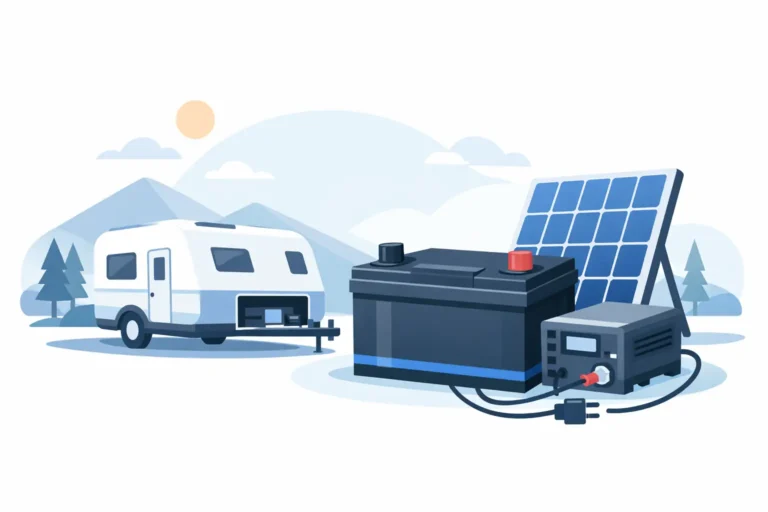
Battery capacity decides how much power you can store and use overnight or during poor weather. Solar replaces that energy during the day, but it cannot help much after sunset. If your battery bank is too small for your actual usage, adding more panel wattage will not always fix the problem.
For some travellers, a modest setup is enough. If you mainly run lights, a water pump, USB charging and a fridge, one lithium battery with sensible solar input can work very well. If you use an inverter for coffee machines, induction cooking, laptops, a TV or medical equipment, the system needs to be planned with far more headroom.
Solar harvest is never the sticker number
A 200W panel does not deliver 200W all day. Output changes with heat, cloud, panel angle, shading, time of year and how clean the panels are. On a caravan roof, even a small shadow from an antenna, air-conditioner or roof hatch can drag output down.
That is why good design matters. Panel placement, regulator quality and cable routing all affect real-world performance. It also explains why some people feel let down by systems that looked fine on paper.
Sunshine Coast caravan solar installation – sizing it properly
The best starting point is your daily power use. Not guesses – actual loads. A quality installation should be based on what you run, how long you run it, and whether you want to stay comfortable through cloudy days without chasing sun.
A practical way to think about it is by separating essential loads from convenience loads. Essentials are things like the fridge, lights, water pump and device charging. Convenience loads are where systems often blow out, such as coffee machines, hair dryers, microwaves, TVs and bigger inverter use.
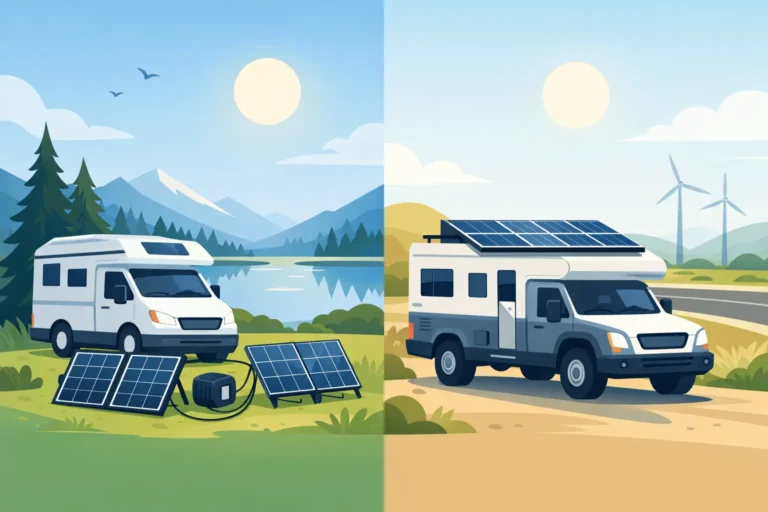
If your travel style is mostly short trips with regular driving, the vehicle can help charge the van through a proper DC-DC setup. If you camp in one spot for several days, roof solar has to do more of the heavy lifting. If you spend time in shaded sites, portable solar may be worth considering alongside fixed panels.
The role of lithium, DC-DC charging and inverters
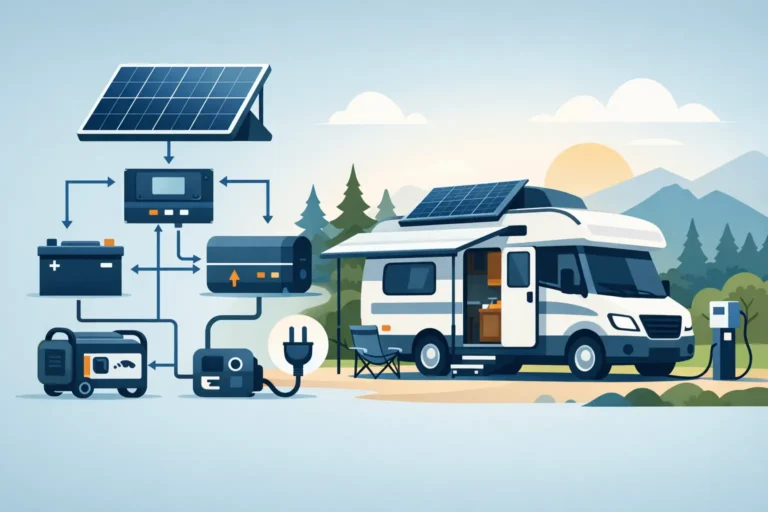
Modern caravan systems work best when the major components are chosen to suit each other. Lithium batteries have changed what is possible off-grid because they offer usable capacity, stable voltage and quicker charging compared with older battery types. But they still need the right charger settings, battery monitoring and installation standards.
DC-DC charging is equally important for many touring setups. If you tow regularly, charging from the tow vehicle can make a big difference, especially after overcast days. It should not be treated as a substitute for solar, but it is an important backup and often part of a balanced system.
Inverters are where a lot of systems get overcomplicated. They are useful, but they can also create unrealistic expectations if the battery and charging side have not been sized to support them. Running a few small 240V items occasionally is very different from trying to live as if you are plugged into mains power.
Common mistakes with caravan solar installs
The most expensive mistake is often buying in stages without an overall plan. A van gets one battery now, extra solar later, then an inverter is added after that. On its own, each upgrade sounds sensible. Together, they can create mismatched gear, poor charging performance and extra labour to redo what should have been planned once.
Another common issue is focusing on headline specs instead of installation quality. Premium gear is worth little if cable sizing is wrong, terminations are average, fuse protection is poorly laid out or components are mounted where heat and vibration shorten their life.
Roof space is another real limitation. Caravans already have hatches, air-conditioners and other hardware competing for room. That means some vans simply cannot fit enough fixed solar to support very high usage. In those cases, a good installer should say so clearly and offer realistic options instead of overselling the result.
Cheap solar can cost more later
Budget parts are tempting, especially when solar kits are advertised as simple bolt-on solutions. The problem is that caravans live a hard life. Corrugations, heat, moisture and constant movement expose weak points quickly.
A quality installation uses proven components, secure mounting, correct protection and tidy wiring that can be diagnosed and serviced later. That matters when you are hours from home and relying on the system to keep food cold, phones charged and basic comforts working.
Why installation quality matters as much as the parts
A dependable Sunshine Coast caravan solar installation should be neat, traceable and serviceable. That means wiring runs that are protected and labelled properly, components mounted where they can breathe, and a layout that makes future diagnostics straightforward.
Good installers also explain the trade-offs. For example, more solar is generally helpful, but there is no point covering the roof in panels if the battery bank cannot absorb the charge efficiently. A large inverter might sound attractive, but if your usage does not justify it, that money may be better spent on battery capacity, charging upgrades or monitoring.
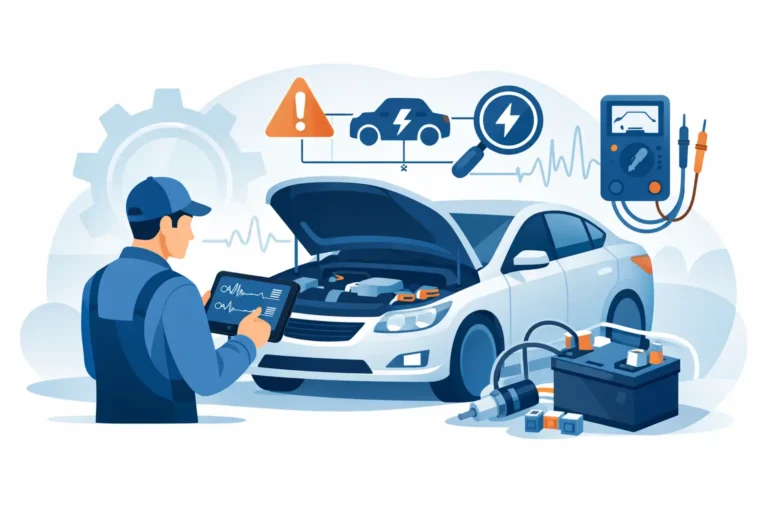
This is where workshop-based diagnostics make a difference. Instead of guessing, a proper assessment can look at current draw, charging behaviour and how your existing equipment is performing. Sometimes the answer is a full custom build. Sometimes it is fixing one weak link in the system you already have.
Monitoring is not a luxury
One of the most useful upgrades in any off-grid van is accurate battery monitoring. Without it, people tend to rely on rough voltage readings or whatever the fridge and lights seem to be doing. That is not enough if you want predictable performance.
A proper monitor helps you understand daily usage, charging recovery and whether your solar is keeping up. It also makes fault-finding faster if something changes.
Choosing a setup that suits your travel style
There is no single best caravan solar system. The right setup depends on where you camp, how long you stay, and how much comfort you want off-grid.
If you are a light user doing short coastal trips, a modest lithium and solar package may be all you need. If you are heading inland, staying put for longer periods and running more appliances, the system should be designed with reserve capacity, solid charging options and realistic expectations around weather and shade.
For families, power use often climbs quickly because more people means more charging, more lighting, more fridge access and more chances of someone using the inverter. For couples doing simple touring, the opposite can be true. Small differences in habits make a big difference to system design.
That is why tailored advice matters. A good installer will ask how you actually camp, not just what products you think you want.
On the Sunshine Coast and through the hinterland, plenty of caravan owners want the same thing – a setup that works without fuss. Coastal Cool Air approaches these jobs the same way it handles other vehicle electrical work: start with how the system is meant to be used, check the details properly, and recommend parts and layout that make sense for long-term reliability.
If you are planning solar for your caravan, the smart move is to design for your real usage, leave room for the weather to disappoint you now and then, and build a system you can trust when the nearest powered site is the one you chose not to book.