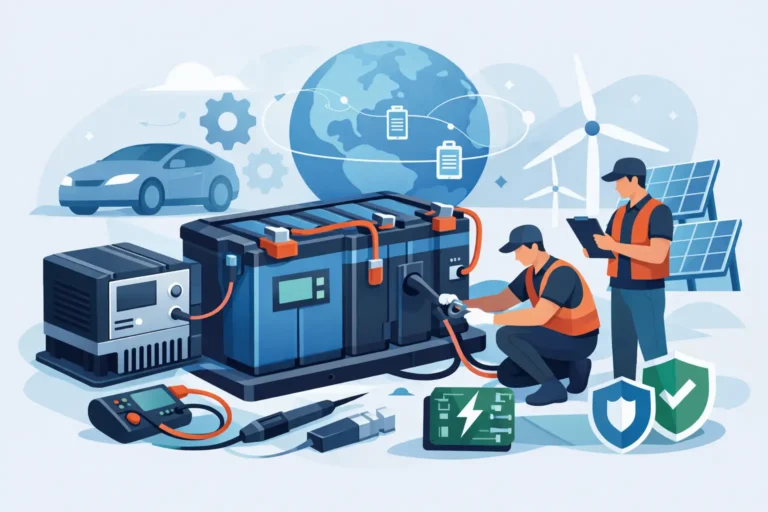

Redarc BCDC Charger Review for Touring Setups
When a dual battery system lets you down, it usually happens at the worst possible time – camp set up, fridge warming up, lights dimming, and a battery monitor telling you what you already suspected. That is exactly why a proper redarc bcdc charger review matters. On paper, these chargers look like the answer for touring rigs, caravans and work utes. In the real world, the question is whether they actually charge properly, play nicely with modern vehicles, and justify the price.
Redarc BCDC charger review – what it does well
The short version is this: Redarc BCDC chargers have earned a strong reputation for a reason. They are designed for Australian conditions, they suit modern smart alternators, and they make far more sense than a basic isolator in many current 12V setups.
A BCDC charger is a DC to DC charger that manages the charge going into your auxiliary battery. Rather than just connecting your start battery and second battery together and hoping the alternator does the rest, it boosts and controls voltage to suit the battery chemistry. That becomes especially important with lithium, AGM and calcium batteries, and even more so in newer vehicles where alternator voltage can vary a lot.
In practical terms, that means more reliable charging while driving, less guesswork, and a better chance your fridge, lights and accessories are still running as expected on day three of a trip.
Where Redarc stands out
The biggest strength in this redarc bcdc charger review is compatibility. Redarc has done a solid job building units that suit real touring setups rather than ideal workshop diagrams. If you have a 4WD with a smart alternator, a caravan with roof solar, or a ute carrying a canopy power system, a BCDC unit usually fits into the system without much drama when it is sized and installed properly.
The inbuilt solar regulator on many models is another major plus. Instead of adding separate charging gear for alternator input and solar input, you can often simplify the system. That saves space and can make fault-finding easier later. For plenty of owners, especially those trying to keep a setup neat and dependable, that matters just as much as raw charging performance.
The build quality is also generally very good. Redarc units are known for being tough, well sealed and suited to harsh environments. Heat, corrugations, dust and wet weather are exactly where cheaper gear starts showing its weaknesses. If your vehicle is used for beach runs, long gravel roads or regular towing, durability stops being a nice extra and becomes part of the value.
Charging performance in the real world
This is where expectations need to be realistic. A BCDC charger can improve charging performance significantly, but it is not magic. If you are running a large lithium bank, a big fridge, lighting, pumps, inverters and charging devices all day, the charger still has limits. A 25A charger will charge at a very different rate to a 40A unit, and battery capacity matters just as much.
For a modest touring setup, Redarc performs well. If you are driving regularly and your battery size matches the charger output, it will usually recover charge efficiently. For caravan and camper owners using solar as well, the combination of alternator charging on the move and solar support at camp can work very well.
Where some people get disappointed is when the system has been undersized from the start. A charger cannot fix poor cable sizing, bad earths, weak connections or unrealistic loads. We see this a lot with off-grid vehicle power systems – the charger gets blamed, but the actual problem is elsewhere.
The main trade-off – price
Any honest redarc bcdc charger review has to mention cost. Redarc is not the budget option. You are paying more than you would for many imported alternatives, and for some owners that can be hard to swallow.
Whether it is worth it depends on how you use the vehicle. If the second battery only runs a few lights twice a year, there are cheaper ways to build a system. But if you rely on that setup for touring, work, refrigeration or remote travel, reliability starts carrying more weight than upfront savings.
There is also the install side to consider. Premium gear still needs correct cable sizing, fusing, mounting location and battery configuration. A poor install can make a quality charger perform badly. So the real comparison is not just product price versus product price. It is total system value versus total system value.
Which setups suit a Redarc BCDC charger?
For most 4WDs with a touring battery in the rear, Redarc makes good sense. Long cable runs from the engine bay to the back of the vehicle often lead to voltage drop, and that is exactly where DC to DC charging helps.
For caravans and camper trailers, it also makes a lot of sense, especially when alternator charging through the trailer plug is not going to do the job properly on its own. Add solar input and the system becomes much more practical for longer stays.
For lithium upgrades, Redarc is often a strong choice, but only when the charger profile matches the battery manufacturer’s requirements. That detail matters. Not every lithium battery wants the same charging behaviour, and that is one area where buying parts off a shelf without checking the full system can create headaches later.
For basic weekenders with light loads, it may be more charger than you need. There is nothing wrong with choosing quality gear, but there is also no point overspending if your use case is simple.
Redarc BCDC charger review – common install mistakes
The product itself is usually not the issue. System design is where things can go wrong.
One common mistake is choosing charger size based on what sounds impressive rather than what the battery bank and charging source can support. Bigger is not always better. A larger charger may need heavier cabling, stronger input supply and more careful mounting to manage heat.
Another mistake is poor mounting position. These chargers are built tough, but they still need sensible airflow and protection from unnecessary heat soak. Tucking one into a cramped, hot cavity can reduce performance.
Then there is the wiring. Undersized cable, poor crimps, weak earth points and skipped fusing can all cause voltage loss or reliability issues. If the goal is dependable off-grid power, the charger should be one part of a properly planned system rather than a bolt-on fix.
How it compares to cheaper options
There are cheaper DC to DC chargers that do a decent job. Not every non-Redarc unit is rubbish, and not every vehicle needs premium gear. That said, Redarc tends to win on confidence, support, local reputation and suitability for Australian touring conditions.
Cheaper units can look similar on a spec sheet, but real differences often show up over time. Heat tolerance, water resistance, fault behaviour, charging consistency and long-term durability are harder to judge from packaging alone.
If you are building a setup that needs to work every weekend or on a long trip away from towns, proven gear has real value. If you are experimenting with a light-use setup and budget is tight, another option may still be reasonable. It depends on how much risk you are comfortable carrying.
Is it worth it for caravans and campervans?
In many cases, yes. Caravan and campervan owners often benefit more from a BCDC charger than they expect, because towing charge circuits are commonly underwhelming. By the time power travels from the alternator through factory wiring, connectors and trailer plugs, the battery at the other end may not be seeing enough voltage to charge properly.
A good DC to DC charger helps overcome that. Pair it with solar and a battery suited to your load profile, and the system becomes far more useful for free camping and longer trips. If your travel style includes fridge use, fans, pumps, charging devices and occasional inverter loads, that extra charging control is well worth considering.
Our view on Redarc overall
Redarc BCDC chargers are not popular by accident. They suit modern vehicles, they handle a wide range of touring applications, and they generally do what they claim when installed as part of a well-designed system. They are not the cheapest option, and they are not a substitute for proper planning, but they are one of the safer bets in the dual battery space.
If you are deciding between spending less now or building a system you can trust later, this is one of those products where the quality difference is usually felt over time rather than on day one. For 4WDs, caravans, camper trailers and off-grid touring setups, that can make all the difference.
If you are unsure whether a Redarc unit is the right fit, the smartest move is to size the whole system first – battery type, battery capacity, solar input, cable run, loads and how you actually travel. A charger should match the job, not just the badge on the box. That is how you end up with a setup that works quietly in the background, which is exactly what good 12V gear is supposed to do.