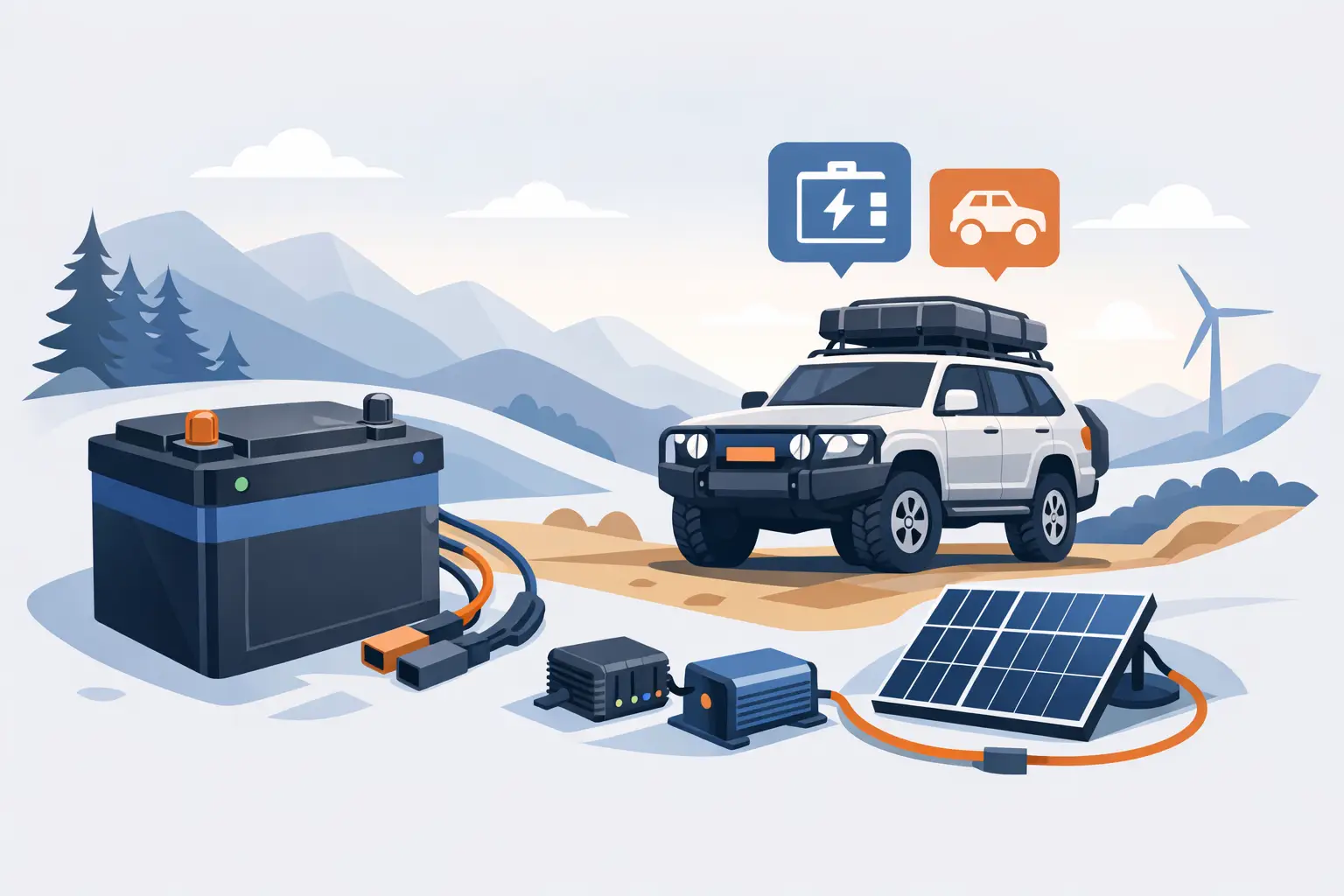
Custom Lithium Battery Review for 4WDs
You usually find out how good a battery is when the fridge has been running all night, the camp lights are still on, and you are nowhere near a powered site. That is where a proper custom lithium battery review matters. Specs on a box are one thing. Real-world performance in a 4WD, caravan, campervan or work ute is another.
For most vehicle owners, the question is not whether lithium is better than older battery types. In many setups, it is. The real question is whether a particular battery is right for your system, your charging gear, your mounting space and the way you actually travel. A battery that looks brilliant on paper can still be the wrong fit if the charge profile is off, the install is poorly planned, or the rest of the 12V system is not up to scratch.
What stands out in a custom lithium battery review
The first thing worth saying is that not all lithium batteries are built to the same standard. Capacity figures matter, but they are only part of the story. Build quality, battery management system protection, thermal behaviour, charge acceptance and support after the sale all carry just as much weight.
In a practical touring setup, a good lithium battery should do three things well. It should hold voltage under load, recharge efficiently, and cope with vibration and heat better than cheaper alternatives. If you are running a fridge, lights, a water pump, comms gear and maybe an inverter, steady performance matters more than marketing claims.
A strong review also has to look past headline amp-hours. Two batteries with the same rated capacity can behave very differently once they are installed in a vehicle. Cable sizing, DC-DC charging, solar input, and even where the battery is mounted all affect the result.
Performance in real touring conditions
For 4WD owners and caravan travellers, lithium’s biggest advantage is usable capacity. You can generally draw more from a lithium battery without the same voltage drop or recovery issues seen in older AGM systems. That makes a noticeable difference when you are free camping for a couple of nights and trying to keep power use sensible without living in the dark.
In a custom lithium battery review, this is where quality products tend to separate themselves from the cheap end of the market. Better batteries deliver stable output for longer, recharge faster from alternator or solar, and recover more reliably after repeated cycling. If you are moving camp every day, fast charging can be a major benefit. If you stay put for days, efficient solar charging becomes more important.
That said, lithium is not magic. If your solar array is undersized, your charger is mismatched, or your loads are heavier than you think, even a premium battery will struggle. Many disappointing battery stories are really system design problems.
Charging compatibility matters more than people expect
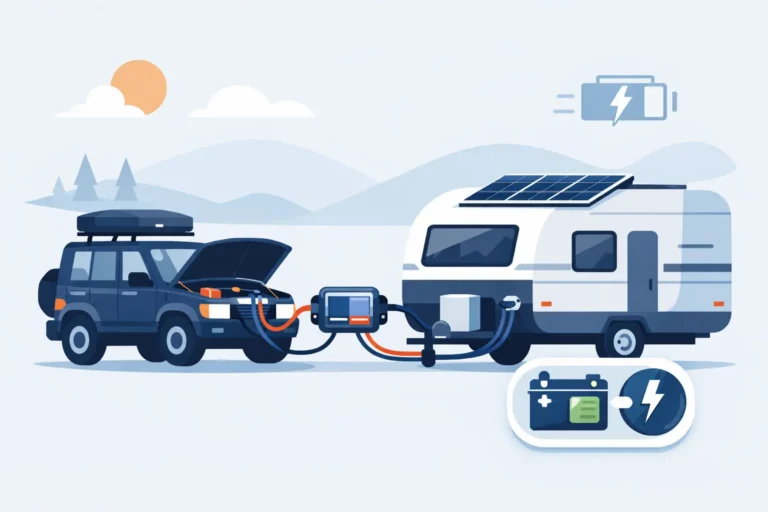
One of the most common issues with lithium upgrades is assuming the battery alone does the heavy lifting. In reality, the charger setup is just as important. A smart alternator vehicle often needs a proper DC-DC charger to get the best from a lithium battery. Without it, charging can be inconsistent or far too slow.
The same goes for mains charging and solar regulators. The charge profile needs to suit lithium chemistry, and the system should be configured to protect battery life rather than simply force current into it. This is especially relevant for caravans and camper trailers that may already have older charging gear fitted.
A battery can only perform as well as the system around it. That is why battery reviews that ignore chargers, cabling and load calculations rarely tell the full story.
Safety and build quality
Safety is one area where cheap batteries can become expensive. A proper custom lithium battery review should consider internal cell quality, BMS design, low-temperature and high-current protection, enclosure strength and the manufacturer’s reputation. In an automotive environment, batteries deal with vibration, dust, heat and constant movement. They are not sitting quietly on a shelf.
This is where premium brands usually justify their price. Better monitoring, stronger internal construction and more reliable protection systems can make a real difference over time. For touring vehicles and off-grid setups, reliability is not a luxury. It is what keeps your food cold, your lighting on and your trip moving.
It also pays to think about where the battery will live. Under-bonnet fitment, canopy installs and internal caravan battery compartments all create different demands. Some batteries are suited to one location and not another. A good workshop will explain those limits before fitting anything.
Weight, space and install flexibility
Lithium’s lighter weight is a genuine advantage, especially in caravans, campervans and touring 4WDs where every kilogram adds up. Swapping from a heavy AGM bank to lithium can help free up payload and make battery placement easier. That matters in vehicles already carrying recovery gear, water, tools and camping equipment.
But smaller and lighter does not automatically mean simpler. Space savings are useful only if the install is planned properly. Battery restraints, ventilation requirements, cable protection and service access still matter. Neat installs are not just about appearance. They make fault-finding easier and reduce the risk of future issues.
In many cases, a custom setup works better than a one-size-fits-all kit. Every vehicle has its quirks. A dual cab ute with a canopy has different requirements to a van towing setup or a camper with solar on the roof and a portable panel at ground level.
Value for money – not just purchase price
A fair custom lithium battery review should be honest about cost. Lithium batteries usually cost more upfront than AGM. There is no point pretending otherwise. The better question is what you get back for that spend.
If the battery lasts longer, delivers more usable power, charges quicker and reduces overall system weight, the value can stack up well for regular travellers. For people who head away often, rely on fridges and inverters, or spend time off-grid, lithium can be the more economical option over the life of the setup.
If you only camp once or twice a year and your power needs are modest, the answer may be different. Some owners are better off keeping a simpler battery system and spending money elsewhere. Good advice should reflect how you use the vehicle, not just push the most expensive option.
When premium products make sense
Premium batteries and matching components tend to make the most sense when reliability is critical. That might be a touring 4WD heading remote, a caravan owner relying on off-grid power for extended stays, or a tradie with a work ute that cannot afford electrical downtime.
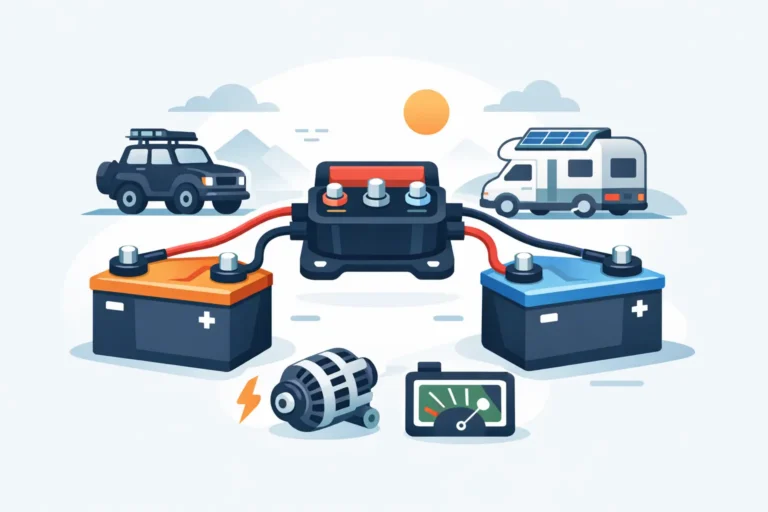
This is also where a matched ecosystem helps. Pairing a quality battery with proven charging and monitoring gear from brands like Redarc and Victron often gives a better result than mixing random parts to save a few dollars upfront. The system becomes easier to monitor, easier to diagnose and generally more dependable over time.
Common mistakes that affect battery performance
A lot of battery complaints start with unrealistic expectations. Running a large inverter, induction cooking, coffee machine and compressor fridge from a modest battery bank will flatten even a good setup if charging input does not keep pace.
Another common issue is poor installation practice. Undersized cable, weak earths, bad fuse placement and messy joins all create voltage drop and reliability problems. Then the battery gets blamed for faults that started elsewhere.
The other trap is buying based on capacity alone. Bigger is not always better if the battery does not physically suit the vehicle, the charger cannot support it, or the added cost never gets used in practice. The right battery is the one that matches your loads, travel style and charging opportunities.
So, are custom lithium batteries worth it?
For a lot of 4WD, caravan and camper owners, yes – provided the battery is quality and the install is done properly. In day-to-day use, the benefits are real. Better usable capacity, faster charging, lower weight and more stable power delivery can make off-grid travel easier and less frustrating.
But the battery should never be judged in isolation. The best results come from looking at the whole system, from alternator charging and solar input through to cable runs, load demands and future expansion. That is where experienced advice matters. A proper assessment can save you from overspending, underbuilding or ending up with gear that does not work together.
If you are considering a lithium upgrade, ask for clear explanations, realistic load estimates and a setup that suits how you actually use your vehicle. A dependable power system is not built around hype. It is built around the right parts, fitted properly, with no guesswork left in the middle.