
Caravan Electrical Upgrades Sunshine Coast
You usually find out your van’s electrical system is undersized at the worst possible time – after dark, in warm weather, with a fridge working hard and the battery monitor heading south. That is why caravan electrical upgrades Sunshine Coast travellers ask for are rarely about adding gadgets for the sake of it. They are about making the van more reliable, safer, and better suited to how you actually camp.
A good upgrade starts with one simple question: what is not working well enough now? For some owners, it is poor battery capacity. For others, it is inconsistent solar charging, tired wiring, limited 240V options, or an inverter setup that was never designed for real off-grid use. The right answer depends on your van, your tow vehicle, and whether you are spending weekends at powered sites or longer stretches away from mains power.
What caravan electrical upgrades Sunshine Coast owners usually need
Most caravans are sold with a basic electrical package that covers light use. That can be fine for occasional trips, but it often falls short once you add a compressor fridge, charging points, water pumps, fans, lighting, and a few comfort items that make travel easier. If you are touring in Queensland conditions, heat alone can increase power demand quickly.
Battery upgrades are often the first thing owners look at, and for good reason. An older AGM setup may still work, but it can struggle if your usage has grown. Lithium batteries are lighter, recharge faster, and generally offer more usable capacity. That said, a battery swap on its own is not always enough. If the charger, DC-DC system, solar regulator, wiring, or battery management are not matched properly, you can end up paying for capacity you cannot fully use.
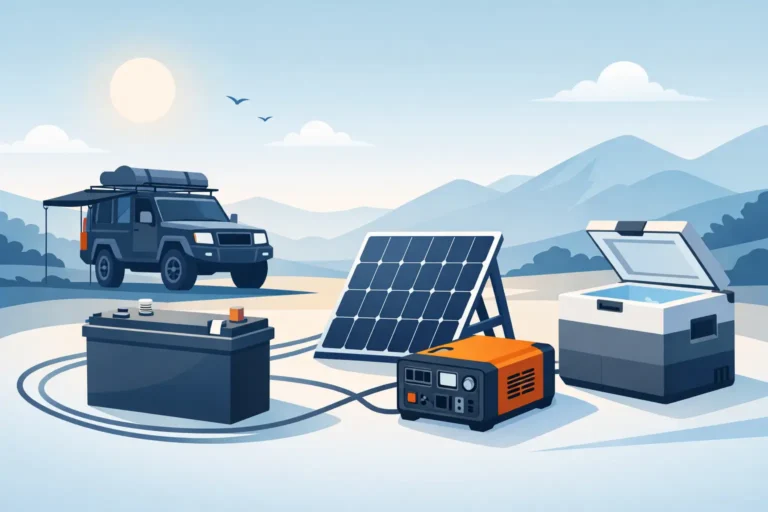
Solar is another common upgrade, but panel size is only part of the picture. The way the system is wired, the quality of the regulator, roof space, shading, and your daily consumption all matter. A van that spends mornings under trees and runs a fridge, lighting, device charging and a coffee machine has very different needs from one used mainly in caravan parks.
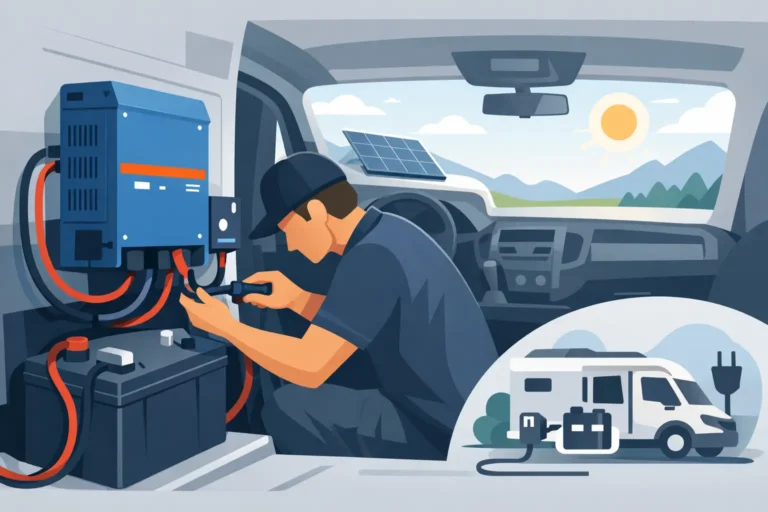
Then there is power distribution. This is where a lot of hidden issues sit. Undersized cable, poor terminations, voltage drop and untidy additions from previous installs can all affect performance. If your lights dim when a pump kicks in, your battery readings do not make sense, or charging seems slower than expected, the fault may not be the battery at all.
Start with usage, not products
The best caravan electrical upgrades are built around usage, not brand names or online trends. It is easy to get sold on a bigger inverter or more battery capacity than you need. It is also easy to go too small and end up disappointed.
If you mostly do short stays and drive every day, a sensible battery and DC charging setup may be enough. If you free camp for several days in one spot, solar generation and battery storage become more important. If you need to run induction cooking, a coffee machine or sensitive electronics, inverter quality and system design matter far more than a headline wattage figure.
That is where proper diagnostics and planning save money. A workshop that understands both automotive charging systems and off-grid caravan power can look at the van as a complete system. That includes how the tow vehicle charges the van while driving, how solar contributes during the day, and how loads are managed overnight.
The upgrades that usually make the biggest difference
For many van owners, the biggest jump in performance comes from moving to a properly designed lithium setup. Not because lithium is fashionable, but because it solves real problems when installed correctly. You get faster charging, better usable capacity and less weight. In a touring setup, those are practical gains.
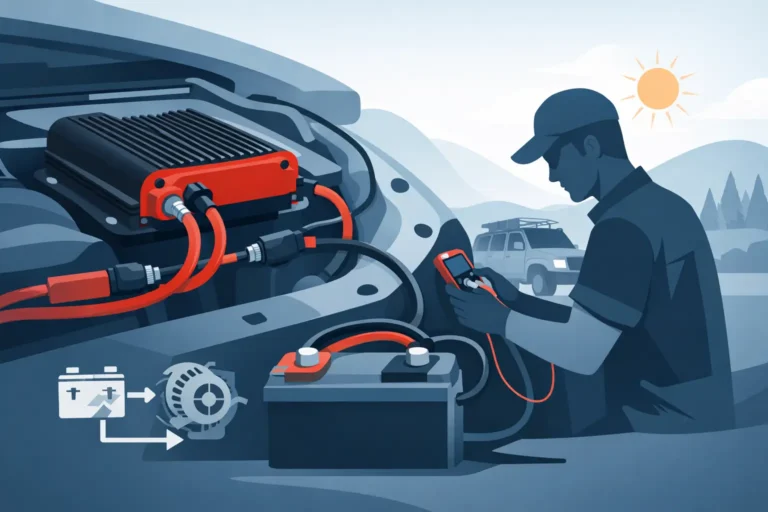
A quality DC-DC charger is often just as important. Modern vehicles do not always provide consistent charging to a caravan through the standard connection, especially with smart alternators in the mix. A dedicated charger helps deliver the correct charging profile and protects the battery investment.
Solar upgrades are worthwhile when they match your travel style. More panel capacity can reduce generator use and help stretch battery reserves, but only if the regulator, wiring and battery storage can support it. If roof space is limited, panel placement and efficiency become important.
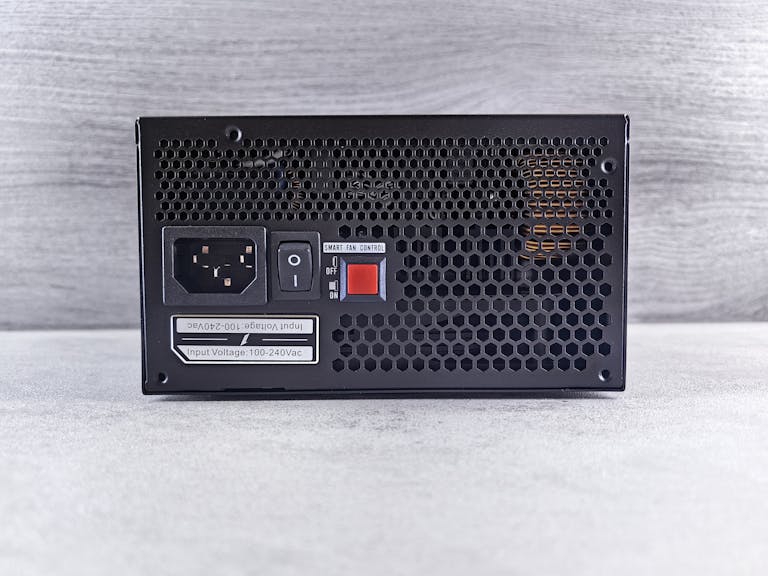
An inverter can also be a smart addition, but this is one area where people often overspend. If you only want to charge a laptop, camera batteries and a few household items, you may not need a large unit. If you plan to run kitchen appliances or other heavier loads, then the system needs to be designed for that from the start, including cable sizing, protection and ventilation.
Monitoring is another upgrade that gets overlooked. A decent battery monitor gives you real information instead of guesswork. That matters when you are trying to understand why your system is underperforming or whether you can stay another night off-grid without pushing things too hard.
Safety and compliance matter more than extra features
Electrical upgrades in a caravan are not just about convenience. Safety matters, especially when 12V and 240V systems are both involved. Poor-quality installs can create heat, voltage drop, nuisance faults, or in worst cases, serious risk to the van.
That is why workmanship matters as much as component choice. Clean cable runs, correct fusing, secure mounting, proper isolation and quality terminations are not flashy upgrades, but they are what make a system dependable. A tidy install is usually easier to service later as well, which matters when you are relying on the van for holidays or longer travel.
It is also worth being realistic about mixed systems. Some caravans have had bits added over time – a battery here, a solar panel there, an inverter from a previous owner, maybe a charger that no longer suits the setup. Sometimes the smartest path is not adding another part. It is stepping back, sorting what is already there, and rebuilding the system properly.
Why one-size-fits-all advice falls short
There is plenty of general advice around caravan power, but a lot of it ignores the differences between setups. A tandem touring van, a compact hybrid, and a camper trailer all have different loads, different space limits and different charging needs. Even two near-identical vans can need different solutions depending on how they are used.
The Sunshine Coast and hinterland also shape what works well. Heat, humidity, stop-start touring, and mixed camping styles all affect electrical demand. A setup that performs fine on paper may not be ideal once you factor in real travel conditions, storage temperatures, and time spent away from powered sites.
That is why tailored advice matters. A practical technician will ask how you travel, what you run, how long you stay put, and what problems you want solved first. There is no point building a high-end system if a simpler, better-balanced setup will do the job reliably.
Choosing the right workshop for caravan electrical upgrades Sunshine Coast wide
When you are comparing workshops, look for clear advice, proper fault-finding and a willingness to explain trade-offs. Not every van needs a premium full rebuild. Not every issue is fixed by adding battery capacity. You want someone who can test, inspect and recommend the right work rather than the most expensive package.
It also helps to choose a specialist who understands the link between caravans, tow vehicles and off-grid systems. Charging problems often sit across both the vehicle and the van, especially with dual battery systems, Anderson plugs, brake wiring and solar all sharing space in the setup. A workshop with solid automotive electrical knowledge can usually diagnose those interactions more accurately.
If premium brands are part of the build, they still need to be matched properly to the application. Good components are worth it, but only when the installation and system design are right. Coastal Cool Air works with setups that focus on real-world reliability, including quality lithium, charging and power management systems suited to touring conditions.
When an upgrade is worth doing now
If your battery goes flat too quickly, charging is inconsistent, or your current system limits where you can stay, an upgrade is usually worth considering sooner rather than later. The same applies if your van has an ageing electrical setup and you are planning bigger trips. It is far better to sort it in the workshop than troubleshoot it from a campsite.
There is also value in upgrading before a failure. Preventative work can save a holiday, especially if your existing system is showing signs of strain. Warm cables, blown fuses, weak battery performance and unexplained voltage drops are all signs that something needs attention.
A well-planned caravan electrical system should feel boring in the best possible way. Lights work, the fridge stays cold, devices charge, and you stop thinking about whether the van will cope overnight. That kind of confidence is what a proper upgrade is really buying you.
If you are looking at caravan electrical upgrades, the best place to start is with an honest assessment of how your van is used and where the current setup falls short. Once that is clear, the right solution tends to be a lot simpler than the internet makes it sound.