Lithium vs AGM for 4WD: What Suits You?
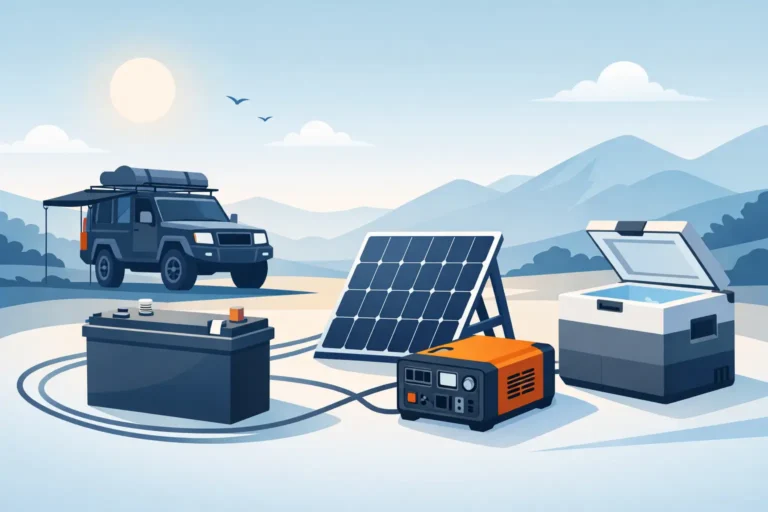
You usually find out whether your battery setup is right when the fridge starts beeping at 2 am, the camp lights dim earlier than expected, or the DC-DC charger never quite seems to keep up. That is why the lithium vs AGM for 4WD question matters so much. It is not just about battery chemistry – it is about how you travel, how long you stay off-grid, and how much hassle you are willing to put up with.
For some 4WD owners, AGM is still a sensible, dependable choice. For others, lithium is a genuine upgrade that changes how the whole touring setup performs. The trick is not picking the fanciest option. It is matching the battery to the vehicle, charging system, accessories and the kind of trips you actually do.
Lithium vs AGM for 4WD: the real difference
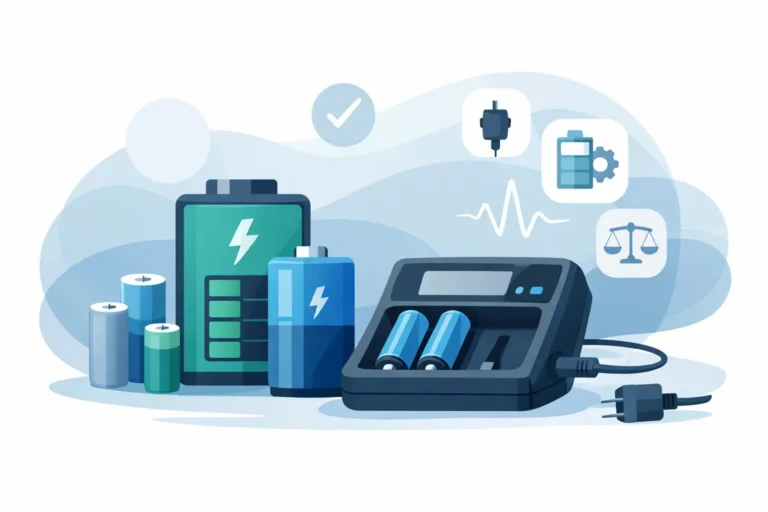
At a basic level, both battery types can run your 12V accessories, charge from the vehicle and support a dual battery setup. Where they differ is in how efficiently they do it, how much usable power they offer, how much they weigh and how they handle repeated discharge and recharge cycles.
AGM batteries have been a common choice in 4WDs for years because they are proven, widely available and generally cheaper up front. They suit plenty of touring setups, especially where loads are modest and the system has been designed properly.
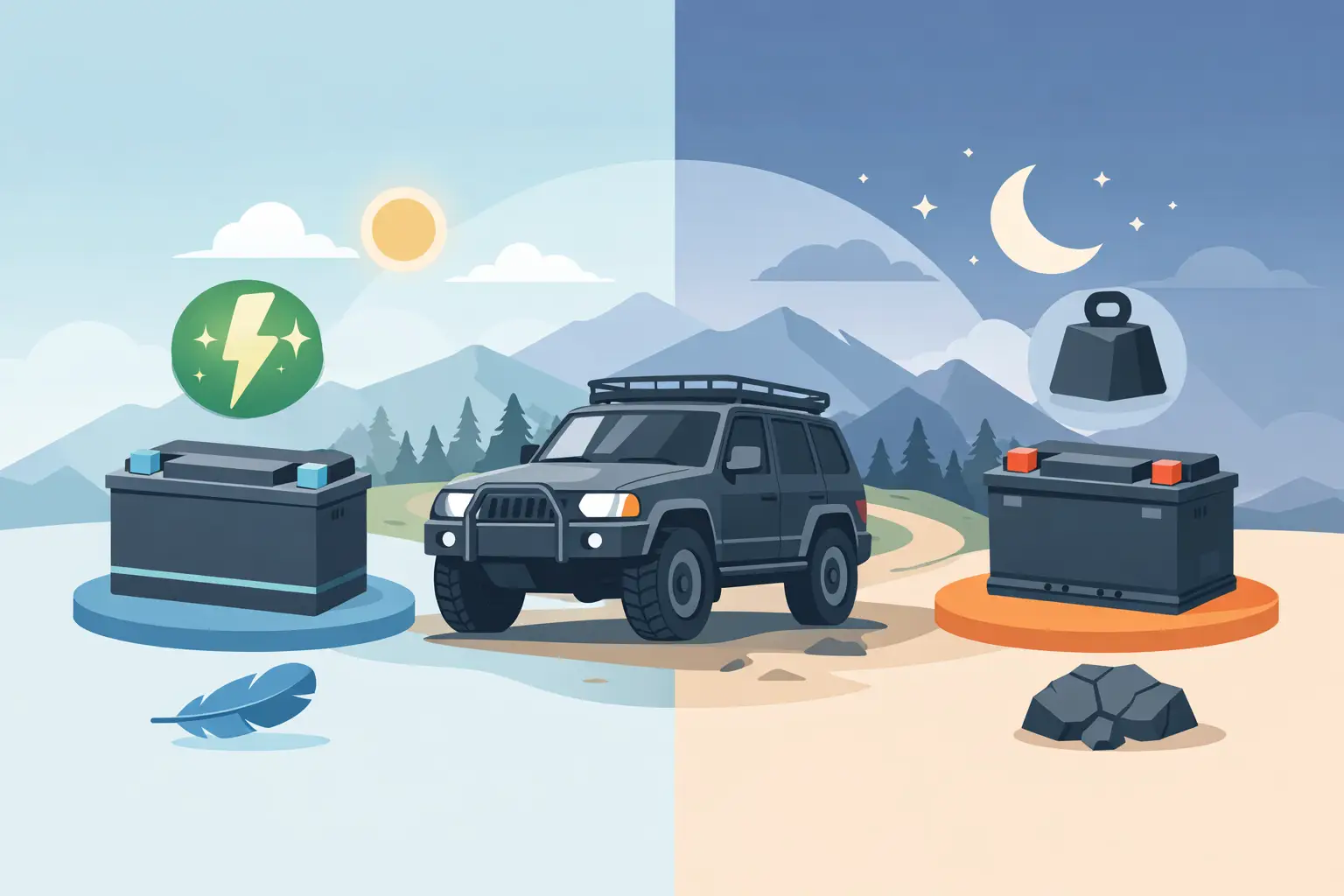
Lithium batteries, particularly quality lithium iron phosphate units, offer more usable capacity, less weight and faster charging. They are excellent for modern touring setups with fridges, lighting, chargers, inverters and solar. They also tend to recover faster after overnight use, which is a big deal if you are driving shorter distances between camps.
The catch is that lithium is not a drop-in answer for every vehicle. Charging profiles, under-bonnet heat, battery management systems and install quality all matter. If those parts are ignored, even an expensive battery can perform poorly.
Weight and usable capacity matter more than most people think
This is one of the biggest practical differences. A 100Ah AGM battery is heavy. In a touring rig where you are already carrying drawers, recovery gear, water, tools and maybe a canopy or caravan ball weight, every extra kilo counts.
A comparable lithium battery is much lighter, which can make a noticeable difference in a ute, wagon or camper setup. Less weight means less strain on the vehicle and more flexibility for where the battery can be mounted, depending on the system design.
Usable capacity is where lithium really starts to separate itself. With AGM, you generally do not want to discharge too deeply on a regular basis if you want decent battery life. In real terms, that means only a portion of the rated capacity is comfortably usable. With lithium, you can use much more of the battery capacity without the same penalty, so a 100Ah lithium battery often gives a lot more practical runtime than a 100Ah AGM.
For someone running a fridge, camp lights, USB charging and maybe a diesel heater or inverter, that difference is not theoretical. It can mean an extra night at camp without needing to start the car or chase the sun with a portable panel.
Charging speed can make or break your setup
A battery is only as good as your ability to recharge it. This is where many 4WD owners get caught out.
AGM batteries charge more slowly, especially as they near full charge. If you are doing long highway runs, this may not be a major issue. But if your travel style is shorter hops between campsites, beach runs, or a couple of hours on the road between stops, AGM can struggle to get properly topped up.
Lithium batteries accept charge faster, so they can recover more quickly from overnight use. That makes them well suited to touring where drive times are shorter or loads are higher. Combined with a quality DC-DC charger and solar, lithium can be very effective in keeping your system ready without needing long daily drives.
That said, you cannot ignore compatibility. Modern vehicles with smart alternators often need the right charging equipment regardless of battery type. Lithium especially needs a properly designed charging setup. Good installers look at the whole system – alternator behaviour, charger sizing, solar input, cable size and battery management – not just the battery itself.
Cost: AGM is cheaper to buy, but that is not the whole story
If you are comparing shelf prices, AGM usually wins on entry cost. That is one reason it remains popular. For occasional campers or anyone building a modest setup on a tighter budget, AGM can still offer fair value.
But the cheapest battery is not always the cheapest system over time. Lithium typically lasts longer, delivers more usable energy and performs better under heavier cycling. If you are using your 4WD regularly for touring, work, camping or running accessories every week, that longer service life can shift the value equation.
It really comes down to how often the setup gets used. If your battery only runs a fridge a few times a year on weekend trips, AGM may be enough. If the vehicle is set up for frequent travel, remote work, extended camping or caravan towing, lithium often makes more financial sense over the longer term.
Lithium vs AGM for 4WD touring styles
The best battery choice depends heavily on what your trips look like.
If you mainly do day trips, occasional overnighters and simple camping with light loads, AGM can still be a practical option. It is straightforward, proven and suitable for many conventional dual battery systems. If the vehicle gets regular driving and the accessories are not excessive, AGM can do the job well.
If you are running a fridge full-time, charging camera gear, powering a compressor, using camp lighting every night and adding solar into the mix, lithium starts to make more sense. The extra usable capacity and faster recharge become very valuable.
For caravan and camper trailer owners, lithium often shines even more. Once you have multiple loads, solar charging, inverter use and a desire to stay put for longer, the efficiency gains are hard to ignore. You get more practical power from a similar footprint and usually a neater overall system.
Heat, installation and safety are not side issues
One of the most common mistakes in this conversation is treating battery choice as a simple product comparison. In reality, installation conditions matter just as much.
AGM is generally more forgiving in traditional engine-bay and auxiliary battery applications, depending on the vehicle and layout. Lithium can be excellent, but it needs the right environment and protection. Heat management, vibration resistance, charger compatibility and battery management system quality are all part of the decision.
This is where vehicle-specific advice matters. A touring setup in a canopy, drawer system, caravan or camper trailer may suit lithium beautifully. An under-bonnet install in a hot engine bay may need more careful consideration. There is no one-size-fits-all answer, and anyone telling you otherwise is skipping the hard part.
A proper 12V specialist will ask what you run, how often you travel, where the battery will be mounted, whether solar is part of the plan, and how your vehicle charges. That is the difference between a battery that works on paper and a setup that works at camp.
So which one should you choose?
If you want the short version, AGM suits simpler systems, lower budgets and lighter-use touring. Lithium suits higher-demand setups, regular off-grid travel and anyone who values lower weight, more usable power and quicker charging.
Neither option is automatically right. If the system is poorly designed, both can disappoint. If the setup is matched properly to your vehicle and travel habits, both can work well.
For many 4WD owners, the right question is not whether lithium is better than AGM in general. It is whether lithium is better for your setup. If your current AGM system is always running close to empty, taking too long to charge, or adding more weight than you would like, that is usually a sign the battery and charging package need a rethink.
If you are building a touring setup from scratch, it is worth planning the whole system before buying parts. Battery type, charger, solar, inverter, cable sizing and accessory loads all need to work together. That approach usually saves money, frustration and roadside guesswork later on.
Around the Sunshine Coast, we see plenty of 4WD owners spend twice because the first setup was based on catalogue claims rather than real-world use. A battery should support the way you travel, not become another thing you have to manage.
The best setup is the one that keeps the fridge cold, the lights on and the trip simple – without asking you to compromise every afternoon on what you can and cannot run.