Sunshine Coast Aircon Leak Testing Explained
If your aircon was cold a month ago and now it is blowing warm by the time you hit the motorway, there is a good chance refrigerant is escaping somewhere it should not. Sunshine Coast aircon leak testing is the step that tells you whether the issue is a minor seal problem, a damaged hose, a condenser leak, or something deeper in the system.
For most vehicle owners, the frustrating part is not that the aircon stopped working. It is paying for a regas, getting a short burst of cold air, then finding yourself back where you started. A proper leak test helps avoid that cycle. It gives you a clear starting point before repairs are recommended, and it helps explain why some systems lose performance slowly while others fail almost overnight.
What aircon leak testing actually does
Your vehicle air-conditioning system is sealed. Refrigerant should circulate under pressure through components like the compressor, condenser, evaporator, hoses and fittings without escaping. If the gas level drops, the system loses cooling efficiency and may eventually stop working altogether.
Leak testing is the process of finding where that refrigerant is getting out. That sounds simple, but the source is not always obvious. Some leaks are large and easy to spot. Others are extremely small and only show up under certain pressures or temperatures. A proper test is less about guessing and more about narrowing the fault down with the right method.
That matters because a weak result from the vents does not always mean the same thing. Low refrigerant can feel similar to an electrical control issue, a faulty pressure sensor, a compressor problem or poor airflow through the condenser. Good diagnostics separate those faults instead of treating every warm-air complaint as a regas job.
Why vehicles on the Sunshine Coast often need aircon leak testing
Local conditions are not kind to automotive air-conditioning. Heat puts the system under load, salt air can accelerate corrosion in exposed components, and rough roads or off-road touring can put stress on pipework, brackets and fittings. If you drive a 4WD, ute, caravan tow rig or campervan, vibration and long-distance use can make minor weaknesses show up faster.
Older vehicles are especially prone to slow leaks. Rubber seals harden over time, service ports can start weeping, and condensers mounted at the front of the vehicle can cop damage from stones, bugs and general road grime. In touring vehicles, custom accessory work can also affect access and airflow around the system, which is one more reason testing needs to be methodical rather than rushed.
Common signs your aircon may have a leak
The obvious sign is air that is no longer cold, but there are a few variations worth knowing. Sometimes the aircon starts cold and fades after a few minutes. Sometimes it cools better at highway speed than in traffic. In other cases, the compressor may cycle on and off more often than normal because pressure is not staying where it should.
You might also notice oily residue around hose joints or component fittings. Refrigerant itself can be hard to see, but the oil travelling with it can leave clues. A musty smell from the vents is a different issue and usually points to moisture or bacterial build-up, not necessarily a refrigerant leak, so it is important not to lump every aircon problem into the same category.
How Sunshine Coast aircon leak testing is usually carried out
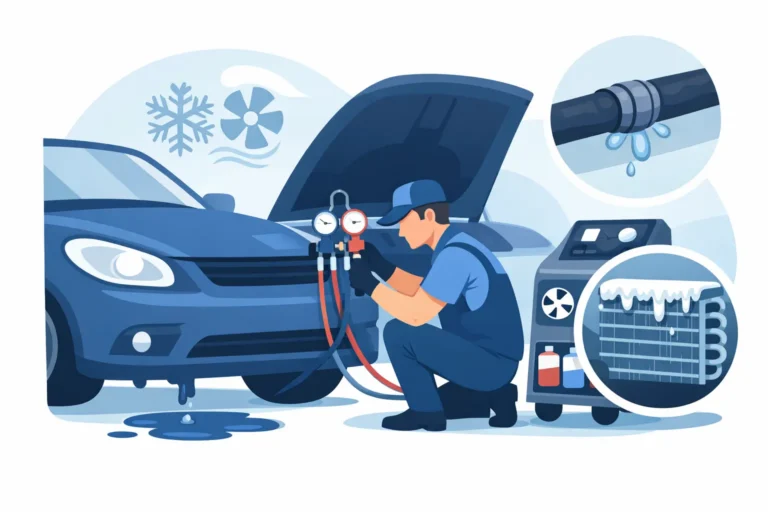
A proper test often starts with the basics. Pressures are checked, performance is assessed, and the system is inspected for obvious signs of damage or oil staining. From there, the technician chooses the most suitable leak detection method for the fault.
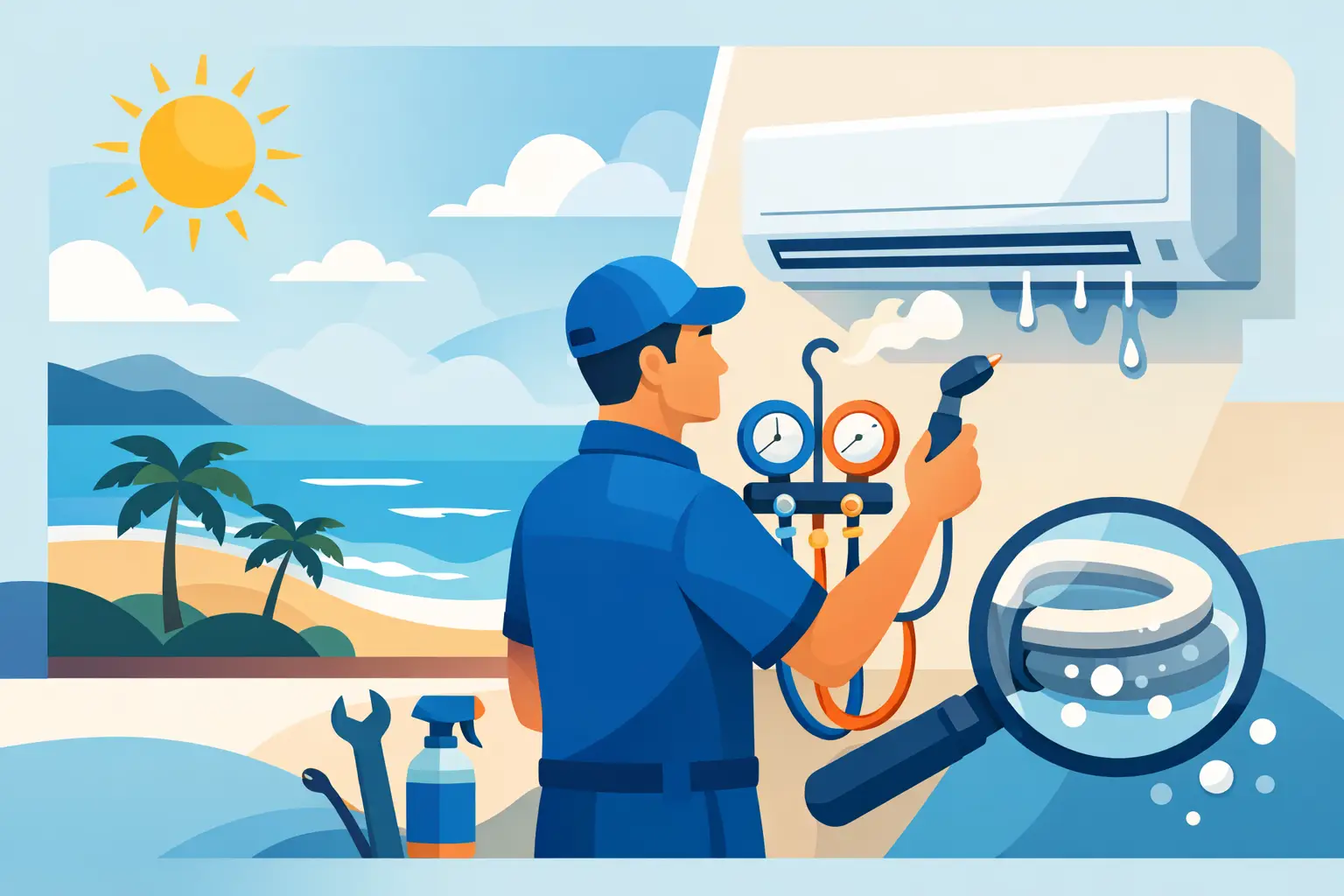
In many cases, UV dye can help identify where refrigerant oil is escaping. Electronic leak detectors can also be used to sniff out trace refrigerant around fittings, hoses, condensers and evaporator drains. Nitrogen pressure testing is another common method, especially when the system is empty or the leak is suspected to be too large or too small to confirm reliably with a quick visual check.
The method depends on the situation. A system with no gas left in it may need a different approach from one that still holds partial charge. Some leaks show up quickly. Others take more time because parts need to be accessed, covers removed, or the vehicle rechecked after pressure stabilises.
Why topping up refrigerant is not the same as fixing the problem
There is a reason good workshops do not treat aircon like a tyre that just needs a bit more pressure. Refrigerant does not get used up in normal operation. If the charge is low, it has gone somewhere.
A top-up without finding the leak can feel like a quick fix, especially if you are heading into summer or getting ready for a trip. Sometimes it buys a little time. But if the leak is still there, the result is usually temporary. You risk wasting money on repeat regassing, and in some cases low refrigerant can affect lubrication inside the system and put extra strain on the compressor.
That does not mean every leak repair is major. Some are straightforward. A service valve, an O-ring or a section of hose may be the culprit. The point is that testing gives you the chance to repair what is actually wrong instead of chasing short-term cold air.
The parts most likely to leak
Condensers are common failure points because they sit up front and deal with heat, airflow and road debris. A stone strike can cause visible damage, but corrosion can also create tiny leaks over time. Hoses and crimp joints can deteriorate, especially in older vehicles or those exposed to plenty of engine-bay heat.
Compressor shaft seals can leak as components age, and service ports are another regular culprit. Evaporators can leak too, although they are often harder to access because they sit inside the dash area. That is where proper diagnosis really matters, because replacing an evaporator is a very different job from replacing a valve core or external hose.
What to expect after the leak is found
Once the source is identified, the next step should be clear advice. That means explaining what has failed, what needs replacing or repairing, and whether there are any related issues that should be checked at the same time. If the system has been leaking for a while, it may also need a receiver drier or related components assessed depending on the repair.
This is where experience makes a difference. Some faults are isolated. Others are a sign of broader wear through the system. A good technician will tell you if the repair is simple, if there are trade-offs in doing a minimum repair, or if it makes more sense to deal with multiple ageing components while the system is open.
For owners of campervans, tow vehicles and touring setups, it is also worth considering how and where the vehicle is used. If you rely on that vehicle for remote travel, you may want a repair that prioritises reliability over the cheapest short-term option.
Choosing the right workshop for aircon diagnostics
Air-conditioning work is not just about regassing equipment. It requires correct handling of refrigerant, suitable diagnostic tools, and a technician who can tell the difference between a leak, a pressure issue and an electrical control fault. That is especially useful when your vehicle also has accessory wiring, dual battery gear or custom touring equipment that changes access around components.
A dependable workshop will explain the findings before repairs go ahead. You should know what has been tested, what has been confirmed, and what the likely repair path looks like. That kind of clarity saves time and helps you make a sensible decision, whether it is a daily driver, a work ute or a trip-ready 4WD.
When to book a leak test instead of waiting
If the aircon has noticeably lost performance, if it was recently regassed and has gone warm again, or if the compressor is behaving oddly, it is worth booking testing sooner rather than later. Waiting can turn a smaller issue into a larger one, particularly if the system runs low for an extended period.
There is also the comfort factor. On the Sunshine Coast, a weak aircon system is not just annoying in summer. It affects demisting in wet weather, makes long drives harder, and takes the edge off family trips or work days on the road.
For local drivers who want straight answers, Coastal Cool Air approaches leak testing the same way any good diagnostic job should be handled – check the system properly, explain what is found, and repair what needs repairing without the guesswork.
If your aircon is fading, cycling strangely or just not keeping up with the heat, the best next step is not another hopeful top-up. It is finding the leak properly so the fix lasts.