
Vehicle AC Diagnostics That Find the Real Fault
When your air con starts blowing warm on a 30-degree day, guessing gets expensive fast. Proper vehicle ac diagnostics is what separates a quick fix from replacing parts that were never the problem in the first place. A weak vent temperature can come from low refrigerant, sure, but it can also come from a faulty pressure sensor, a failing compressor clutch, a blocked condenser, poor fan operation or even an electrical issue hiding in the circuit.
That is why a decent diagnosis matters before anyone talks about regassing, replacing components or tearing into the dash. If the fault is identified properly from the start, you save time, money and the frustration of having the same problem come back a few weeks later.
What vehicle AC diagnostics actually involves
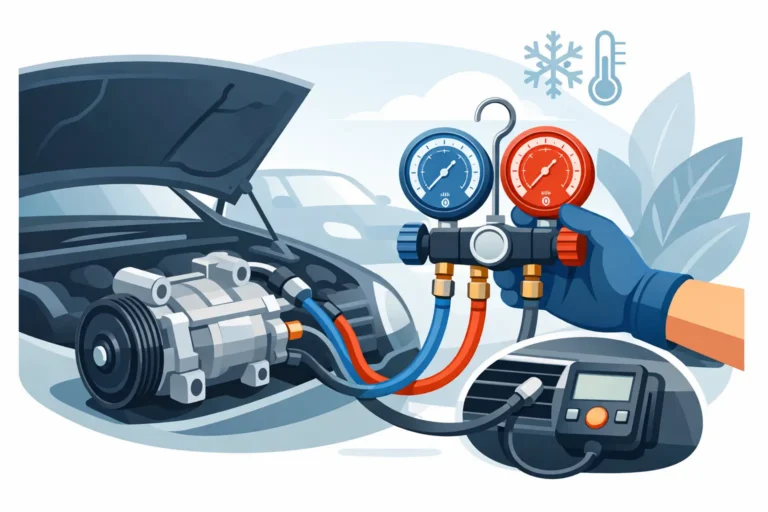
A lot of drivers hear the word diagnostics and picture a scan tool plugged into the dash. Sometimes that is part of it, but air-conditioning faults usually need more than a fault code check. A proper process combines pressure testing, temperature readings, visual inspection, leak detection and electrical testing.
The first step is usually listening to the customer and confirming the symptoms. Does the system cool at idle but not on the highway? Does it start cold and then fade out? Is the fan strong but the air warm? Does the compressor cut in and out? These details matter because they point the technician in different directions.
From there, pressures are checked on the high and low sides of the system. Those readings tell a story, but only when they are read alongside ambient temperature, vent temperature and system behaviour. Low pressure alone does not automatically mean it just needs gas. If refrigerant is low, the next question is why. Vehicle AC systems are sealed systems. Refrigerant does not get used up like fuel.
Why regassing without diagnostics can waste money
This is one of the most common misconceptions in automotive air con. A regas can restore cooling if the charge is low, but if there is a leak, a bad sensor or a compressor issue, the result may only be temporary. In some cases, it does nothing at all.
If a hose connection is leaking, the refrigerant may escape again. If the condenser fan is not operating properly, pressures can climb and cooling can drop off even with the correct charge. If the compressor has internal wear, the system might look acceptable on a quick glance but fail under load.
That is where proper vehicle ac diagnostics pays for itself. You are not paying for someone to have a guess. You are paying to narrow the fault down properly and explain what needs attention before repairs go ahead.
Common faults found during vehicle AC diagnostics
Leaks are still one of the biggest culprits, especially in older vehicles or those exposed to heat, vibration and road grime. O-rings harden over time, condensers can be damaged by stones and compressors can seep from shaft seals. In a caravan tow vehicle, 4WD or work ute that sees a lot of corrugations or rough tracks, vibration-related issues are not unusual.
Electrical faults are another major category. A blown fuse is the simple end of it. Further along, you can have a failed relay, damaged wiring, poor earth, sensor faults or a control module issue. On modern vehicles, the air-conditioning system often talks to multiple modules, and the compressor may be electronically controlled rather than clutch-operated in the old-school sense.
Airflow faults can also be missed if the focus stays only on refrigerant. A blocked cabin filter, weak blower motor, stuck blend door or restricted condenser airflow can all affect cabin cooling. If the fan is running but the cooled air is not being directed properly through the HVAC box, the system may seem faulty when the issue is really in the controls or actuators.
Then there is compressor performance. A compressor can engage but still not pump efficiently. That can lead to poor cooling, unusual pressure readings or intermittent operation. Replacing a compressor is not a small decision, so it needs to be supported by proper testing rather than assumption.
Signs your vehicle needs AC diagnostics
Warm air from the vents is the obvious one, but there are other clues that often show up first. If the system takes much longer than normal to cool the cabin, that is worth checking. If you notice cooling is fine while driving but weak at idle, airflow across the condenser or fan performance could be part of the problem.
Cycling on and off too often can point to charge issues, sensor faults or pressure-related problems. Strange noises when the air con is turned on can indicate compressor or pulley trouble. A musty smell is more likely related to moisture, bacteria or the evaporator area than a refrigerant fault, but it is still something worth inspecting.
For touring vehicles, campervans and 4WDs, it is smart to pay attention before a big trip. If your air con is already struggling around town, it will not magically improve after hours on the road with a loaded vehicle and hot conditions.
What a good technician is looking for
Good diagnostics is not just about finding a failed part. It is about understanding the system as a whole and spotting what caused the failure. If a pressure switch has failed, was it simply old age or has the system been running outside normal pressure because of another issue? If a compressor is damaged, has debris moved through the system and affected other components?
That matters because proper repairs often include more than the headline part. Depending on the fault, the system may need leak repairs, a receiver drier replacement, an orifice tube or expansion valve check, a flush, vacuum testing and a precise recharge to specification. Shortcuts can lead to repeat failures.
The best workshops also explain what they found in plain language. Most customers do not need a lecture on refrigerant thermodynamics. They just want to know what is wrong, what it will take to fix, and whether there are options depending on budget and vehicle age.
Vehicle AC diagnostics for 4WDs, caravans and working vehicles
Not every vehicle lives an easy life. A daily commuter that spends most of its time on sealed roads has different demands from a 4WD towing a van through summer or a ute carrying tools across job sites. Dust, vibration, heat load and accessory installations can all affect air-conditioning performance.
In off-grid and touring setups, electrical modifications also need to be considered. Dual battery systems, aftermarket accessories and added loads can sometimes introduce wiring complications if previous work was not done properly. It does not always mean the air con fault was caused by an accessory install, but it is another reason diagnostics should be thorough rather than rushed.
For drivers across the Sunshine Coast and hinterland, that mix of daily driving and weekend travel is common. A vehicle might spend Monday in traffic and Friday towing a camper inland. Diagnostics needs to account for how the vehicle is actually used, not just what the system does for five minutes in the workshop.
How to get the most from an AC diagnostic booking
If you are booking your vehicle in, a bit of detail helps. Note when the problem happens, how long it has been going on and whether it is constant or intermittent. Mention any recent repairs, battery issues, cooling system work or accident damage around the front of the vehicle. Even something that seems unrelated can help narrow the cause.
It also helps to be realistic about what diagnostics is meant to do. The goal is to identify the fault accurately and map out the right repair path. Sometimes the answer is simple. Sometimes the testing reveals a larger issue that needs a staged repair. Either way, clarity upfront is better than spending money based on trial and error.
At Coastal Cool Air, that practical approach matters because customers are usually not chasing theory – they want cold air, reliable operation and straight answers. Whether it is a family car, a tradie ute or a touring setup that needs to be road-trip ready, the process should be methodical and easy to understand.
When not to wait
If the compressor is making noise, the system is short cycling heavily, or cooling has dropped off suddenly, do not leave it for months hoping it sorts itself out. Continuing to run a struggling system can sometimes turn a smaller fault into a larger one, especially if a compressor is failing internally or the refrigerant level is well down.
A small leak is still a leak. A weak fan motor does not usually get stronger with age. And if the system is working harder than it should, fuel use and cabin comfort can both take a hit.
If your air con is not keeping up, proper diagnostics is the sensible first move. Get the fault tested properly, get the findings explained clearly, and make decisions based on facts rather than guesswork.