How to Diagnose Parasitic Battery Drain
You notice it first thing in the morning. The vehicle was fine yesterday, but now it cranks slowly or won’t start at all. If the battery tests healthy and the alternator seems to be charging, the next question is usually how to diagnose parasitic battery drain without wasting money replacing the wrong part.
A parasitic drain is simply electrical current being used when the vehicle is switched off. Some draw is normal. Modern vehicles often keep memory settings alive for the clock, radio, ECU and security systems. The problem starts when something stays awake or powered longer than it should. That can flatten a starter battery overnight, over a weekend, or slowly over a week depending on the size of the fault and the condition of the battery.
What parasitic battery drain actually looks like
Not every flat battery is caused by a parasitic draw. Battery age, poor charging, corroded terminals and short-trip driving can create similar symptoms. That matters because the testing path changes depending on the pattern.
If the battery goes flat after the vehicle sits unused, especially when it drives normally once started, a hidden drain becomes more likely. If it struggles every day regardless of how long it has been parked, you may be dealing with a weak battery, charging issue, bad earth or high resistance connection instead.
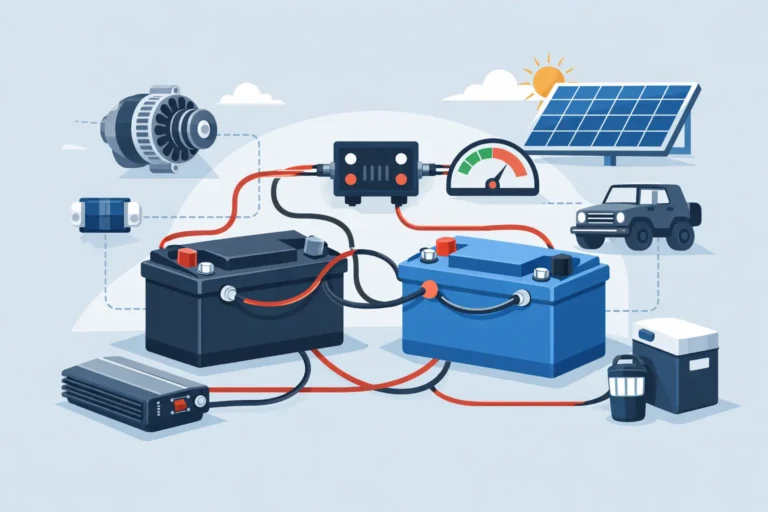
With 4WDs, campervans, caravans and dual battery systems, there is another layer. Accessories like fridges, brake controllers, inverters, DC-DC chargers, UHF radios, trackers and aftermarket lighting can all affect off-current behaviour. A drain may not come from the factory wiring at all. It can be in the added equipment, the way it was installed, or how different components interact.
How to diagnose parasitic battery drain properly
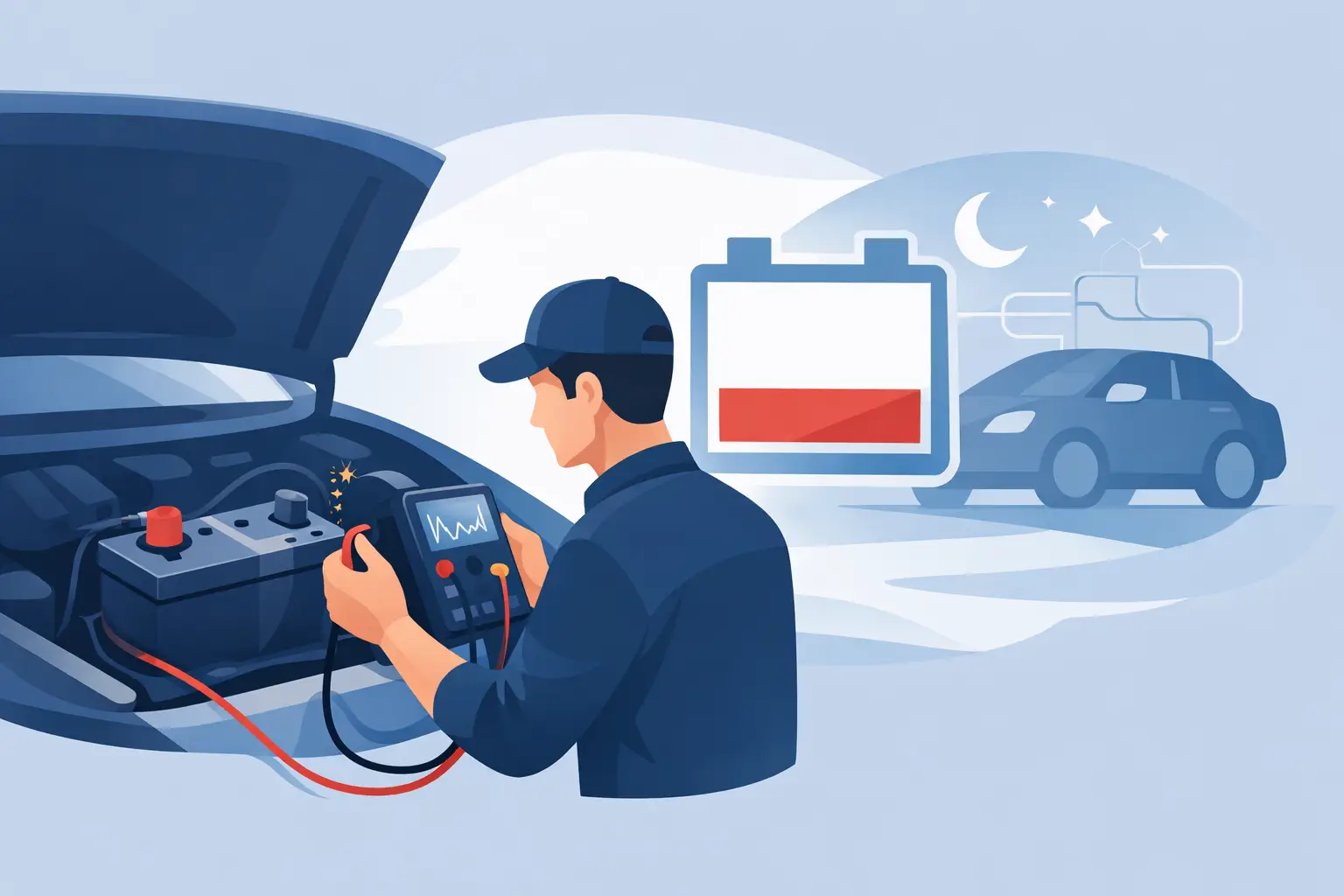
The most reliable way to diagnose a parasitic drain is to measure current draw with the vehicle switched off and then isolate the circuit causing it. That sounds simple, but a lot of false results come from rushing the setup.
Before testing, make sure the battery is fully charged and known to be in decent condition. A tired battery can confuse the process because it may drop voltage quickly even with a relatively small draw. Also confirm the charging system is working. If the alternator is undercharging, the battery may look like it is being drained while parked when the real issue happened during driving.
Next, switch everything off, remove the keys from the vehicle and close all doors, bonnet and boot latches as needed. On many vehicles, modules stay awake for several minutes after shutdown. Some take half an hour or longer to go to sleep. If you connect your test gear too early, you’ll read normal wake-up current and chase a fault that isn’t there.
Normal off-current versus a problem
There is no single magic number for every vehicle. Older vehicles with very little electronics may only draw a few milliamps. Newer vehicles with factory security, telematics and multiple control modules often sit higher. As a rough guide, many passenger vehicles settle somewhere around 20 to 50 milliamps once fully asleep. Some may be slightly above that and still behave normally.
When the draw is well beyond expected sleep current, especially in the hundreds of milliamps or more, that is when battery discharge becomes a practical problem. The real question is not just the reading itself, but whether that reading remains steady once all systems should be asleep.
Using a multimeter or clamp meter
A multimeter in series with the battery negative lead is a common test method. It can be accurate, but you need to use it carefully. Open the circuit the wrong way and you can wake modules, blow the meter fuse or lose memory settings that change the result.
A low-amp clamp meter is often the cleaner option because it lets you measure current without disconnecting the battery. For modern vehicles and accessory-heavy touring setups, that can save a lot of frustration. It also reduces the chance of upsetting modules that are sensitive to power interruption.
Whichever tool you use, the vehicle needs time to settle. If the current starts high and gradually drops, that can be completely normal. What you are looking for is the final resting draw after sleep mode.
Finding the circuit that is causing the drain
Once you confirm there is excessive off-current, the next step is isolation. This is where people often start pulling fuses at random. It works eventually, but there is a better way.
Start by monitoring the current draw continuously. Then remove one fuse at a time and watch for a drop. If the current falls into a normal range when a fuse is removed, that circuit becomes your main suspect. Make a note of every change. Some vehicles have multiple fuse boxes, including under the bonnet and inside the cabin, so it helps to be methodical.
The trick is to avoid waking the vehicle while you test. Opening doors, switching courtesy lights on, or reconnecting modules can temporarily spike current and muddy the result. In workshop conditions, technicians often latch door catches manually and keep access points controlled for that reason.
Common causes of parasitic drain
The actual fault can be surprisingly ordinary. Interior lights that stay on, glovebox lights, faulty relays and aftermarket accessories are frequent culprits. Audio systems, reverse camera interfaces, brake controllers and USB chargers can all keep drawing power when they should be asleep.
In 4WDs and camper setups, we also see issues with isolators, DC-DC chargers, solar regulators and poorly integrated dual battery systems. If a system is wired incorrectly, the starter battery may continue feeding accessory loads after shutdown. That is not always obvious until the vehicle is left parked for a day or two.
Control modules can also be at fault. A body control module, door module or infotainment unit may fail to sleep because of an internal fault or because it is receiving the wrong signal from another part of the vehicle. That is where diagnosis becomes less about simple fuse pulling and more about understanding network behaviour.
When the drain is intermittent
Intermittent drains are the ones that test your patience. The vehicle behaves perfectly in the workshop, then goes flat at home two nights later. In those cases, the issue may only appear when a module fails to sleep occasionally, a relay sticks once hot, or an accessory wakes up at random.
That is why pattern matters. If the battery only dies after rain, after using a particular accessory, or after locking the vehicle, those details help narrow it down. A drain that appears after fitting a new fridge socket or UHF is another strong clue. Good diagnostics are not just about readings. They are about connecting the reading to the way the fault shows up in real life.
For hard-to-catch faults, data logging or extended current monitoring may be needed. That approach is often worth it on caravans, campervans and touring vehicles with layered 12V systems, where multiple components can switch states over time.
Mistakes that lead to the wrong diagnosis
The most common mistake is blaming the battery first. Batteries do fail, and age absolutely matters, but replacing one without confirming the cause can turn into an expensive loop. A new battery facing the same drain will go flat too.
Another mistake is assuming every aftermarket accessory is the problem. Sometimes it is. Sometimes the accessory is fine and the real issue is a poor earth, a backfeed through another circuit, or a control module staying awake because of a factory fault.
It is also easy to underestimate installation quality. A clean-looking setup can still have hidden issues in fuse selection, cable routing, trigger wiring or isolation logic. That is especially true on vehicles set up for camping, towing or off-grid travel, where electrical systems have grown over time.
When it makes sense to get it professionally tested
If you are comfortable with a meter and understand safe testing procedures, basic checks can tell you a lot. But if the vehicle is newer, heavily accessorised, or fitted with dual batteries, lithium upgrades, solar or an inverter, the fault path can get complicated quickly.
Professional testing is usually the better option when the drain is intermittent, when multiple systems have been added, or when the battery keeps going flat despite previous repairs. A proper diagnostic process saves time because it focuses on measured current, sleep-state behaviour and circuit isolation instead of guesswork.
That is particularly relevant for Sunshine Coast drivers using their vehicles for work during the week and trips on the weekend. Reliability matters more when your ute, 4WD or camper has to do both jobs without fuss.
A flat battery is annoying. A repeated flat battery usually means there is a reason. The good news is parasitic drain faults can be found with the right process, and once the actual cause is identified, the fix is often far more straightforward than the symptoms make it seem.