4WD Battery Charging Problems Explained
You usually notice 4WD battery charging problems at the worst possible time – the fridge starts cutting out, camp lights go dim, the battery monitor shows odd numbers, or the vehicle struggles to crank after a stop. For touring setups, dual battery systems and off-grid power gear, charging faults are rarely just an inconvenience. They can leave you with a flat starter battery, an auxiliary battery that never fully recovers, or gear that works fine one day and not the next.
The tricky part is that charging problems are not always caused by the battery itself. In plenty of 4WDs, the issue sits somewhere between the alternator, cabling, battery charger, isolator, solar input, earth connections, or the way the whole system has been matched together. That is why proper diagnosis matters more than guesswork.
Why 4WD battery charging problems happen
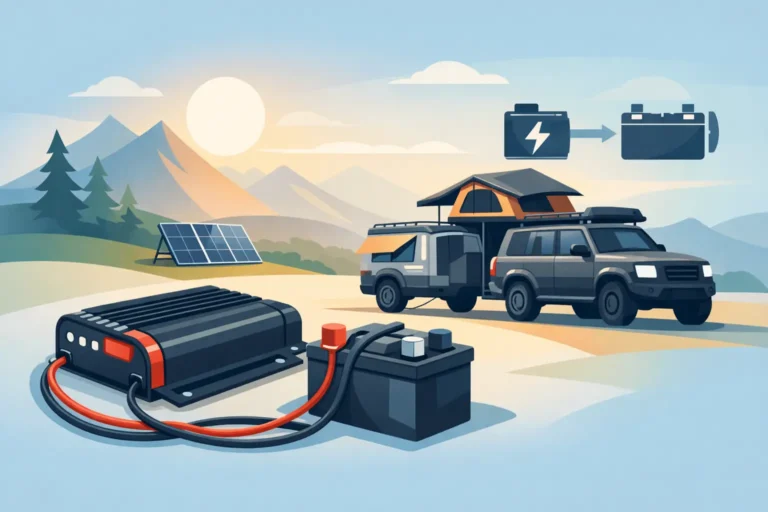
A modern 4WD charging setup can be simple or surprisingly complex. A basic system might only have a cranking battery, alternator and one auxiliary battery. A touring vehicle, caravan tow rig or camper setup might also include a DC-DC charger, solar regulator, lithium battery, inverter, battery monitor and multiple loads running at once.
Once you add accessories, the chances of a charging mismatch go up. The alternator might be healthy, but the auxiliary battery still does not charge properly because the cable run is too thin, the charger is undersized, or the battery chemistry is wrong for the charging profile. In other cases, the battery itself has deteriorated and will no longer accept charge the way it should.
Heat, corrugations, water exposure and vibration make things harder again. What works in the driveway can behave very differently after a few hundred kilometres on rough roads.
The most common causes of 4WD battery charging problems
Battery age or battery failure
This is the obvious one, but it still catches plenty of people out. Batteries do not usually fail all at once. They often decline gradually. You might see slow charging, voltage drop under load, poor reserve capacity or the battery appearing full on a monitor before going flat far too quickly.
AGM batteries can suffer from sulphation if they are regularly left partially charged. Lithium batteries can shut down due to low voltage, temperature protection, internal BMS issues or charging gear that is not set up correctly. If the battery is damaged or worn out, no charger can fix that.
Incorrect charging equipment
Not every charger suits every battery. This matters even more if the vehicle has been upgraded over time. We often see setups where a battery has been replaced with a different type, but the charging system was never adjusted to suit it.
For example, a lithium battery paired with an older charger profile may never charge properly. On the flip side, some systems are overbuilt in one area and underdone in another. A premium battery still performs poorly if the charger cannot deliver the correct voltage or enough current.
Voltage drop in cabling
Voltage drop is one of the most common hidden faults in touring setups. The battery charger or battery itself might be fine, but by the time current travels from the alternator to the rear of the vehicle, there is not enough voltage left for effective charging.
This often happens in dual battery systems with long cable runs to the tub, canopy, rear drawer system or caravan connection. Undersized cable, poor joins, low-quality fuse holders and tired plugs can all reduce charging performance. The result is a battery that never reaches full charge, especially on shorter drives.
Faulty alternator or regulator behaviour
If the alternator is weak, inconsistent or overcharging, the whole system suffers. Some faults are obvious, such as a battery warning light or repeated flat batteries. Others are harder to spot because the alternator still works, just not within the range your setup needs.
In newer vehicles with smart alternators, charging voltage can vary by design. That is normal, but it changes how auxiliary batteries should be charged. If the system has not been designed with that in mind, charging performance can be poor even though the vehicle itself appears to be operating normally.
Bad earths and poor connections
A poor earth can mimic all sorts of electrical faults. It can cause low charging voltage, intermittent charging, heat in cables or connectors, and unreliable accessory operation. Corrosion, loose terminals and badly crimped connections are common offenders.
This is especially relevant in 4WDs and caravans exposed to salt air, dust, mud and moisture. One weak connection can drag down the whole system.
Too much load, not enough charging
Sometimes the system is technically working, but it cannot keep up with demand. A fridge, lights, compressor, charger ports, inverter and caravan feed can add up quickly. If the battery is heavily discharged overnight and the next day only involves short-distance driving, the system may never catch up.
That is not always a fault. Sometimes it is a design issue. The fix may involve a larger charger, better solar input, more battery capacity or simply resetting expectations around power use.
Warning signs worth taking seriously
Some charging issues creep in slowly. Others show up in a hurry. If your auxiliary battery takes longer than usual to recover, your battery monitor readings seem erratic, or accessories cut out earlier than they used to, that is worth checking.
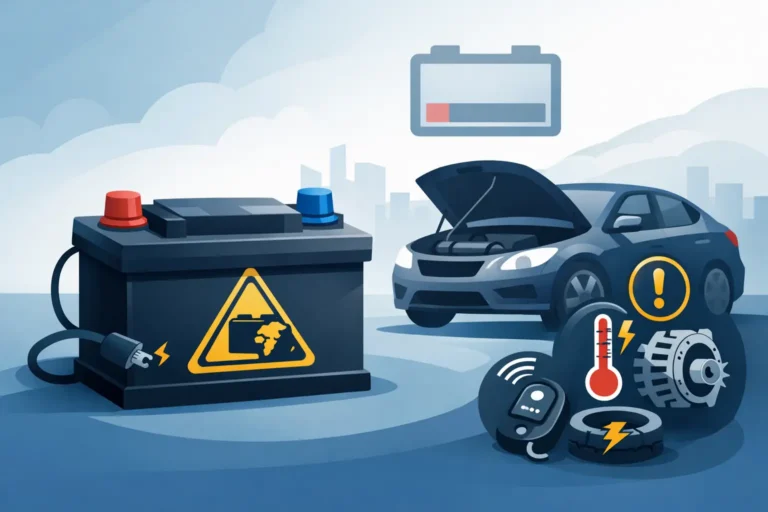
Other signs include hot cables, blown fuses, low-voltage alarms, headlights dimming at idle, hard starting, a battery that swells, or solar that appears to work but never fully tops the system up. If you smell anything unusual around the battery area, stop using the setup until it is inspected.
The key is not to rely on one symptom alone. Voltage readings can be misleading without proper load testing and system checks. A battery showing decent voltage at rest can still be unserviceable.
Why guessing usually costs more
A lot of 4WD battery charging problems lead people into a parts-swapping cycle. They replace the battery first, then the charger, then the isolator, and maybe the solar regulator after that. Sometimes one of those parts genuinely is faulty. Sometimes the original problem was a bad earth or voltage drop all along.
This is where practical testing saves money. A proper diagnostic approach checks the battery condition, alternator output, charging voltages under load, cable integrity, fuse protection, connection quality and charger configuration. It also looks at how the vehicle is actually used. A weekend beach run, a touring setup for long remote trips, and a work ute with daily accessory loads all need slightly different solutions.
Matching the system to the way you travel
Not every dual battery setup needs the same fix
A simple AGM auxiliary battery used for occasional camping has different needs to a full lithium canopy system with inverter and solar. The right fix depends on battery chemistry, cable length, charging source, daily load and recharge opportunities.
If you mostly do short drives around town, alternator charging alone may never be enough for your camping setup. If you are towing a caravan, the vehicle and van charging systems need to work together rather than fight each other. If you have upgraded one component but not the rest, the weak link usually shows up sooner or later.
Lithium upgrades need proper planning
Lithium can be an excellent option in a 4WD, but only when the rest of the system supports it. Charging profiles, low-temperature behaviour, DC-DC charger sizing, solar settings and battery monitoring all matter. A quality lithium battery in a poorly configured system will still give poor results.
That is why tailored setup matters more than chasing the biggest battery on the shelf.
When to book professional testing
If the battery keeps going flat, the system is not charging as expected, or you are planning an upgrade and want it done once and done properly, it is worth having the whole setup tested. This is especially true before a long trip.
For drivers across the Sunshine Coast and hinterland, a proper inspection can pick up issues that are easy to miss in the shed – borderline battery condition, hidden voltage drop, mismatched components, charger settings that are slightly off, or signs of heat damage around connectors and fuse points. Coastal Cool Air handles this type of practical electrical diagnosis regularly, particularly for 4WDs, camper setups and dual battery systems where reliability matters away from home.
A good charging system should be boring
That is really the goal. You should not have to watch the battery monitor every hour or wonder whether the fridge will still be running at breakfast. When a 4WD charging setup is designed properly, tested properly and matched to how you actually use the vehicle, it fades into the background and just gets on with the job.
If your system has started behaving differently, do not wait for the next trip to force the issue. Small charging faults have a habit of becoming expensive ones at the least convenient time.